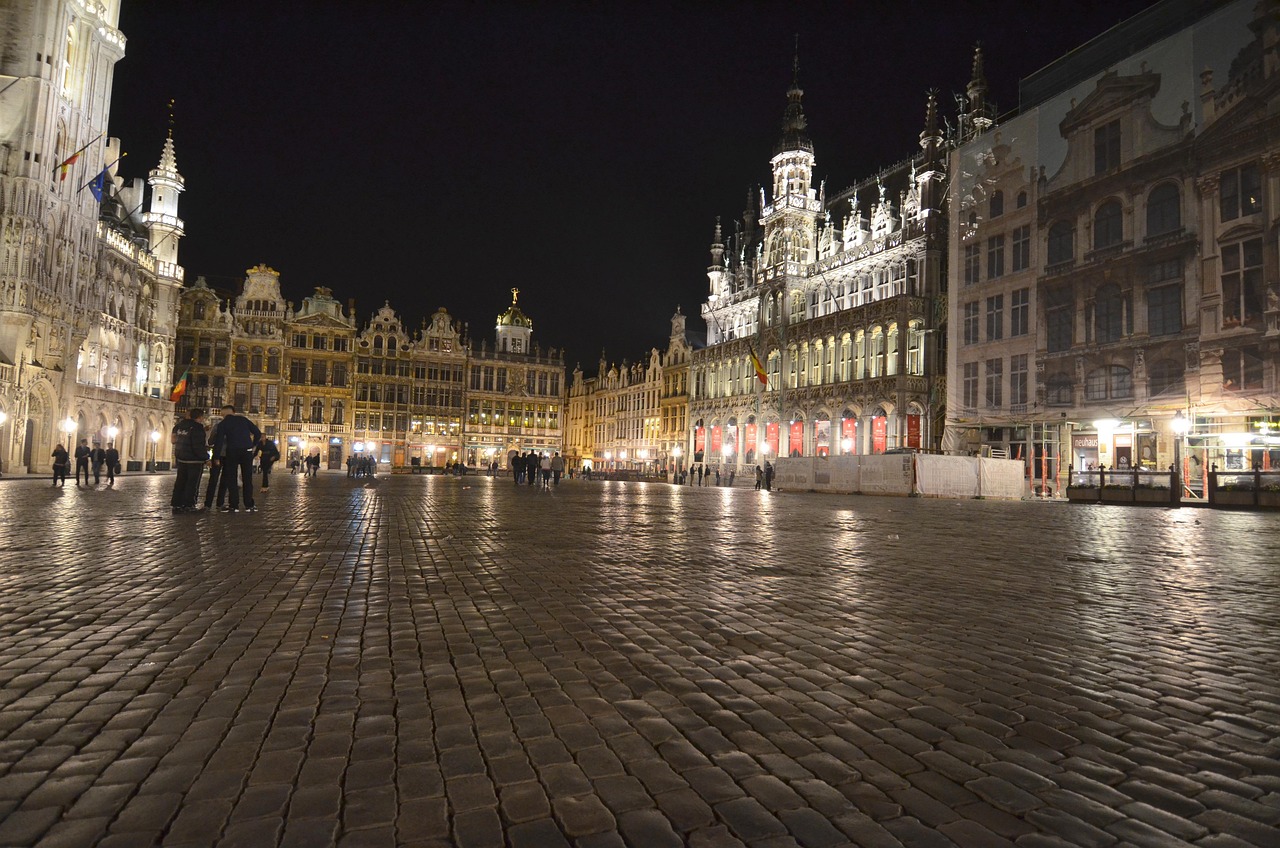
Grand-Place Gold and Art Nouveau Elegance
Brussels is the capital of Belgium and a major European centre, known for its ornate Grand-Place, its Art Nouveau architecture, its chocolate and beer culture and its role as home to key European institutions. The Grand-Place, ringed by guildhalls with gilded facades and the Gothic town hall, was inscribed as a UNESCO World Heritage Site in 1998, and at night it is lit with a warmth that draws every visitor. A short walk away stands the small bronze Manneken Pis, the city's cheerful and irreverent mascot.
Art Nouveau is Brussels' other signature. Victor Horta's townhouses, including the Hotel Tassel, are listed by UNESCO as major works of the style, and the Horta Museum shows the movement's sinuous staircases and stained glass at their best. The Royal Galleries of Saint-Hubert, one of Europe's first covered shopping arcades, shelter chocolatiers and booksellers beneath a glass roof. Travellers who enjoy compact, characterful capitals often pair Brussels with Berlin or with Baltic stops such as Tallinn on a wider European tour.
Chocolate, Frites, Beer and Comic Strips
Food in Brussels is a joy. Pralines were invented here, and chocolate shops around the Sablon and Grand-Place offer everything from classic ganache to modern bean-to-bar experiments. Waffles come either light and sugared or crisp and caramelised, frites are served in paper cones with a choice of sauces, and mussels with chips remain the great national dish. Belgian beer culture is recognised by UNESCO as intangible heritage, and traditional cafes serve Trappist, lambic and gueuze with a sense of ceremony.
The city is also a capital of the comic strip, home to the creators of Tintin and the Smurfs, and a trail of murals across the centre celebrates its heroes. The Magritte Museum devotes itself to Belgium's great Surrealist, and the Atomium, built for the 1958 World's Fair, remains a bold symbol of optimism. A hotel group can use this blend of design, taste and humour to showcase a distinctive boutique city stay.
A Season-by-Season City Break
Brussels works through the year. Spring brings blossoms in the parks and the opening of the Royal Greenhouses of Laeken, while summer sees the Grand-Place carpeted with flowers in some years and the city filled with festivals. Autumn offers museum weather and the rich flavours of game and seasonal produce, and winter transforms the centre with Plaisirs d'Hiver, its Christmas market and light displays. The forest of Soignes, on the southern edge, provides green space for walks and cycling.
Getting there is simple. Eurostar links London St Pancras with Brussels-Midi in around two hours, and the airport serves routes across Europe, so the city is ideal for a short break. A name like Brussels.co.uk lets airlines and boards present Brussels alongside other cities. Many visitors continue to Ireland or look toward the sun of the Mediterranean, making Brussels a convenient hub for an extended itinerary.
Grand-Place Addresses and Neighbourhood Favourites
Brussels offers distinct neighbourhoods, each with its own mood. Staying close to the Grand-Place puts guests among the guildhalls, chocolatiers and cafes, convenient for a first short break and for anyone arriving by Eurostar. The Sablon, a few minutes uphill, is the address for antique dealers, elegant restaurants and boutique hotels, and suits couples who enjoy browsing galleries before dinner. The Marolles, below it, adds flea markets and local colour for guests who like character with their stay.
Further out, Ixelles and Saint-Gilles hold the city's Art Nouveau streets, cafe terraces and independent shops, with small hotels in restored townhouses. Avenue Louise and the Chatelain district draw those who like fashion and brunch, while the European Quarter near Cinquantenaire Park offers modern business hotels with easy transport and ample space for groups. Families enjoy the green edges at Tervuren and the Forest of Soignes, and design-minded travellers choose the converted warehouses around the canal, where lofts and bars have opened in former factories.
Mussels, Speculoos and a Year of Flower Carpets
Belgian cooking in Brussels goes beyond chocolate and chips. Carbonnade flamande, beef slowly stewed in a rich sauce, is a classic bistro dish, and stoemp, mashed potato with vegetables, comes alongside sausages. Speculoos biscuits, caramelised and spiced, are the traditional sweet with coffee, and gaufres de Bruxelles and de Liege show two waffle styles side by side. Fresh seafood arrives from the coast, with shrimp croquettes and eel in green sauce as local specialities, and the Place Sainte-Catherine fish market area is a good place to taste them.
The calendar adds events with a distinct Brussels signature. The Flower Carpet, laid in the Grand-Place every second August, covers the square in tens of thousands of blooms, and the Ommegang pageant in early summer brings costumed processions with a Renaissance flavour. Brussels Jazz Weekend, the Winter Wonders market and the Christmas light show give the cold months warmth, and the Comic Strip Center and the Musical Instruments Museum are excellent for rainy afternoons. Fashion, lace and glass fill the boutiques of the Galeries and the Dansaert district.
Day Trips to Bruges, Ghent and Waterloo
Brussels is a superb hub for short excursions. Trains reach Bruges in about an hour, bringing canals, belfry and lace shops, while Ghent's castle and waterside guildhalls provide a livelier, more student-flavoured outing. Antwerp offers the diamond quarter, fashion and the Rubens house, Leuven has its Gothic town hall and university, and the battlefield of Waterloo lies a short ride south. Mechelen, between Brussels and Antwerp, is a charming bell-ringing town with a tall, handsome cathedral tower.
Active guests can cycle along the Brussels canal, walk in the Forest of Soignes or hire bikes in Tervuren. A weekend might combine Art Nouveau trails with a day among the Flemish cities, and a airline or rail partner can promote such combinations as city-plus packages. Travellers wanting a longer European loop can add Berlin, Estonia or Scotland, and those drawn to coast and sunshine can follow with Spain or Italy on a second leg.
Planning your stay
The Brussels-Capital Region comprises 19 municipalities, including the City of Brussels, which is the capital of Belgium. It is part of both the French Community and the Flemish Community, and forms an enclave within the Flemish Region, so signs and services reflect both languages.
It sits comfortably alongside Berlin as a business and city-break market, and within the wider Europe guide.
Entry rules
Belgium follows Schengen rules, and Eurostar passengers are checked at St Pancras before they board. British visitors can spend up to 90 days in any 180-day period in Belgium and its Schengen neighbours without a visa.
The EU's Entry/Exit System is now being implemented across the Schengen area, so you may need to register fingerprints and a photo on your first visit, free of charge, and should allow extra time at the border. Overstaying the limit can lead to a ban from Schengen countries for up to three years.
Before you travel
Entry requirements and official travel guidance are updated regularly, so check the latest position with your government before booking. The sources we used are listed at the foot of this page.
Why Brussels matters to the industry
Brussels combines business, institutional and leisure demand, which makes accurate, current information on rail, strikes and security valuable. Brussels.co.uk lets a tourist board, hotel group or airline publish clear guidance, and an online travel agency can link it to its listings.
Browse our destination guides and the AI platform page, or compare Brussels with Estonia and Ireland elsewhere in the group.
Questions travellers ask about Brussels
Do UK citizens need a visa for Belgium?
No. A Brussels visit can last up to 90 days in any 180-day period without a visa, counted across the Schengen area. Whether you arrive by Eurostar or at Zaventem, your passport must be under 10 years old and have three months left after you plan to leave.
What is Brussels best known for?
Brussels is best known for the UNESCO-listed Grand-Place, Art Nouveau architecture by Victor Horta, chocolate, waffles, frites and beer, the Atomium, Tintin and comic-strip culture, and its role as a European capital.
How long does it take to reach Brussels from the UK?
Eurostar trains run from London St Pancras to Brussels-Midi in around two hours, making the city an easy short break. Brussels also has an international airport with many European connections.
Where should I stay in Brussels?
Stay near the Grand-Place for first visits, the Sablon for antiques and elegant dining, or Ixelles and Saint-Gilles for Art Nouveau streets and cafes. The European Quarter suits groups wanting modern hotels and easy transport.
What are the best day trips from Brussels?
Bruges, Ghent and Antwerp are all within an hour or so by train, with canals, art and fashion. Leuven, Mechelen and the Waterloo battlefield make quieter alternatives, and each can be done comfortably in a day.
In the Visit Travel Group portfolio: Brussels.co.uk, Brussels.uk.