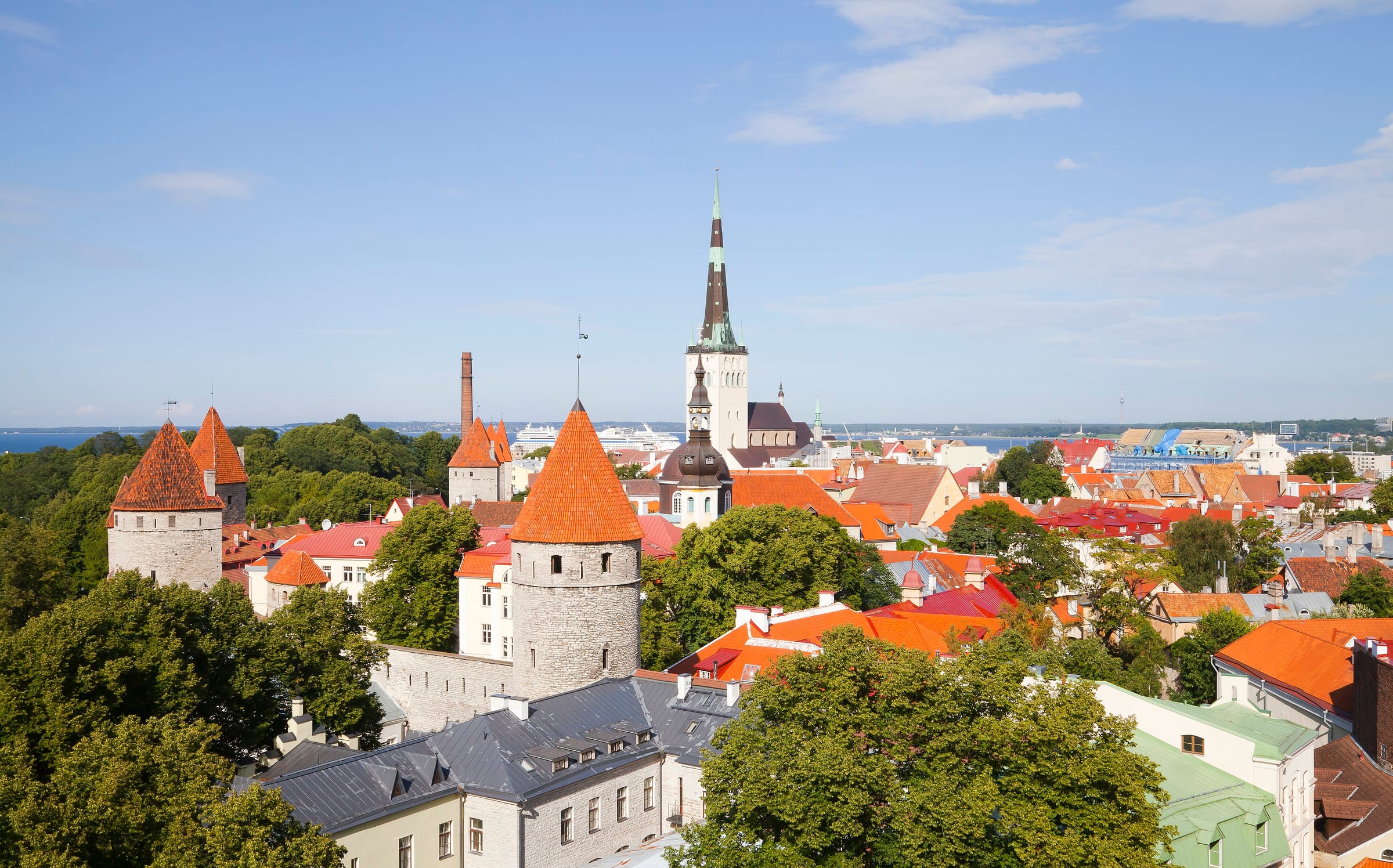
Tallinn's Medieval Skyline and a Digital Nation
Estonia is a country on the eastern shore of the Baltic Sea in northern Europe, known for its beautifully preserved medieval capital, its forests and islands, and its pioneering digital society. About 1.3 million people live here, and Tallinn is home to roughly a third of them. The Old Town of Tallinn was inscribed as a UNESCO World Heritage Site in 1997, and its cobbled lanes, merchants' houses, town wall and spired churches form one of northern Europe's best-preserved medieval centres.
Beyond the walls lies a modern, creative capital. Telliskivi Creative City hosts studios, cafes and markets in former factories, while the Kadriorg district adds a baroque palace and park. Estonia is also known for e-Residency and for digital public services, and the country has a reputation as a home for technology start-ups. Visitors who enjoy cities with strong character will find a natural companion in Berlin, while Brussels and wider Europe complete a northern capitals route.
Forests, Islands and Midsummer Light
Nature is close at hand. Lahemaa National Park, east of Tallinn, combines bays, bogs, forests and manor houses, while Soomaa is famed for its seasonal waterways, explored by canoe. Offshore, Saaremaa and Hiiumaa are the largest of more than two thousand islands, with windmills, juniper meadows, lighthouses and spa towns. Pärnu, the summer capital, is a long sandy beach resort with a Baltic seaside charm that has drawn visitors for generations.
Estonian culture is deeply tied to song, sauna and the seasons. The Song Festival tradition, recognised by UNESCO, gathers vast choirs in Tallinn every few years, and the smoke sauna tradition of the south-east is also on UNESCO's list. Midsummer, celebrated around 23 and 24 June with bonfires, is the high point of the calendar. Dark rye bread, smoked fish, forest berries and local craft beer feature on menus. A tourist board can use this mix of heritage and nature to attract city-break and wellness travellers.
Seasons, Spas and Easy Arrival
Summer brings the famous long, pale evenings and festivals on the coast and islands, while autumn paints the forests gold and brings mushroom and berry foraging. Winter is a season for Christmas markets, spa hotels, ice roads and snowy walking, and the Tallinn Christmas market is a favourite. Spring brings a gentle return of light. Estonia is compact and well connected by road and ferry, with ferries linking Tallinn to Helsinki and the islands.
Tallinn Airport has direct links with many European cities, making it simple to reach from the UK and elsewhere on the continent. A name like VisitEstonia.co.uk gives airlines and hotels one clear page for that whole story. Estonia can be paired with a Nordic or Baltic itinerary, or woven into a trip across Europe together with Scotland or Ireland for a northern landscape theme.
Medieval Guesthouses, Manor Hotels and Island Spas
Estonia's best stays suit its compact size. In Tallinn, small hotels inside the medieval Old Town occupy merchants' houses and former warehouses, perfect for couples and culture seekers who want cobbles at the door, while Rotermann Quarter and Telliskivi bring modern design hotels and rooftop bars for city-break regulars. Kadriorg offers a calmer, leafier address near the palace and park, and the seafront at Pirita suits families who want beach space and cycle paths.
Beyond the capital, restored manor houses in Lahemaa and elsewhere offer old-world hospitality, often with restaurants serving local produce. Parnu has grand spa hotels and a long beach, ideal for wellness breaks, and Saaremaa's spa hotels in Kuressaare give guests a castle backdrop and a seaside promenade. Tartu, the university city, offers lively student quarters and boutique stays. Sauna lodges, farm stays and forest cabins complete the range, and many hotels now offer wood-fired saunas and cold plunges as part of the stay.
Rye Bread, Song Festivals and White Night Summers
Estonian cuisine has a modern northern confidence. Dark rye bread, smoked fish, kama, a roasted grain mix stirred into yoghurt, and black pudding at Christmas anchor the traditional table, while Tallinn's chefs reinterpret foraged mushrooms, berries and Baltic herring in tasting menus. Marzipan has an old tradition in the capital, with a museum dedicated to it, and the cafes of the Old Town serve cardamom buns and strong coffee. Estonian craft and design appear in knitted Muhu patterns, linen, ceramics and wood.
The cultural year is rich. Tallinn Music Week in spring and Jazzkaar bring concerts to the capital, and Midsummer in June fills the countryside with bonfires and singing. Summer festivals include the Viljandi Folk Music Festival and Opera Days at the Saaremaa castle, while the Black Nights Film Festival lights up the dark of November. Winter brings the Old Town Christmas market under a tall tree, and a gentle ice-skating season. Museums such as Kumu, the national art museum, and the Seaplane Harbour reward rainy days.
Bog Walks, Coastal Trails and Helsinki Hops
Active guests will find easy, atmospheric adventures. Bog shoes let walkers cross the floating peatland of Soomaa or Viru, canoeists glide down the rivers in the high-water season, and Lahemaa's trails thread coast, boulders and manors. Cyclists enjoy the flat islands, kayakers paddle the quiet bays of Saaremaa, and winter brings cross-country skiing and ice fishing. Birdwatching in spring and autumn is outstanding on the western islands, and the long summer light allows evening walks and late-night saunas.
Day trips stretch the stay. A ferry from Tallinn to Helsinki takes a couple of hours, Tartu and its university lie a short drive south, and the coastal spa town of Haapsalu offers a pretty promenade and its famous lace. Latvia's capital Riga is also in reach for a Baltic pairing. A booking platform can package Tallinn with a spa island, and guests heading onward can look at Berlin, Brussels or Scotland, or fold Estonia into a broader European route with Ireland for a northern landscapes theme.
Planning your stay
The official tourist board, Visit Estonia, also promotes Tartu, Pärnu, nature and activities, and sauna and wellness as reasons to travel, and lists a year-round events calendar.
Estonia sits at the northern edge of Europe, and many UK visitors combine it with other capitals. Compare it with Berlin and Brussels for city breaks, or look at the wider Europe guide for regional rules.
When to go
Estonia has long summer days and short winter ones, and the tourist board's calendar shows how much of its programme runs in the colder months. Its current listings include the Tallinn Restaurant Week from 30 October to 8 November 2026, the Black Nights Film Festival from 6 to 22 November 2026 and Tallinn Christmas Market from 20 November 2026 to 6 January 2027.
Tartu Christmas City runs from 29 November 2026 to 10 January 2027, so winter is a busy season for city breaks rather than a quiet one. Dress for cold, and confirm dates with the organisers before you book.
Entry rules
Estonia follows Schengen rules, and Tallinn Airport is where most UK visitors meet them. UK visitors may stay up to 90 days in any 180-day period without a visa, and overstaying could lead to a ban of up to three years.
At Estonian border control you may need to show a return or onward ticket and prove that you have enough money for your stay, and the amount varies depending on your accommodation. The EU's Entry/Exit System is now being implemented, so you may need to register fingerprints and a photo, free of charge, and should allow extra time on arrival and departure.
Before you travel
Entry requirements and official travel guidance are updated regularly, so check the latest position with your government before booking. The sources we used are listed at the foot of this page.
Why Estonia matters to the industry
Estonia is a compact market with strong digital credentials and a clear city-break appeal, and VisitEstonia.co.uk lets a tourist board, hotel group or airline publish clear, sourced guidance on entry, logistics and seasons. Online travel agencies can link their listings to the same page.
See our destination guides and the AI platform page for how the model works across the network, or compare with Ireland and Scotland in the same group.
Questions travellers ask about Estonia
Do UK citizens need a visa for Estonia?
No. A trip to Tallinn or Tartu can last up to 90 days in any 180-day period without a visa, because Estonia is in the Schengen area. Estonian border staff look for a passport under 10 years old that stays valid for three months after you leave the Schengen area.
What is Estonia best known for?
Estonia is best known for Tallinn's UNESCO-listed medieval Old Town, its forests and islands, its song festival tradition, sauna culture and its pioneering digital society, including e-Residency and online public services.
When is the best time to visit Estonia?
Summer offers long evenings and Midsummer celebrations, autumn brings golden forests, and winter suits Christmas markets and spa breaks. Tallinn works well as a city break in any season.
Where should I stay in Tallinn?
Couples and culture lovers enjoy the medieval Old Town, design fans like Rotermann Quarter and Telliskivi, and families often prefer Kadriorg or Pirita for green space and beaches. Spa hotels in Parnu and Kuressaare suit wellness breaks beyond the capital.
What can I do in Estonia in winter?
Winter highlights include the Tallinn Christmas market, ice skating, cross-country skiing, spa and sauna days, and the Black Nights Film Festival in November. Snowy walks in Lahemaa and cosy Old Town cafes add to the charm.
In the Visit Travel Group portfolio: VisitEstonia.co.uk.