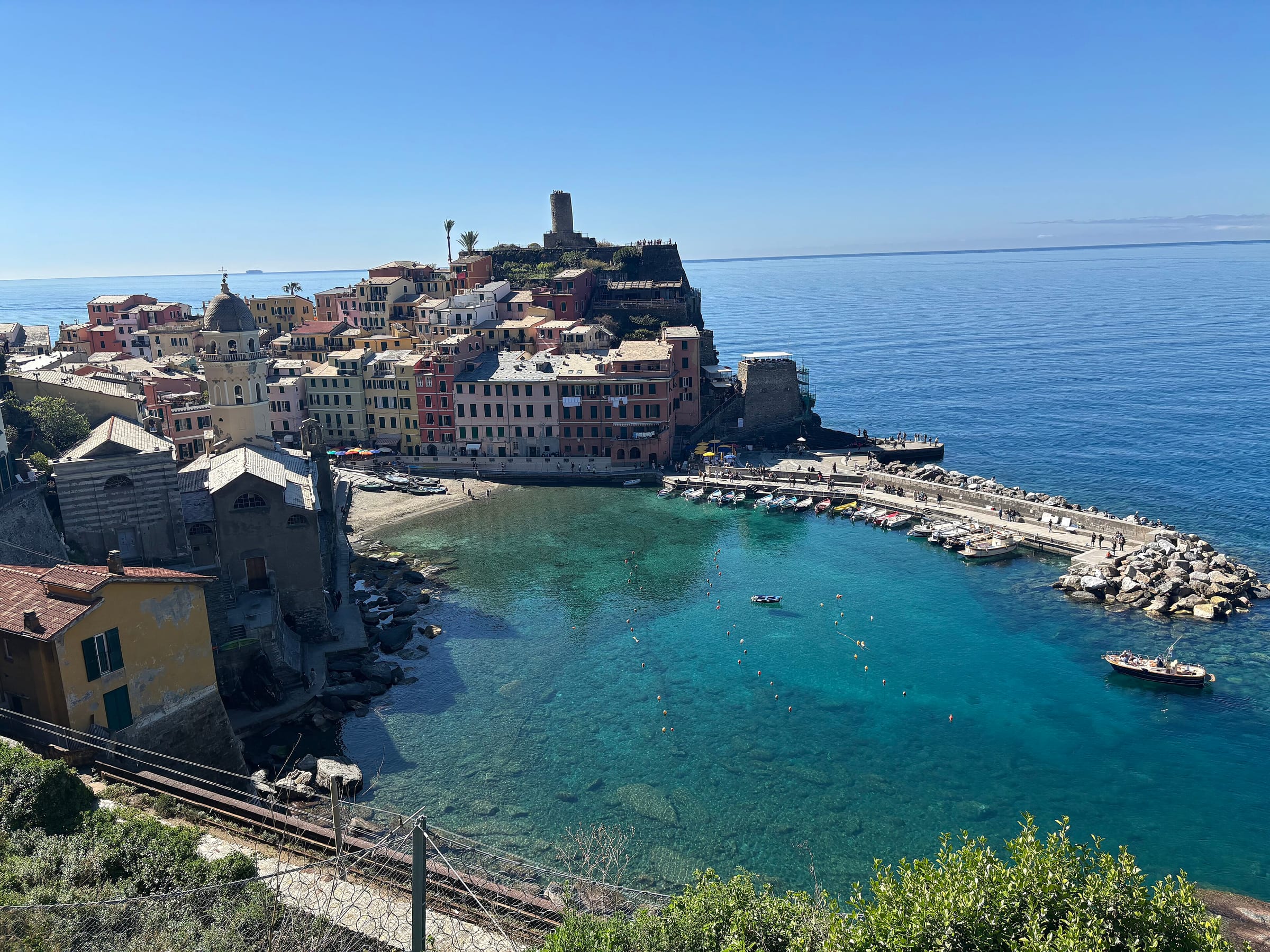
The Ligurian Riviera, a Coast of Colour
Liguria is a narrow, crescent-shaped region of north-western Italy, running along the Ligurian Sea from the French frontier in the west to the edge of Tuscany in the east, with Genoa as its capital. About 1.5 million people live here, mostly on the coast, and the Apennines rise directly behind the shore, so villages and terraces cling to steep slopes above the sea. The two halves of the coast have different characters: the Riviera di Ponente, west of Genoa, is sunny and flower-filled, and the Riviera di Levante, to the east, is more rugged and dramatic.
The Levante is home to the best-known names. Portofino, a tiny harbour ringed by pastel houses, is one of Italy's most glamorous villages. Nearby, Camogli, Rapallo and Santa Margherita Ligure are classic seaside towns, and Portovenere and the Cinque Terre, five villages linked by cliffside paths and rail, form a UNESCO World Heritage Site inscribed in 1997. To the west, San Remo, Alassio, Bordighera and Imperia provide palm-lined promenades, flower markets and the hill villages of the Ligurian Alps.
Pesto, Focaccia and Terraced Vineyards
Ligurian cooking is built on olive oil, herbs and the sea. Pesto genovese, with local basil, is the region's most famous creation, and focaccia, farinata and trofie are staples of every menu. The small, sweet Taggiasca olives of the Ponente give a mild, fruity oil, and the white wine Vermentino is the natural partner for fresh anchovies, stuffed mussels and fritto misto. In the Cinque Terre, vines are planted on terraces so steep that harvest is partly by hand and monorail, and the sweet Sciacchetra wine is a local treasure.
Walking is a Ligurian pleasure. Paths link the Cinque Terre villages above the sea, the headland trail to San Fruttuoso from Camogli leads to a medieval abbey on a quiet cove, and the Alta Via dei Monti Liguri follows the ridge for those who want a long hike. Boats connect many of the coastal towns in season. A tourist board could present the Riviera by activity: walking, sailing, gastronomy, gardens and seaside towns, each as its own distinct itinerary.
Seasons and Connections along the Coast
Spring and early autumn are ideal for walking and sightseeing, with mild weather and clear light, while summer is the season for beaches and boat trips. Genoa is the natural hub, with trains running along the coast in both directions, and the region sits easily between Tuscany to the south-east and the French Riviera to the west. A coastal circuit might link Portofino, Manarola and San Remo in a single trip.
Airports at Genoa, Pisa, Nice, Milan and Turin all serve Liguria, with direct flights from the UK, and the coast's railway makes car-free travel simple. A destination name such as Liguria.co.uk lets airlines and hotels tell a unified story across the whole coast, and the guide to Italy shows how Liguria sits among the north's lakes, cities and mountains.
Choosing Your Stretch of the Riviera
Liguria's coast is a string of distinct bases. In the east, Portofino, Santa Margherita Ligure and Rapallo form the glamorous Tigullio, with grand hotels and harbour-front promenades that suit couples and luxury travellers. Camogli, with its tall painted houses and pebble beach, is a charming fishing town for those wanting authenticity, and the five villages of the Cinque Terre, together with Portovenere and Lerici, offer guesthouses and apartments for walkers and photographers. Genoa, at the centre, is the city base, with palace hotels and a lively port quarter that suit culture seekers and rail travellers.
To the west, the Riviera di Ponente is sunnier and gentler. Sanremo, Alassio, Laigueglia and Finale Ligure give long beaches, palm-lined promenades and family-friendly resorts, while Bordighera and Imperia bring Belle Epoque hotels and gardens. Finale Ligure is a magnet for climbers and mountain bikers, and the hill villages of the Ligurian Alps, such as Dolceacqua and Apricale, offer stone-built stays with a rural feel. Villas with sea views are available across the coast, and families can often find self-catering options by the beach. The hotel group story is one of a coast with a base for every traveller, with easy links to Genoa.
Basil, Olives and Coastal Festivals
Liguria's culture grows out of its terraces and harbours. Basil from Genoa's Prà district, olives from the Ponente and anchovies from the Levante give the cuisine its character, and the region's bakeries produce focaccia in countless varieties, including the cheese-filled focaccia di Recco, a speciality of that town. Coffee and sweet pastries start the day, and farinata is a warming evening snack. Festivals follow the seasons: in spring, flower markets and garden festivals fill the Ponente, summer brings sea processions and fireworks in each harbour town, and autumn has olive and chestnut festivals in the hills.
Craft and heritage are tangible. Camogli's Sagra del Pesce, a fish festival each May, fries fish in a giant pan on the seafront, and Genoa's Euroflora and boat show are international draws. Chiavari is known for its elegant, lightweight chairs, and Albisola for ceramics, while Rapallo's tradition of lace-making recalls the coast's artisan past. Bordighera's palm groves and gardens, including the Giardini Hanbury near the French frontier, are botanical highlights. Combine the coast with Tuscany to the south-east or the French Riviera to the west, and the Italian Riviera becomes a link in a longer Mediterranean journey.
Walking, Diving and Itineraries on the Coast
Liguria suits outdoor lovers. Walkers can follow the Sentiero Azzurro in the Cinque Terre, the headland trail to San Fruttuoso and the long Alta Via, while cyclists have the Riviera dei Fiori cycle path on the old railway line and mountain bikers have the trails of Finale Ligure. Divers can explore the Portofino marine reserve, where the Christ of the Abyss, a bronze statue beneath the surface at San Fruttuoso, is a famous dive. Sailing is superb, with marinas at Genoa, Portofino and Imperia, and wellness seekers can find seaside spas and thalassotherapy centres. Families enjoy sandy beaches at Alassio and Varazze.
Add-ons lie in every direction. Boat trips link coastal villages, while Pisa and Lucca are a train ride from the Cinque Terre, and the hill villages behind the coast reward a day by car. Portofino suits a glamorous afternoon, Manarola a sunset, and San Remo the Riviera of flowers. A week can be built as three bases, east, centre and west, using the coastal railway. Booking platforms can curate this on the booking platform page, matching each traveller to the right stretch of coast.
Planning your stay
Genoa sits in the middle and divides the Riviera in two. The Riviera di Levante to the east has the best-known villages, including Cinque Terre and Portofino. The Riviera di Ponente to the west runs towards the French border and includes Sanremo, with a milder, broader coast and more beach resorts.
The region is long and narrow, so the mountains come close to the sea and roads are steep and winding. Space for building is scarce, which is why villages are stacked up hillsides and why rooms are limited and priced accordingly in summer.
When to go
Late April to June and September to October are the most comfortable months for coastal walking and swimming, with fewer queues. July and August are hot and crowded, and many Italian families holiday here, so book early. Many beach clubs and some hotels close in winter, while the milder western coast stays more active.
Heavy winter rain can also cause local flooding, so check forecasts and follow the advice of local authorities.
Getting around
The coastal railway is the easiest way to move between towns and avoids the traffic and parking problems on the narrow roads. Regional trains are frequent but can be crowded in summer. Ferries link some of the villages along the eastern coast in the warmer months, and services reduce or stop in bad weather.
If you hire a car, expect narrow roads, tight parking and restricted traffic zones in town centres.
Before you travel
Entry requirements and official travel guidance are updated regularly, so check the latest position with your government before booking. The sources we used are listed at the foot of this page.
The industry view
Liguria is a region with famous villages and limited beds, which rewards partners who can explain where to stay and how to get around. Liguria.co.uk lets a tourist board or hotel group publish that information once for the whole coast.
Our AI platform makes it available to search assistants, and you can compare it with the other destination guides. The nearby French Riviera is the natural extension for a longer trip.
Questions travellers ask about Liguria
What is the best time to visit Liguria?
Along the Ligurian coast, late April to June and September to October are mild and less crowded. July and August are hot and busy, and some beach clubs and hotels close in winter.
How do you get around the Ligurian coast?
The coastal railway is the easiest option, with ferries between some villages in warmer months. Driving is slow because roads are narrow and parking is limited.
Do I need a visa for Liguria?
No. UK visitors can stay up to 90 days in any 180 across the Schengen area, with a passport under 10 years old and valid for at least three months after you leave.
What is Liguria best known for?
Liguria is best known for the Italian Riviera, including Portofino, the Cinque Terre and San Remo, for pesto genovese and focaccia, and for its pastel harbour villages, terraced hillsides and coastal walking paths.
How do I travel along the Ligurian coast?
The coastal railway links Genoa with the Riviera di Levante, including the Cinque Terre, and with the Riviera di Ponente towards San Remo. Ferries connect many seaside towns in season, and walking paths join villages in the Cinque Terre.
Which part of the Ligurian coast is best for a first visit?
The Riviera di Levante, with Portofino, Camogli and the Cinque Terre, is the classic choice for scenery and walking. The Ponente, around Sanremo and Alassio, is sunnier with long beaches, and Genoa is the best city base.
What are the best activities in Liguria?
Walk the Cinque Terre paths and the San Fruttuoso trail, dive at the Portofino marine reserve, cycle the Riviera dei Fiori path, mountain bike at Finale Ligure and take boat trips between harbour villages. Food trails of pesto and focaccia are a delight.
In the Visit Travel Group portfolio: Liguria.co.uk, VisitLiguria.co.uk.