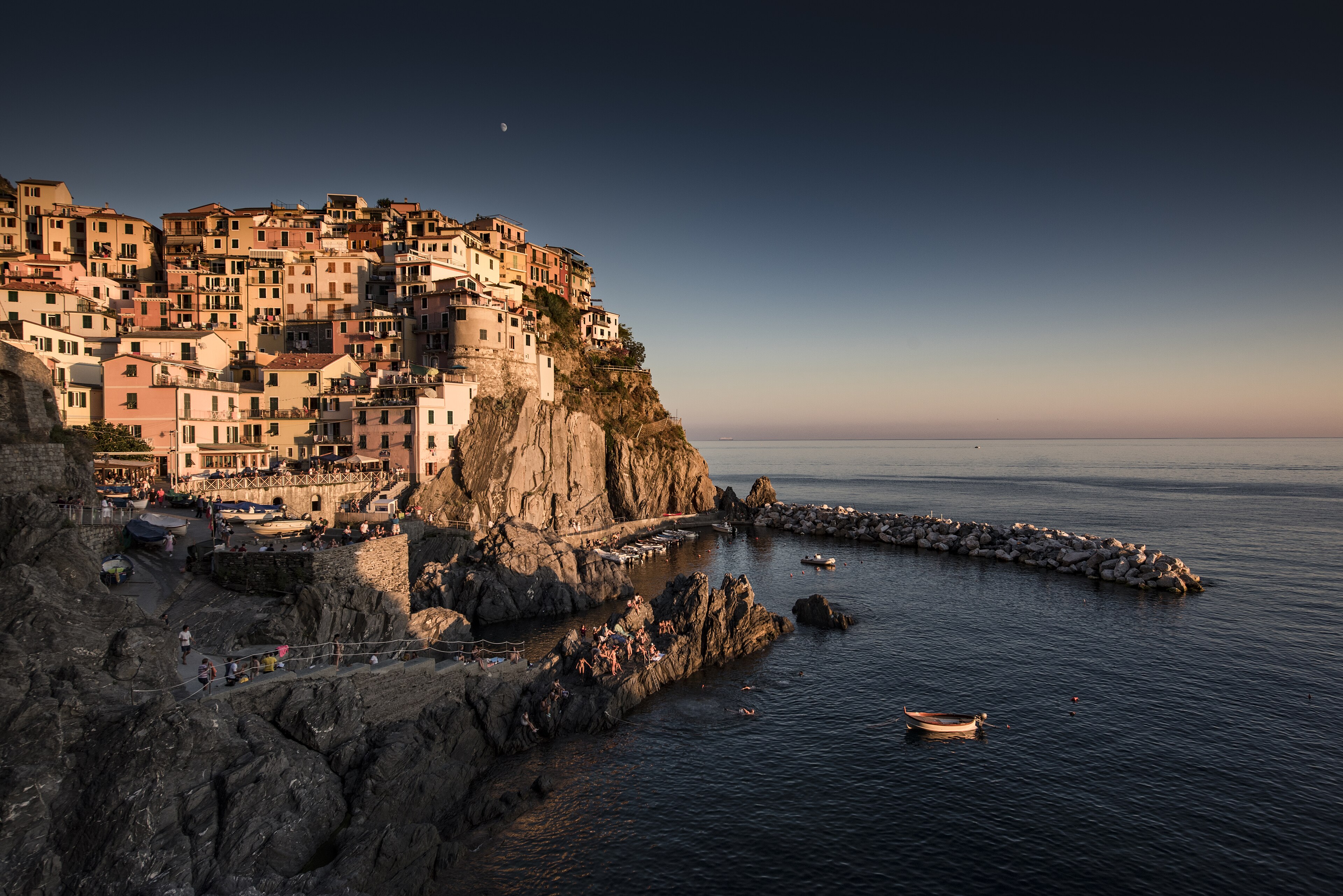
Five Villages on a Ligurian Cliff Edge
The Cinque Terre, meaning the Five Lands, is a stretch of rugged coastline in Liguria, north-western Italy, made up of five villages: Monterosso al Mare, Vernazza, Corniglia, Manarola and Riomaggiore. Painted houses in ochre, rose and apricot stack up narrow valleys and cling to rock above the sea, while vineyards and olive terraces, built by hand over centuries, climb the slopes behind them. Portovenere, the Cinque Terre and the islands of Palmaria, Tino and Tinetto were inscribed together as a UNESCO World Heritage Site in 1997, and the Cinque Terre National Park protects the setting.
Each village has its own character. Monterosso is the largest and has the only broad sandy beach, Vernazza clusters around a small harbour and a medieval castle tower, and Corniglia sits high on a promontory, reached by a long brick stairway or a shuttle bus from its station. Manarola and Riomaggiore tumble towards tiny harbours where boats are pulled up on ramps. There are no grand sights to tick off. The experience is the villages themselves, the light on the water and the pace of life between them.
Walking, Boats and Anchovies
The best way to know the Cinque Terre is to move between the villages. A network of footpaths, including the celebrated Sentiero Azzurro, connects them along the cliffs and through the terraces, passing lemon trees, vines and views that open over the whole coast. A local train links every village in minutes through tunnels, and in season ferries run along the shore, offering the best view back at the painted houses. Many walkers plan a half-day on foot with a train or boat back, finishing with an afternoon in the sea.
Food here is intensely local. Anchovies from Monterosso are served fresh, salted or fried, trofie with pesto reflects the region's best-known recipe, and focaccia appears at every bakery. The vineyards produce the white Cinque Terre wine and the rare sweet Sciacchetra, made from dried grapes. A hotel group or guesthouse operator could showcase the villages through their tables, guests tasting the same anchovies and pesto that locals have served for generations.
When to Go and How to Reach the Coast
Spring and early autumn are the favoured seasons, with comfortable walking weather and clear, soft light, while summer brings the best beach days at Monterosso and the liveliest evenings in the harbours. The villages sit within the wider Liguria region, with Manarola one of the best-known, and Portofino lies further north-west along the Riviera di Levante. Inland, Tuscany is a short journey, with Pisa and Lucca making a natural pairing.
Most visitors arrive via La Spezia, reached by train from Genoa, Pisa or Milan, and the local line then runs through each village. Pisa and Genoa airports receive flights from the UK, making the coast accessible for a long weekend. A name such as VisitCinqueTerre.co.uk gives airlines and tourist boards a simple, memorable home for the story, and the guide to Italy shows how the Cinque Terre sits among the country's coast and cities.
Which Village Suits Which Traveller
Each Cinque Terre village offers a different base. Monterosso al Mare, the largest, has the long sandy beach, seafront hotels and the widest choice of restaurants, which makes it the natural pick for families and first-time visitors. Vernazza, with its small harbour and castle tower, is the postcard village, favoured by couples who like to sit on the piazza by the water. Corniglia, high on its promontory, is the quietest, suited to walkers and those who prize peace and vineyard views. Manarola and Riomaggiore, the two southern villages, stack their houses above tiny harbours and suit photographers and romantics, with guesthouses and apartments on every lane.
Styles of stay are mostly small and personal. Family-run guesthouses, rooms above restaurants and converted village houses with terraces make up much of the choice, and a number of boutique stays sit in the terraced hills above the coast. Larger hotels are found in Monterosso, and many visitors base themselves in La Spezia, Levanto or Portovenere, which have more rooms and a train or ferry link into the park. Vineyard stays among the terraces give a quiet agricultural experience for those who want to wake among the vines. A hotel group or collection of guesthouses could present each village as a distinct chapter, with Liguria as the overall story.
Sciacchetra, Lemons and Village Feasts
The Cinque Terre's culture is the culture of the terrace. For centuries, villagers built dry-stone walls, many kilometres of them, to plant vines and lemons on near-vertical slopes, and the result is a working landscape that still shapes daily life. Lemon trees in Monterosso, anchovies preserved in salt, and honey from the hills are local products, while the sweet Sciacchetra wine is made from grapes dried on racks. Pesto, focaccia, stuffed mussels and fried seafood cones appear in village kitchens and takeaway shops, and mornings start with coffee and a slice of focaccia in a village square.
The year brings its own rhythm. Spring is wildflower season on the paths, early summer brings the Monterosso lemon festival, when the village is decorated with citrus, and August has fireworks and processions at the harbours. September and October are harvest months in the vineyards, a lovely time to walk, and December's lit nativity at Manarola draws a winter crowd. Craft traditions include fishing nets, boat-building and local honey. Each village has its own patron saint festival. For a pairing with a polished harbour, Portofino is a short trip to the north-west, while Genoa gives a city counterpoint.
Trails, Kayaks and Coastal Day Trips
The Cinque Terre is a natural outdoor playground. Beyond the famous coastal path, higher routes such as the Sentiero Rosso follow the ridge with sweeping sea views, and the sanctuary trails link villages to hillside churches. Sea kayaking from Monterosso and Riomaggiore gives a fresh view of the cliffs and caves, and snorkelling in the marine protected area is popular in summer. Boat tours let you see all five villages from the water in a day, and cooking classes, pesto workshops and wine tastings in terraced vineyards add gentler options. Wellness fans can find yoga retreats and spa treatments in nearby resorts.
Day trips and extensions are straightforward. Portovenere, with its dramatic church on the rocks and view of the islands, and Lerici's castle are a short boat or train ride away, while Pisa's leaning tower and Lucca's walls are easily reached by rail. Further on, Tuscany opens with Florence and Siena, and Manarola is a pleasing base for the trails. A stay can be built around walking, food or photography, and the destination guides show where the Cinque Terre sits among Italy's coast and cities, with Genoa and the Riviera di Levante as natural neighbours.
Planning your stay
Cinque Terre means five lands: Monterosso, Vernazza, Corniglia, Manarola and Riomaggiore. Each is a small village of coloured houses built on terraces above the sea, and together they form a national park and UNESCO World Heritage site. Monterosso has the longest beach, while the others have small harbours and rocky swimming spots.
The villages are tiny, and the lanes are steep and often stepped, so travel light. The region is part of Liguria, with Genoa about an hour and a half to two hours away by regional train, and Portofino on the opposite side of the Gulf of Genoa.
When to go
April to June and September to October are the best months, with comfortable walking weather and fewer crowds than midsummer. July and August are hot, and the trails and trains are busy, so start early and book rooms well ahead. Winter is quiet, and some restaurants and boat services stop.
Heavy rain can also close trails and affect trains and boats, so check the forecast and follow local authority advice.
A sensible plan is two or three nights in one village and a day on the trains to see the others, rather than trying to see all five in a single rush. Eat early, book dinner where you can and keep a flexible hour in the afternoon, because queues for platforms and paths build quickly on busy days.
Trains, trails and boats
A local railway links all five villages and is the main way to move between them, with trains often crowded in summer. Boats run between some villages in the warmer months and depend on the sea. Park authorities set rules for the trails, including paths that need a pass, so check what is open and what you need on the park's official pages before you go.
The trails are steep, rocky and often exposed. Risks are greater if you walk alone, so tell someone your plan and call 112 if you are lost or hurt.
Entry rules
Cinque Terre follows Italian and Schengen rules. For Cinque Terre, your passport must be less than 10 years old when you reach Pisa Galileo Galilei and valid for at least three months after you plan to leave. UK visitors can stay up to 90 days in any 180, and the Entry/Exit System may take fingerprints and a photo. The Italy guide explains the full rules.
Before you travel
Entry requirements and official travel guidance are updated regularly, so check the latest position with your government before booking. The sources we used are listed at the foot of this page.
Why Cinque Terre matters to partners
Few places have such global recognition for such a small area, which makes clear visitor information valuable. VisitCinqueTerre.co.uk lets a tourist board publish crowd, trail and transport advice, and a hotel group present verified stays in and near the park.
Booking platforms can use the same facts to set expectations on trail passes and crowds, and our AI platform carries them to assistants.
Questions travellers ask about Cinque Terre
What is the best time to visit Cinque Terre?
April to June and September to October are comfortable and less crowded. July and August are hot and very busy, and some services stop in winter.
How do you get between the five villages?
By the local railway, by boat in warmer months, or on foot along the trails. Check which trails are open and whether you need a pass, because rules and closures change.
Do I need a visa for Cinque Terre?
No. Cinque Terre visitors from the UK can stay up to 90 days in any 180 across the Schengen area. For Cinque Terre, check before you fly into Pisa Galileo Galilei that your passport is less than 10 years old and valid for at least three months after you plan to leave.
What are the Cinque Terre best known for?
The Cinque Terre are best known for five pastel villages on Liguria's cliffs, linked by coastal paths and a local railway, set among terraced vineyards. The area is a UNESCO World Heritage Site and is famed for anchovies, pesto and Sciacchetra wine.
What is the best way to see the Cinque Terre?
Combine the coastal footpaths, including the Sentiero Azzurro, with the local train and seasonal ferries. Many visitors walk one stretch, then take a train or boat to the next village, and stay in the villages or at nearby La Spezia.
Which Cinque Terre village is best to stay in?
Monterosso suits families with its beach and range of hotels, Vernazza is the postcard harbour for couples, Corniglia is the quietest, and Manarola and Riomaggiore are romantic and photogenic. La Spezia and Levanto offer more rooms nearby.
What are the best activities in the Cinque Terre?
Walk the coastal and ridge paths, take a boat tour past all five villages, try sea kayaking, join a pesto or wine tasting in the terraces and visit Portovenere. The harvest in autumn and spring wildflowers are lovely times for walking.
In the Visit Travel Group portfolio: VisitCinqueTerre.co.uk.