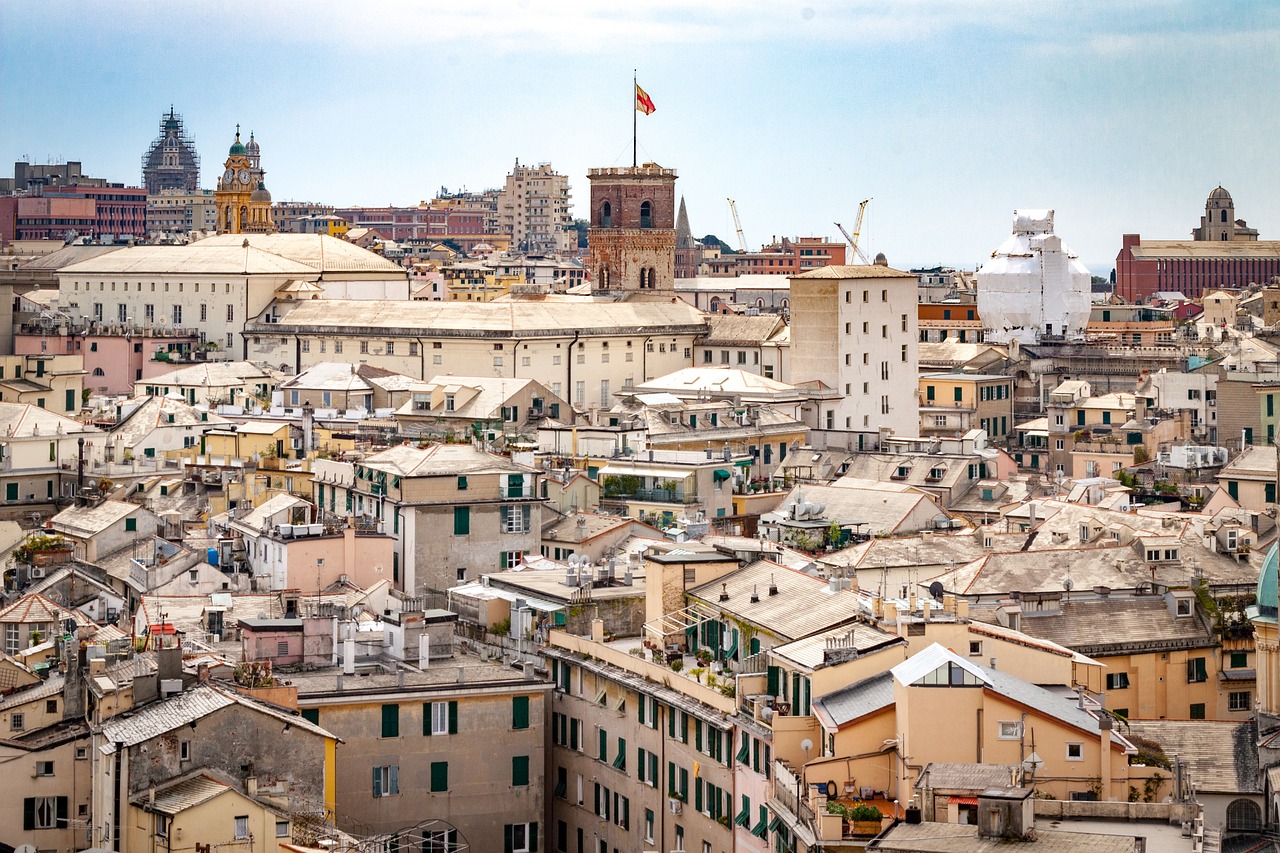
Genoa: Palaces, Port and a Maze of Lanes
Genoa is the capital of Liguria, on the north-western coast of Italy, and one of the great ports of the Mediterranean, a city of marble palaces and steep alleys that rise from the harbour into the hills. For centuries it was the centre of a maritime republic, and the wealth of its merchant families is still visible in the Strade Nuove and the Palazzi dei Rolli, a group of Renaissance and Baroque palaces inscribed by UNESCO in 2006. Genoa is also the birthplace of Christopher Columbus, and the city's seafaring spirit runs through its streets.
The historic centre is among the largest medieval quarters in Europe, a labyrinth of caruggi, narrow lanes where light barely reaches the ground, opening suddenly into small squares and the striped black-and-white facade of the Cathedral of San Lorenzo. Via Garibaldi lines up the grandest palaces, several of them now museums. Above the harbour, the Lanterna, the city's historic lighthouse, remains a symbol of Genoa, while the funicular to Righi gives views over the whole sweep of the port.
Old Port, Pesto and Focaccia
The Porto Antico, the old port, was transformed by architect Renzo Piano and is now the city's lively waterfront, home to the Aquarium of Genoa, one of Europe's largest, and the Galata Museo del Mare, which tells the story of Mediterranean seafaring. The Genoa International Boat Show brings the sailing world to the harbour each autumn. Just east of the centre, the fishing hamlet of Boccadasse, with its pastel houses and small pebble beach, offers a quiet escape and a gelato by the sea.
Genoese food is world-famous. Pesto genovese, made with basil, pine nuts, olive oil, garlic and cheese, is traditionally served with trofie pasta. Focaccia, soft, salty and glistening with olive oil, is eaten at breakfast, and farinata, a thin chickpea pancake baked in a wood oven, is a classic street snack. Pandolce is the traditional sweet cake. A hotel group could build its Genoa story around these tastes, with stays in restored palaces and views across the working harbour.
When to Go and Gateway to the Riviera
Spring and autumn are the most comfortable seasons for exploring Genoa on foot, while summer is the time to use the city as a base for the coast. It is the natural gateway to the wider Liguria region: Portofino is a short train and bus or boat trip to the east, Cinque Terre is reached by rail along the coast, and San Remo lies to the west along the Riviera di Ponente. Inland, Turin and Milan are both within a couple of hours by train.
Genoa's Cristoforo Colombo airport receives flights from the UK, with other gateways at Pisa, Milan and Turin. The port also welcomes cruise ships and ferries to Sardinia and Sicily. A name such as VisitGenoa.co.uk gives airlines and tourist boards a strong home for Genoa's story, and the guide to Italy shows how the city connects the north's cities with the Mediterranean.
Where to Stay in Genoa's Palace Quarters
Genoa offers a stay inside its own history. The Centro Storico, around the Cathedral and Via Garibaldi, places guests among medieval lanes and palaces, with boutique hotels set in converted Rolli buildings that suit couples and culture seekers. The Porto Antico district, by the Aquarium and the old port, is the choice for families and those who like waterfront walks, and nearby Piazza De Ferrari and Via XX Settembre bring grand hotels, shopping and theatre. The hillside quarters of Castelletto and Righi offer quiet, elegant stays with sweeping harbour views, reached by lift and funicular, a distinctive Genoese way of arriving.
Along the coast, Boccadasse, Nervi and Quinto form a leafy seaside strip. Nervi, with its Liberty-era villas, parks and a clifftop promenade, is a favourite for wellness and garden lovers, and Boccadasse's pastel fishing hamlet suits those wanting a village atmosphere with the city nearby. Business travellers favour the Brignole and Principe stations, which also give excellent rail connections along the coast. Groups can find villas on the nearby hills, and cruise passengers can add a pre- or post-sailing stay. The hotel group opportunity is a historic port city with sea views, while a day in Portofino adds Riviera polish.
Pesto, Palaces and the Genoese Year
Genoa's festivals draw on its seafaring past. The Euroflora garden show, held in the parks of Nervi in some years, fills the city with blooms, and in autumn the Genoa International Boat Show brings the world's sailors to the harbour. The Rolli Days open the palaces to the public several times a year, a tradition that lets visitors step into the old merchant mansions. In June, the Regata of the Historical Maritime Republics, rotating between Genoa, Venice, Pisa and Amalfi, adds pageantry, and Christmas has a lovely nativity-scene tradition. Summer evenings are spent on terraces, with the port lit up beneath the hills.
The city's food reaches beyond pesto and focaccia. Pansoti, pasta stuffed with herbs and served with walnut sauce, torta pasqualina, an Easter pie of chard and eggs, and stuffed vegetables are Genoese classics, with farinata and fried seafood from the old frying shops. The Mercato Orientale and the historic bakeries are good places to taste. Music lovers can follow Niccolo Paganini's legacy, as his violin, Il Cannone, is kept in the city's town hall. The Via Garibaldi museums and the Palazzo Reale hold art by Van Dyck and Rubens. Pair Genoa with Turin and Milan for a northern city circuit.
Sailing, Walking and Riviera Day Trips
Genoa is made for the water. Boat tours leave the old port for the coast, sailing schools run from the marinas, and whale-watching trips in the Ligurian Sea are a highlight in summer. Walkers can climb to the city's forts on the hills, following the old walls above the harbour, or take the Righi funicular for easy trails. Cyclists enjoy the seafront path at Nervi and the coastal routes beyond. Families can spend a day at the Aquarium and the Galata Museo del Mare, and wellness seekers can use the spa hotels along the coast. Football fans can visit the historic Luigi Ferraris stadium.
Day trips are Genoa's greatest gift. Trains and ferries reach Camogli, San Fruttuoso, Santa Margherita and Portofino within an hour, while Cinque Terre and Portovenere sit further along the coast. To the west, the Riviera di Ponente leads to San Remo and its flower coast. Inland, the Apennine valleys have walking trails and medieval villages, and the Oltregiogo vineyards sit behind the city. A stay can be built as a hub, with different days along the sea, and Liguria offers the whole region as a themed route. Airlines can feature it through the airline page.
Planning your stay
Genoa is the capital of Liguria and Italy's largest port, and it feels like a working city more than a resort. The old town is a maze of narrow lanes known as caruggi, the Palazzi dei Rolli, together with the Strade Nuove, were inscribed by UNESCO in 2006, and the old port has the aquarium. The Rolli were a list drawn up by the Genoese Senate in 1576 of grand private palaces allocated to host state visitors. Focaccia and pesto are the local specialities to try.
Genoa works as a one or two night stop between Milan and the coast, or as a base for the Riviera by train. Turin lies inland to the north west, while Cinque Terre and Portofino are both within day-trip range by regional train or boat.
Getting there
Genoa has its own airport, Cristoforo Colombo, but many UK visitors fly to Milan and take a train south, which is usually under two hours on the faster services. Check current direct routes from your UK airport before you book, because seasonal schedules change. Genoa also has long-distance and regional trains along the whole Ligurian coast.
Ferries leave the port for Sardinia, Sicily and other Mediterranean destinations, and large cruise ships call regularly, so the waterfront can be very busy on cruise days.
When to go
Spring and autumn are the most comfortable months for walking the old town and the coast, with mild temperatures and fewer crowds. Summer is hot and humid in a city squeezed between hills and sea, and many Genoese head to the beaches along the Riviera. Winter is quiet but cool and often damp.
Check the forecast, follow local authority advice and carry a light waterproof for the autumn and winter months.
Entry rules and health
Genoa sits inside the Schengen area, so a UK passport needs to be under 10 years old on the day you arrive and still have three months left after the day you plan to go. A stay of up to 90 days in any 180 needs no visa. At your first Schengen entry the Entry/Exit System may register your fingerprints and photo, which can lengthen queues at Genoa airport or wherever you land.
Dial 118 for an ambulance. Our Italy guide has the full national picture.
Before you travel
Entry requirements and official travel guidance are updated regularly, so check the latest position with your government before booking. The sources we used are listed at the foot of this page.
What Genoa means for the industry
Genoa is under-sold against its neighbours, and travellers often search for the city only after choosing the coast. VisitGenoa.co.uk gives a tourist board or a hotel group a place to answer the practical questions first: how to arrive, where to stay and what the rules are.
Airlines can explain the routes through Milan and the coast, and our AI platform carries those answers to assistants. See other destination guides for comparison.
Questions travellers ask about Genoa
Is Genoa worth visiting?
Yes, for a city stop. It has a large medieval old town, UNESCO-listed palaces, an aquarium and strong local food, and it is a practical base for the Ligurian coast by train.
How do you get from Milan to Genoa?
By train. The faster services take under two hours, and regional trains also run along the coast to the Cinque Terre. In Genoa, check timetables on the day, because strikes are often called at short notice.
Do I need a visa for Genoa?
No. Genoa is inside the Schengen area, so UK visitors can stay up to 90 days in any 180-day period, counting days spent in other Schengen countries. For Genoa, check before you fly into Genoa Cristoforo Colombo that your passport is less than 10 years old and valid for at least three months after you plan to leave.
What is Genoa best known for?
Genoa is best known for its maritime history and large port, the UNESCO-listed Palazzi dei Rolli, its medieval lanes, the Lanterna lighthouse and the birthplace of Christopher Columbus. It is also the home of pesto genovese and focaccia.
Is Genoa a good base for the Italian Riviera?
Yes. Genoa has frequent trains along the coast, reaching the Cinque Terre in roughly an hour or so, with Portofino close by on the Riviera di Levante and San Remo to the west on the Riviera di Ponente.
Where should I stay in Genoa?
The Centro Storico and Via Garibaldi put guests among historic palaces, the Porto Antico suits families near the Aquarium, and the hillside quarters of Castelletto and Righi offer quiet harbour views. Nervi and Boccadasse give a seaside feel with villas and gardens.
What food should I try in Genoa?
Try pesto genovese with trofie, focaccia, farinata, pansoti with walnut sauce, torta pasqualina and fried seafood. The Mercato Orientale and old bakeries are ideal places to taste, and pandolce is the traditional sweet.
In the Visit Travel Group portfolio: VisitGenoa.co.uk.