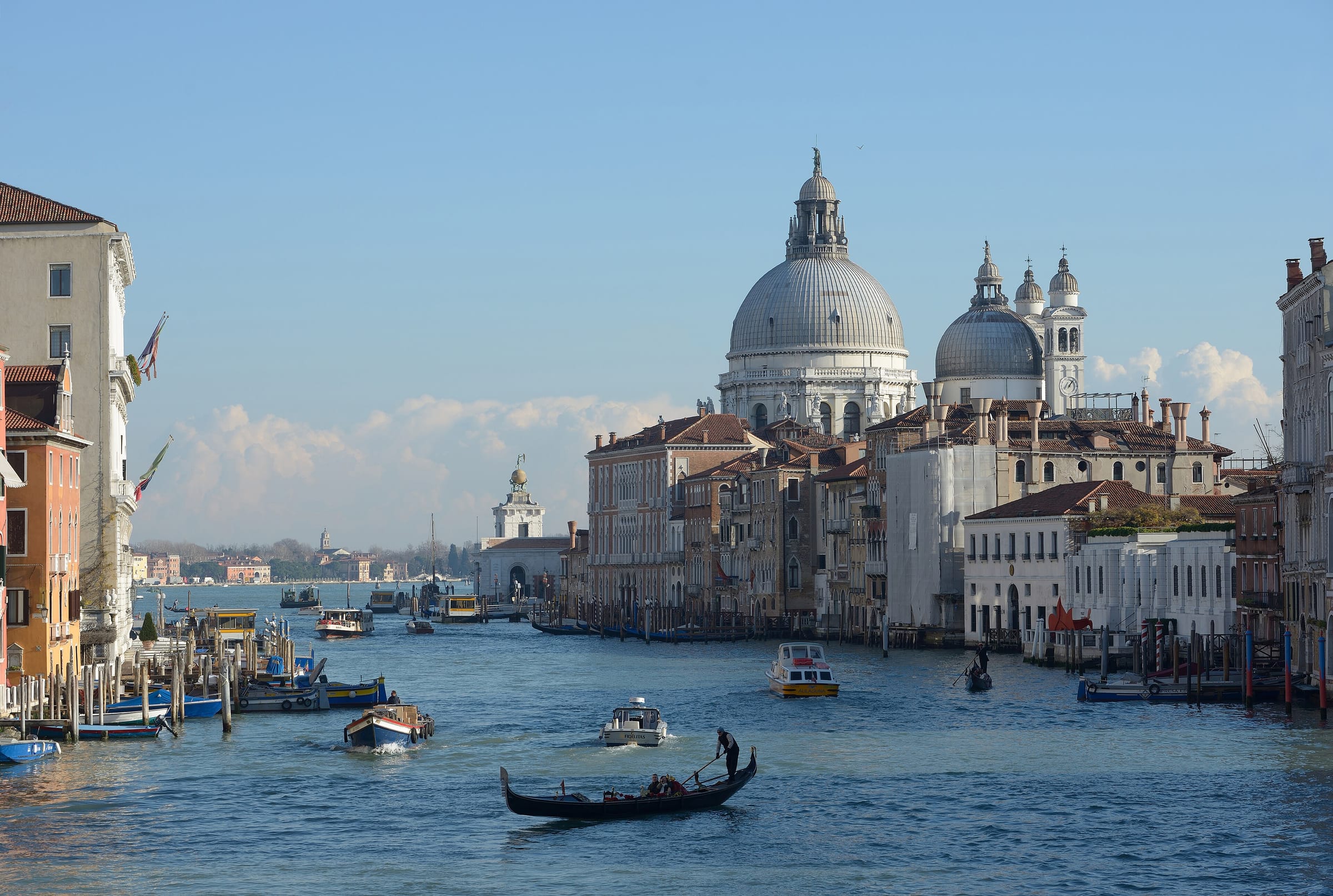
From Venice's Lagoon to the Dolomite Peaks
Veneto is a region of north-eastern Italy, with Venice as its capital, stretching from the Adriatic coast and the Venetian lagoon across fertile plains to the Dolomites. About 4.9 million people live here, and the region packs unusual variety into a small area: canals and palaces, walled cities, hillside vineyards, sandy beaches and Alpine summits. It also holds several UNESCO World Heritage Sites, including Venice and its lagoon, the city of Verona, the city of Vicenza with its Palladian villas, the botanical garden of Padua and the Dolomites.
Cities tell the story. Venice needs little introduction, its canals, basilica and islands making it among the most distinctive cities on earth. Verona offers a Roman arena and opera, Padua the Scrovegni Chapel with Giotto's celebrated frescoes, and Vicenza the elegant buildings of Andrea Palladio, whose villas are scattered across the countryside. Treviso, the home of radicchio and, by tradition, tiramisu, has canal-side streets that are quiet and lovely. Together they make Veneto a region built for slow, culturally rich itineraries.
Prosecco Hills, Lagoon Islands and Adriatic Sands
Landscape is the second pillar. The Prosecco hills around Conegliano and Valdobbiadene, inscribed by UNESCO in 2019, are a patchwork of steep, hand-tended vineyard ridges that are ideal for walking and tasting. To the north rise the Dolomites, where Cortina d'Ampezzo combines mountain scenery with winter sports and summer hiking. In the south-east, the Euganean Hills hold thermal spa towns such as Abano Terme, while along the coast, resorts such as Jesolo, Caorle and Bibione offer long, sandy beaches.
The lagoon islands add another dimension. Murano is known for glass, Burano for colour-washed houses and lace, and Torcello for its ancient cathedral, and the Venice Lido gives the city its own beach. Veneto's cuisine blends lagoon and plain: sarde in saor, baccalà mantecato and cicchetti in Venice, risotto and polenta inland, and the sweet tiramisu to finish. A booking platform could present Veneto as a set of distinct journeys, each tied to its own landscape.
Seasons, Routes and How to Connect
Spring and early autumn are the most comfortable seasons for city exploring, while summer suits the beaches and the Dolomites, and winter belongs to the ski resorts. Carnival in Venice, the Biennale and the opera season in Verona give the calendar its landmarks. Within the region, trains link Venice, Padua, Vicenza and Verona efficiently, and Lake Garda lies on Veneto's western edge. Beyond it, Milan and Lombardy are a straightforward rail journey.
Venice Marco Polo, Verona and Treviso airports all receive flights from the UK, and the region is crossed by Italy's main east-west railway. For travellers planning a wider route, the guide to Italy shows how Veneto links with the lakes, Emilia and Tuscany. A name such as VisitVeneto.co.uk gives airlines, hotels and boards a joined-up place to present it.
Where to Stay Across the Veneto
The Veneto offers a stay for every temperament. Venice itself brings palazzo hotels on the Grand Canal and tiny boutique addresses in quiet squares, while the Lido provides a seaside alternative. Verona suits romantics and opera lovers, Padua and Vicenza offer culture-rich bases with fewer crowds, and Treviso is a gentle canal town on the edge of the Prosecco hills. Golfers and spa guests can look to the Euganean Hills and Abano Terme, where thermal hotels combine wellness with countryside, and the shore resorts of Jesolo, Caorle and Bibione are well suited to family beach holidays.
In the countryside, Palladian villas and wine estates open their doors as guesthouses and retreats, particularly around the Brenta Riviera, Asolo and the Prosecco hills. Lakeside choices appear around the eastern shore of Lake Garda, and mountain lodges and chalets in the Dolomites, near Cortina and the Cadore valleys, suit hikers and skiers. Groups can take whole villas, and luxury travellers will find historic palaces with private gardens. A booking platform could organise the region by traveller type, and Verona and the Venice Lido show how different two Venetian bases can feel.
Carnival Masks, Glass and the Venetian Table
The Veneto's culture is visible in its crafts and festivals. Venice's Carnival, with masks and costumes in the weeks before Lent, is a global spectacle, and the Biennale, held in alternating art and architecture years, transforms the Giardini and the Arsenale. Murano glass, Burano lace and Bassano's ceramics are living crafts, and the Teatro La Fenice is among Italy's great opera houses. In July, the Redentore festival lights the lagoon with fireworks and a bridge of boats, and in September, Venice's Regata Storica sends historic craft along the Grand Canal. Spring brings gardens, while winter has Christmas markets in Verona and Padua.
Cuisine mixes sea, plain and mountain. Cicchetti, small snacks eaten at the bar, risotto al nero di seppia, polenta with baccalà, radicchio from Treviso and Treviso's tiramisu are classics, while asparagus from Bassano is a spring treat. Fritole, fried doughnuts, are a Carnival sweet. Coffee houses such as the historic cafes of St Mark's Square are institutions, and the Prosecco Superiore hills offer food and wine heritage trails. Rice, beans and chestnuts appear in hill-town kitchens, and the Dolomites bring alpine cheeses and speck. A stay across Lake Garda and the lagoon shows the full range.
Dolomites, Villas and Lagoon Day Trips
Active travellers will find plenty to do. In the Dolomites, hiking routes and the high-altitude trails around Cortina d'Ampezzo are among Europe's most scenic, while winter brings downhill and cross-country skiing. Cyclists enjoy the Prosecco hills and the flat routes of the lagoon, with greenways beside the Sile and Brenta. Sailors can charter in the lagoon, kayak between islands or join a rowing lesson with a gondolier. Wellness travellers can book thermal spas in the Euganean Hills, golfers have courses near Venice and Asolo, and history lovers can follow Palladian villa trails by car from Vicenza to the Brenta Riviera.
Day trips are effortless. From Venice, boats reach Murano, Burano and Torcello, while Padua's Scrovegni Chapel is a short train ride away. Treviso, Asolo, Bassano and the walled towns of Cittadella and Montagnana make a rewarding countryside circuit, and Cortina d'Ampezzo is a scenic mountain finale. A hotel can build a week from lagoon, villas and peaks, and Milan and Lake Como extend the route west. For additional ideas, the destination guides show how the Veneto joins up with the rest of Italy.
Planning your stay
Veneto stretches from the Adriatic to the Dolomites. Venice is the best known, and Venice Lido adds beaches and a quieter island base. Verona has the Arena and a lively old centre, and Padua, Vicenza and Treviso add frescoes, Palladian villas and canal-side lanes. The Prosecco hills are a wine-country day trip, and most cities are connected by frequent regional trains, so a multi-stop itinerary needs little driving.
The east shore of Lake Garda lies in the region, and the Dolomites around Cortina d'Ampezzo bring skiing and hiking. The wider country is covered in our Italy guide, and travellers heading to Milan can continue by fast train from Verona.
When to go
April to June and September to October suit city and lake stays. July and August are hot and Venice is crowded, while winter is cool, misty and quieter. The mountains have a ski season in winter and a walking season in summer, so match the part of the region to the month.
Across Veneto, the Foreign, Commonwealth and Development Office says high waters are a common occurrence in Venice and can cause flooding in parts of the city, and that heavy rainfall is common across Italy in winter. Check forecasts and follow local advice if you are visiting between autumn and spring.
Getting around
Venice Marco Polo, Treviso and Verona airports serve the region, with flights from London taking about two hours. Trains link Venice, Padua, Vicenza and Verona, and buses and ferries cover the lagoon and the lake. A car is useful for the hills and the mountains, but not for Venice itself.
Before you travel
Entry requirements and official travel guidance are updated regularly, so check the latest position with your government before booking. The sources we used are listed at the foot of this page.
Why Veneto matters to the industry
Veneto draws city, lake and mountain demand in one region, and partners need accurate, current information on each. VisitVeneto.co.uk lets a tourist board, hotel group or airline publish guidance on the access fee, high water and rail, and our AI platform carries that to assistants.
Browse our other destination guides, or read the OTA page on how booking platforms can handle access fees and event periods.
Questions travellers ask about Veneto
Which airport should I use for Veneto?
Venice Marco Polo suits Venice and the lagoon, Verona suits the city and Lake Garda, and Treviso is used by some low-cost airlines. All are around two hours from London.
What is Veneto best known for?
Veneto is best known for Venice and its lagoon, Verona's Roman arena, Palladian villas around Vicenza, the Prosecco hills and the Dolomites. It also offers Adriatic beaches, thermal springs at Abano and a rich Venetian cuisine.
Which cities should I visit in Veneto?
Venice, Verona, Padua, Vicenza and Treviso form the classic city circuit, all linked by train. Add the Prosecco hills for vineyards, the lagoon islands for glass and lace, and Lake Garda or the Dolomites for scenery.
Where should I stay in the Veneto besides Venice?
Verona suits romantics and opera lovers, Padua and Vicenza are culture-rich bases, Treviso is a gentle canal town beside the Prosecco hills, and the Lido and Adriatic resorts offer beach stays. The Euganean Hills are ideal for thermal spa retreats.
What are the best day trips in the Veneto?
From Venice, visit Murano, Burano and Torcello by boat. Padua's Scrovegni Chapel, Vicenza's Palladian buildings, Treviso and Asolo are easy by train or car, and the Prosecco hills and Dolomites make scenic excursions.
In the Visit Travel Group portfolio: VisitVeneto.co.uk.