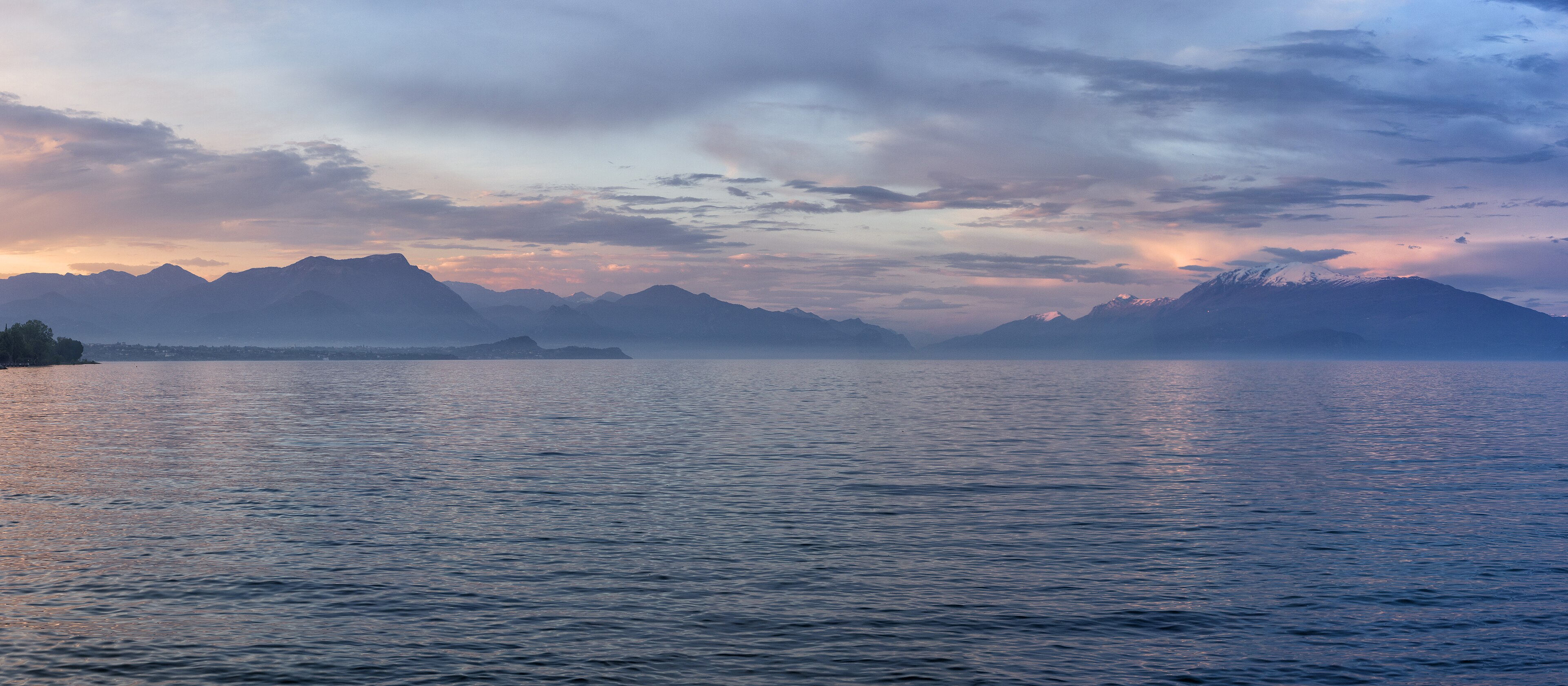
Italy's Largest Lake, Where Alps Meet Olive Groves
Lake Garda is the largest lake in Italy, about 50 kilometres long, set between Lombardy, Veneto and Trentino in the north of the country. Its character changes along its length: at the northern end steep Alpine walls drop into deep blue water, while the southern shores soften into rolling vineyards, olive groves and wide, sunlit bays. The lake's mild microclimate allows lemons, olives and even palms to flourish this far north, which gives its villages a Mediterranean look beneath the mountains and explains why visitors have favoured it since Roman times.
The towns are as varied as the shoreline. Sirmione, on a narrow peninsula at the southern end, is crowned by the medieval Scaligero Castle and edged by the Roman ruins known as the Grotte di Catullo. Malcesine on the eastern shore climbs towards another Scaliger castle, with a cable car rising to the heights of Monte Baldo. Limone sul Garda is known for its terraced lemon houses, Salò for its elegant lakefront, and Gardone Riviera for the Hruska Botanical Garden and the Vittoriale gardens above the water.
Sailing Winds, Olive Oil and Lugana Wines
Garda is among Europe's favourite places for sailing and windsurfing, thanks to reliable daily winds that the locals know by name. Torbole and Riva del Garda at the northern tip are the centre of the action, with schools, regattas and long, bright days on the water. On land, cycling and hiking routes thread through olive terraces and up into the hills, and the ferry network links the main villages. Gardaland, near Castelnuovo del Garda, makes the lake a convenient choice for family holidays too.
The table follows the landscape. Garda olive oil, delicately fruity, is pressed along the shores, and the vineyards around Bardolino and Lugana produce light red, rosé and white wines that suit lakeside lunches of freshwater fish, risotto and tortellini. Towns such as Peschiera and Desenzano offer waterfront cafes and lively markets. A tourist board on the lake could present Garda as three destinations in one: the sporting north, the historic south and the garden-lined western shore, each reaching a different audience.
Seasons, Routes and Neighbouring Cities
The main season runs from April to October, with spring for gardens and cycling, summer for beaches and sailing, and early autumn for harvest and quiet, golden evenings. The lake sits close to Verona, whose Roman arena and Juliet's balcony make an easy day trip, and within reach of Milan by train, while Lake Como offers a natural second lake on a longer northern Italian journey. Many visitors combine the lake with the Dolomites and the wider Veneto region.
Flights from the UK serve Verona, Bergamo, Milan and Venice, all within roughly one to two hours' drive of the lake, and Verona's airport is especially close to the southern shore. Trains stop at Desenzano and Peschiera, with ferries and buses continuing around the water. A name like VisitLakeGarda.co.uk gives airlines and hotels a single home for this story, and the guide to Italy shows how Garda links with the rest of the north.
Where to Stay Around Lake Garda
Garda is large enough to offer several holidays in one. The southern shore, around Sirmione, Desenzano and Peschiera, suits families and first-time visitors, with thermal spa hotels, sandy and pebble beaches, easy rail links and theme parks within reach. The eastern shore, from Bardolino to Malcesine, brings vineyards, lakeside promenades and a quieter Veneto charm, ideal for couples and cyclists. The western Riviera, with Salò, Gardone and Limone, is the elegant side, with Liberty-style villas and grand hotels. At the northern end, Riva del Garda and Torbole are the base for sailors, windsurfers, climbers and mountain bikers who want the Alps on the doorstep.
Styles of stay are equally varied. Historic lakeside hotels with gardens, spa retreats built around the thermal waters at Sirmione, farm stays among olive groves and vineyards, and campsites and apartments for budget-conscious families are all part of the picture. Large villas sleep groups of friends and extended family, often with pools and lake views. Luxury travellers can choose among five-star addresses with private jetties and elegant dining terraces. A week split between two shores gives the best sense of the lake's range, and the hotel group opportunity is a lake with a distinct personality on each side, all within an hour's drive of Verona.
Olive Oil, Opera Nights and Lakeside Festivals
Garda's table is rooted in lake and hill. Freshwater fish such as lavarello and trout are served grilled or in risotto, and tortellini from Valeggio sul Mincio, folded into delicate knots, are a regional pride. Olive oil from the western shore, among the northernmost in the world, has a gentle, almond-like flavour and is protected by its designation. Lemon-scented sweets, polenta, cheeses from Monte Baldo and cured meats appear on every menu, and cafes serve coffee beside the water from early morning. Local ceramic and olive-wood crafts make good souvenirs, and weekly markets in Desenzano, Bardolino and Salò are well worth an hour.
The season brings an energetic calendar. April and May bring flowering gardens and cycling events, while summer features concerts, fireworks over Sirmione and regattas such as the Centomiglia, one of Europe's great sailing races, held each September. Opera nights in nearby Verona's Arena draw many guests, and autumn is harvest time in the vineyards of Bardolino and Lugana, with food festivals in the hill villages. Winter is quiet, with Christmas markets at Arco and the northern towns. Those wishing to see Italy's other great lake can compare it with Lake Como, and the wider Veneto region holds more cultural stops.
Sailing, Cycling and Dolomite Day Trips
Lake Garda is made for activity. Windsurfers and kitesurfers head for Torbole and Malcesine, where the morning Peler and afternoon Ora winds are famously dependable, while sailing schools offer lessons for beginners and regattas for experts. Climbers scale the limestone near Arco, hikers take the cable car to Monte Baldo's ridge, and cyclists choose between gentle lakeside circuits, the Garda cycle route and mountain-bike descents above Riva. Families can enjoy Gardaland, the Parco Giardino Sigurtà and the Sigurtà tulip season, and gentler pleasures include paddle boards, boat trips and slow ferry days between the main towns, each with a gelato at the quayside.
Day trips multiply the choices. Verona, with its arena and balcony, is a short drive, and Mantua's Renaissance palaces and lakes lie south. The Valpolicella wine hills, the Dolomite foothills near Trento and the Venetian city of Vicenza all fit into a day or an overnight. A stay can be built around a theme: sport, gardens, gastronomy or art. Booking partners can use the booking platform page to present those themes, and Milan is an easy city extension at either end of the trip. For those continuing to the lagoon, the Venice Lido provides a beach finale.
Planning your stay
Lake Garda is the largest lake in Italy, and its shores belong to Lombardy, Veneto and Trentino. The southern shore has Sirmione, a medieval peninsula town, and the family resorts near Peschiera. The eastern shore in Veneto has Bardolino and Malcesine, while the northern end at Riva del Garda and Torbole suits walkers, climbers and windsurfers.
Verona is the nearest city, and Milan and Lake Como are within a day's reach. Many visitors combine the lake with Venice Lido or the Venetian cities, so it helps to choose a base that matches your plans rather than trying to see the whole shoreline.
When to go
Each shore has a different character. Sirmione and the south suit families and short stays, Malcesine and the east suit walkers and cable car trips, and the north suits sport. Decide what you want from the holiday first, because a drive from one end of the lake to the other can take well over an hour in summer traffic.
April to October is the main season. May, June and September are warm and quieter, while July and August are busy, especially at weekends. The water is swimmable from late spring, and the northern end has reliable winds that attract windsurfers and sailors. Many hotels and attractions close in winter.
Check forecasts before boat trips and mountain walks.
Getting there and around
Verona airport is the closest, with flights from the UK taking about two hours, and Bergamo, Brescia and Milan airports are options for other shores. Trains stop at Peschiera and Desenzano, and ferries and hydrofoils link the main towns, which is a relaxed way to move around the lake.
Roads around the shore are busy in summer, and parking is limited.
Before you travel
Entry requirements and official travel guidance are updated regularly, so check the latest position with your government before booking. The sources we used are listed at the foot of this page.
Why Lake Garda matters to the industry
Lake Garda is a major UK summer holiday market, and each shore competes for a different traveller. VisitLakeGarda.co.uk lets a tourist board, hotel group or airline publish clear answers on airports, ferries and which shore suits which traveller, and our AI platform carries them to assistants.
Browse our other destination guides, or read the OTA page on how booking platforms can describe each shore accurately.
Questions travellers ask about Lake Garda
Which airport is best for Lake Garda?
Verona is the closest, with flights from the UK taking about two hours. Bergamo, Brescia and Milan are alternatives, depending on which shore you are staying on.
When is the best time to visit Lake Garda?
May, June and September are warm and quieter. July and August are busy, and many hotels close in winter.
What is Lake Garda best known for?
Lake Garda is best known as Italy's largest lake, with Sirmione's castle and Roman ruins, Malcesine's cable car to Monte Baldo, lemon and olive groves, excellent windsurfing and sailing, and the nearby wines of Bardolino and Lugana.
Which airport is best for Lake Garda?
Verona is the closest airport to the southern shore, while Bergamo, Milan and Venice are also practical gateways. Each is roughly one to two hours' drive from the main lakeside towns, and trains serve Desenzano and Peschiera.
Which side of Lake Garda is best to stay on?
The south, around Sirmione and Desenzano, suits families and first-timers. The east, near Bardolino and Malcesine, is good for couples and cyclists, the west has elegant villas at Salò and Gardone, and the north around Riva and Torbole suits sailors and outdoor lovers.
What are the best day trips from Lake Garda?
Verona is the classic choice, with its Roman arena and old town. Mantua, the Valpolicella wine hills, the Monte Baldo cable car and the Dolomite foothills near Trento also make rewarding days, and Milan and Venice are reachable by train.
In the Visit Travel Group portfolio: VisitLakeGarda.co.uk.