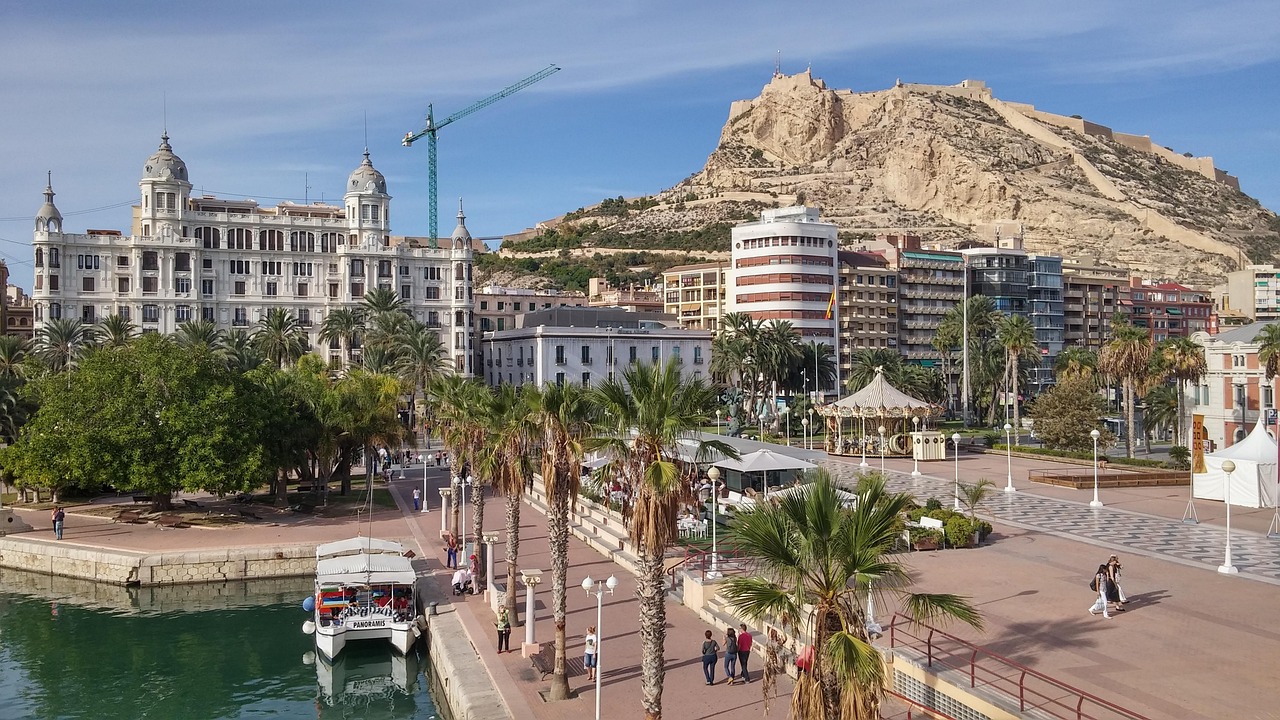
A Castle, a Promenade and the Costa Blanca
Alicante is a port city on Spain's Costa Blanca, in the Valencian Community, known for its sunny climate, hilltop Santa Bárbara Castle, palm-lined seafront and lively old quarter. The castle crowns Mount Benacantil, a rocky outcrop above the bay, and can be reached by a lift cut into the rock or by a winding path that gives views across the whole coast. At the bottom, the Explanada de España, a wave-patterned mosaic promenade shaded by palms, is the city's favourite place for an evening paseo.
The old quarter, Barrio de Santa Cruz, climbs the hillside in whitewashed lanes hung with flowers, while the Central Market, a modernist hall, fills with seafood, cured ham and local produce. Alicante's beaches, including Postiguet in the heart of the city and San Juan to the north, make it a rare place where a city break and a beach day are on the same tram line. For Spain visitors seeking a compact, sunny base, it offers everything within walking distance.
Rice, Turrón and Midsummer Fire
Food here follows the sea and the huerta. Arroz a banda, rice cooked in fish stock, and caldero are the classic dishes, tapas bars around the old town serve fresh prawns and anchovies, and the nearby town of Jijona produces turrón, the nougat that Alicante has made its own. The Hogueras de San Juan, held in late June, are among the city's great festivals, with huge sculpted figures built in the streets and then burned in a night of fire, fireworks and music.
Day trips widen the offer. The island of Tabarca, a short boat ride from the port, is a protected marine reserve with a walled village and clear coves, while Elche's palm grove, inscribed by UNESCO in 2000, lies a short journey inland. Along the coast, the old towns of Altea and Dénia and the dramatic rock of Peñón de Ifach at Calpe are easily reached. A tourist board could weave these into a single regional story, and the nearby resort of Benidorm adds a very different side of the Costa Blanca.
Year-Round Sun and Easy Access
Alicante enjoys a long sunny season, with a beach summer that runs from late spring to autumn and mild, bright winters that suit walking, golf and city exploring. Alicante-Elche airport has frequent flights from across the UK, taking a little over two hours, and trains and motorways connect the city to Valencia and Murcia. Its size makes it easy: the castle, old town, market, beach and marina all sit within a short walk of each other, which gives hotels an attractive story to tell.
Visitors comparing Spanish sun-and-city options will also look at Malaga in Andalusia and Palma on Mallorca, while Ibiza and the wider Mediterranean lie within easy reach by air or ferry. A name like Alicante.co.uk gives airlines and hotels a single home for Alicante's mix of heritage, beaches and food, ready for a short break or a longer stay.
Old Town Charm and Beach-Side Stays
Alicante's compact size means every stay is close to the action. The Barrio de Santa Cruz and the old town suit couples and culture seekers, with small boutique hotels in restored townhouses and balconies overlooking whitewashed lanes. Along Postiguet Beach and the Explanada, sea-view hotels give families and groups easy access to sand and promenade, while the marina and port area adds harbourside rooms close to restaurants and the ferry terminal. San Juan, a few miles north, is a long family beach with apartments and golf-friendly resorts, and Albufereta is a quieter seaside enclave with cove-like beaches.
Beyond the city, the Costa Blanca spreads out in a chain of distinctive bases. Santa Pola has a working harbour and long beaches, Tabarca has a handful of small guesthouses on its island, and Altea, Dénia and Jávea suit couples who like whitewashed villages, art galleries and sea views. Golfers choose resorts in the Vega Baja area and near Villamartín, while villas with private pools in the hills behind the coast suit larger groups. Many visitors stay in the city and use the tram and train for day trips, and an AI platform could help match each guest to the area that suits their holiday.
Tapas Streets, Turrón and Festival Colour
Alicante's food culture is social and sunny. Tapas bars around the Plaza Gabriel Miró and the old town serve prawns, salted fish, croquettes and local rice dishes, while the Mercado Central is the place for fresh seafood, olives and almonds. Arroz con costra, a baked rice dish from nearby Elche, and gazpacho alicantino are regional favourites, and Jijona's turrón is sold in both hard and soft versions, with artisan ice creams made from it. Horchata and coffee are served in the plazas, and cafés on the Explanada are a favourite place for an afternoon pause.
The festival year is full of colour. Carnival and Holy Week mark the late winter and spring, the Hogueras de San Juan dominate late June, and in autumn the city hosts concerts and fairs. Inland, Alcoy's Moors and Christians festival in April is among the most spectacular in Spain, with costumed parades and mock battles. The MARQ archaeological museum is one of Spain's best, and the MACA gallery shows modern art in a historic building. For island lovers, Ibiza and the Balearic Islands are only a short crossing or flight away.
Peñón de Ifach, Tabarca and Wider Costa Blanca Days
Active guests can use Alicante as a base for hiking, diving and cycling. The Serra Gelada, Sierra de Bernia and the rock of Peñón de Ifach at Calpe offer coastal and mountain trails, while divers reach Tabarca's marine reserve by boat from the port. Kayaks leave from the coves of Cabo de la Huerta, cyclists enjoy the coastal roads and the winter training weather, and golfers find courses within an hour. The salt lakes of Santa Pola attract flamingos and other wading birds, and the beaches of La Albufereta suit paddleboarding and snorkelling in summer.
Day trips reach far. Elche's palm grove, the castle village of Guadalest, the old town of Altea and the Roman remains of Dénia are all within easy reach, and Valencia can be reached by train or car in a little over an hour and a half. Ferries run from Dénia to the Balearics, linking neatly with Mallorca. Travellers who like a mainland city with sea views often compare it to Marbella and the wider Andalusia coast, but Alicante's walkable scale and Valencian character set it apart, and the Spain guide shows how to extend the journey.
Planning your stay
Alicante has a historic old town, the Santa Bárbara castle above the harbour and a palm-lined seafront promenade. The city beaches are within easy reach, and boats run from the harbour to the island of Tabarca. The city has a lively food scene based on rice dishes and seafood.
Alicante-Elche airport, which Wikipedia places about nine kilometres south-west of the city, serves much of the Costa Blanca, so many visitors pass through on the way to resorts such as Benidorm and to villa and golf stays elsewhere on the coast. The wider Spain guide explains the national entry rules.
When to go
Alicante is known for sunny weather and mild winters, which makes it popular with long-stay visitors and golfers. Spring and autumn are comfortable for sightseeing, and June and September are warm without the crowds of high summer. July and August are hot, and the beaches are very busy.
If you climb to the castle, go early, take water and wear shoes with a good grip.
Getting there and entry rules
British Airways gives the London to Alicante flight as 2 hours 30 minutes. Spain follows Schengen rules: at Alicante-Elche, your passport must be under 10 years old on the day you arrive and valid for three months after you plan to leave, and you can stay up to 90 days in any 180. Staying longer than that can lead to a ban of up to three years.
The Entry/Exit System may require fingerprints and a photo on your first visit, at no cost, and it can add time at the airport. Keep a copy of your passport photo page somewhere safe.
Before you travel
Entry requirements and official travel guidance are updated regularly, so check the latest position with your government before booking. The sources we used are listed at the foot of this page.
Why Alicante matters to the industry
Wikipedia calls Alicante-Elche the busiest airport in south-eastern Spain, and the coast it serves has hotels, villas and golf resorts competing for the same visitors. Alicante.co.uk lets an airline, hotel group or tourist board publish clear information on transfers, seasons and rules, and our destination guides show the approach.
For island and northern alternatives, see the Balearic Islands and Catalonia.
A practical point for planners: arrival-day questions about transfers, taxi fares, luggage allowances and hire car collection are asked in the weeks before travel, and many guests arrive late in the evening. Answering them on one trusted page helps reservations teams at hotels and villa operators, and gives airlines a clear way to explain the journey beyond the terminal.
Questions travellers ask about Alicante
How do I get from Alicante airport to Benidorm?
Benidorm is a road transfer up the Costa Blanca. Buses, taxis and pre-booked transfers are available, so ask your provider for the current journey time.
How long is the flight from London to Alicante?
British Airways lists 2 hours 30 minutes for the flight from London to Alicante.
When is the best time to visit Alicante?
Spring, June and September are warm and comfortable. Winters are mild and popular with long-stay visitors. July and August are hot and busy.
Do I need a visa for Alicante?
You can stay in Alicante for up to 90 days in any 180 without a visa. Your passport must be under 10 years old when you land at Alicante-Elche and valid for three months after you plan to leave the Schengen area.
What is Alicante best known for?
Alicante is best known for Santa Bárbara Castle, the palm-lined Explanada de España, its old quarter and city beaches, and festivals such as the Hogueras de San Juan. It is the main city of Spain's Costa Blanca.
How long is the flight from the UK to Alicante?
Direct flights from the UK to Alicante-Elche airport take a little over two hours, with services from many UK airports throughout the year. The airport is a short drive from the city centre and the coast.
Where should I stay in Alicante?
The old town and Santa Cruz quarter suit couples and culture lovers, the Postiguet and Explanada area suits families wanting sea views, and San Juan is ideal for a longer beach holiday. The marina is handy for restaurants and ferries.
What are the best day trips from Alicante?
Popular choices are the boat to Tabarca, Elche's palm grove, the castle village of Guadalest, Altea's old town and Calpe's rock. Valencia is easily reached by train in a little over an hour and a half.
In the Visit Travel Group portfolio: Alicante.co.uk, Alicante.uk.