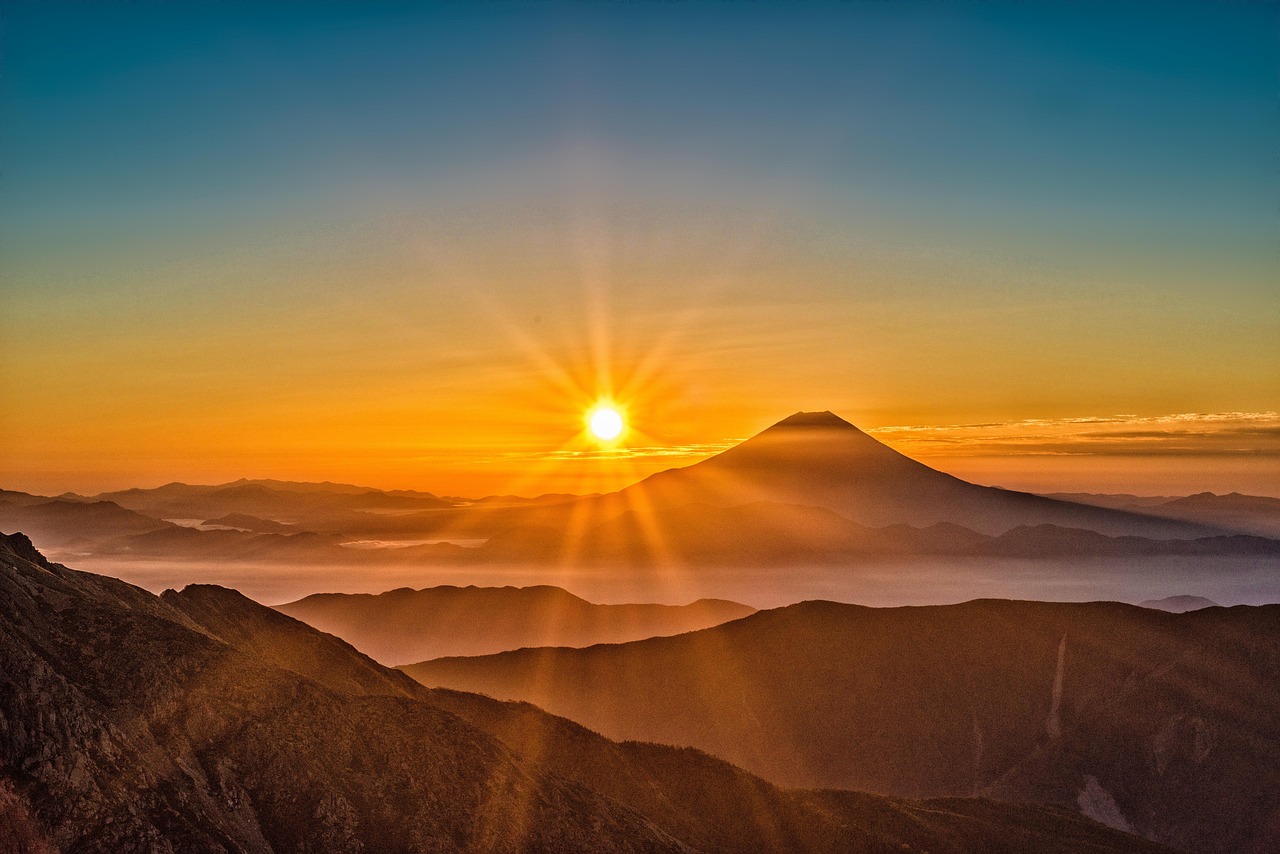
Temples, Blossom and Bullet Trains Across the Archipelago
Japan is an island nation in East Asia, famed for its ancient temples, cherry blossom, Mount Fuji, bullet trains, onsen hot springs and one of the most celebrated cuisines in the world. Four main islands, Honshu, Hokkaido, Kyushu and Shikoku, are joined by thousands of smaller ones, and a landscape of mountains and coast gives the country remarkable variety. Tradition and modernity coexist with ease: a morning in a mossy Kyoto temple garden can be followed by an evening in the neon of Tokyo, with a shinkansen, a service launched in 1964, linking the two in a little over two hours.
The great cities are the starting point. Tokyo, the capital, offers the crossing at Shibuya, the temples of Asakusa, Meiji Shrine and a food scene of every level. Kyoto, the former imperial capital, has 17 monuments inscribed by UNESCO in 1994, including Kiyomizu-dera and the Golden Pavilion, along with the red torii gates of Fushimi Inari and the bamboo grove of Arashiyama. Nearby Osaka adds street food and humour, while Mount Fuji, inscribed in 2013, anchors the horizon. Travellers also continue to Seoul or Shanghai on a wider Asian circuit.
Ryokan Stays, Kaiseki Dining and Hokkaido Snow
Japan's stays are part of the experience. A ryokan, a traditional inn with tatami rooms, futon bedding and a communal hot spring bath, offers a quiet introduction to Japanese hospitality, often with a kaiseki dinner, a multi-course seasonal feast. Hakone, Kinosaki and Beppu are among the best-known onsen towns. Contemporary hotels offer a different style, from design-led city towers to mountain lodges, and a hotel group has plenty to present here. The Japanese Alps, Shirakawa-go with its thatched farmhouses, inscribed in 1995, and the temple settlement of Mount Koya all add depth.
Food is a national passion. Sushi, ramen, tempura, yakitori, okonomiyaki and wagyu beef appear everywhere, from tiny counters to grand dining rooms, and regional specialities reward every stop, while convenience stores and department store food halls are a delight in themselves. In winter, Hokkaido's Niseko and Nagano's snow monkeys draw skiers and wildlife lovers, while Okinawa and the southern islands offer subtropical beaches. For those who love island journeys, the Philippines and Thailand are good companions for a longer holiday.
Hanami, Autumn Colour and the Flight from London
Spring and autumn are the peak seasons. Cherry blossom, or sakura, moves northward from late March, when parks and riversides fill with picnics under the pink canopy, an event known as hanami. Autumn, from October to November, paints the maples red and gold, and the temple gardens of Kyoto are at their most beautiful. Summer is the season of festivals and fireworks, and winter brings snow festivals in Sapporo and clear views of Mount Fuji. Whatever the month, the efficient rail network, polite service and clear signs make Japan one of the easiest countries in Asia to travel.
Direct flights from London to Tokyo take around 14 hours, and Osaka is also well served, with many UK travellers using the Japan Rail Pass or regional passes to travel by train. A name like YourJapan.co.uk gives airlines and hotels one confident home for the Japan story. Combining Japan with Singapore, China or Hawaii makes a natural multi-stop itinerary, and the long-haul journey itself becomes part of the adventure.
Machiya Townhouses, Alpine Lodges and Island Resorts
Japan's regions offer stays of every style. In Tokyo, Shinjuku and Shibuya suit first-timers, Ginza and Marunouchi the luxury seeker, and Asakusa the traveller who wants old-town atmosphere. In Kyoto, Gion and Higashiyama place guests among wooden teahouses and temples, Arashiyama has riverside retreats, and machiya townhouses offer a private slice of tradition. Hakone has hot-spring inns with views of Mount Fuji, Takayama and Kanazawa have heritage lodgings, and Koyasan offers temple stays, called shukubo, with vegetarian meals and morning chanting. Naoshima's art-island houses and Hiroshima's Miyajima inns suit travellers who like design and history.
In winter, Niseko in Hokkaido and Hakuba in the Japan Alps are famous for powder snow, with lodges, chalets and apartments for skiers and snowboarders. In the south, Okinawa and Ishigaki have beach resorts, while Kyushu has onsen towns such as Beppu and Yufuin. Golfers, families and groups will find resort hotels with spacious rooms, and design lovers can choose sleek towers or minimalist inns. An AI platform can help travellers compare these stays by season, interest and budget, and plan routes from a city night to a mountain onsen. Japan combines with Seoul, Osaka and Singapore for a wider Asian loop.
Matcha, Washi Paper and Japan's Festival Seasons
Japan's food and craft traditions are endlessly rewarding. Matcha, powdered green tea from Uji near Kyoto, is whisked in tea ceremonies and turned into sweets, while wagashi, delicate seasonal confections, change with the months. Kissaten coffee houses offer slow mornings, and regional specialities from Hiroshima's okonomiyaki to Hokkaido's seafood and Kanazawa's gold-leaf desserts reward every stop. Crafts include Kutani porcelain, Arita ceramics, indigo dyeing, lacquerware and washi paper, and visitors can try pottery or indigo workshops. The art of kintsugi, mending ceramics with gold, and the quiet beauty of ikebana flower arranging are cherished across the country.
The festival calendar is a delight. Hatsumode, the first shrine visit of the year, opens January, plum blossom follows in February, the Sapporo Snow Festival glitters in the same month, and sakura sweeps north from late March. Golden Week in spring is a busy national holiday, Kyoto's Gion Matsuri lights July with grand floats, Tokushima's Awa Odori dancing fills August, and Aomori's Nebuta lanterns glow the same month. Autumn brings maple viewing and harvest festivals. The performing arts include kabuki, noh and taiko drumming, and museums from the Tokyo National Museum to the Ghibli Museum in Mitaka suit rainy days, with teamLab's digital art installations drawing admirers of the modern.
Skiing Hokkaido, Walking the Nakasendo and Art Islands
Japan is made for active holidays. Skiers head to Niseko, Hakuba and Nozawa Onsen for light powder, hikers follow the Nakasendo trail between the post towns of Magome and Tsumago, and the Kumano Kodo pilgrim routes wind through cedar forests. The Japan Alps offer summer hiking around Kamikochi, cyclists enjoy the Shimanami Kaido island-hopping route, and divers explore Okinawa's reefs. Yakushima, inscribed by UNESCO in 1993, has ancient cedars and mossy forests, and Naoshima's art museums and sculptures make a stylish island day. Onsen towns suit every rest day, and wellness retreats offer forest bathing and shiatsu massage.
Day trips extend any base. From Tokyo, Nikko, inscribed by UNESCO in 1999, has ornate shrines among cedars, Kamakura has its Great Buddha and seaside temples, and Hakone offers lake cruises, an open-air museum and a view of Fuji. From Hiroshima, the island of Miyajima, with its Itsukushima Shrine inscribed in 1996, is a short ferry ride away. A stay can be built around skiing, culture, wellness or food, with the rail pass doing the heavy lifting. Japan pairs with Shenzhen, Bangkok, New Zealand or Whistler for travellers who love snow, and with Australia for a southern-hemisphere summer.
Planning your stay
Tokyo is a vast city of districts, each with its own character, from Shinjuku's towers to Asakusa's temples. Kyoto holds the greatest concentration of temples, gardens and traditional streets, and Osaka is the food and nightlife capital of the west. Hiroshima, Nara, Hakone and the Japan Alps are all within easy reach by the rail network.
Many UK visitors plan a two-city trip of ten to fourteen days using the bullet train. Japan sits near Seoul, Shanghai, Shenzhen and wider China, which makes it a natural part of an East Asia itinerary.
When to go
Spring, for the cherry blossom in late March and April, and autumn, for the colour in November, are the most popular and expensive times. Both are mild and comfortable, but crowds and room prices peak. Winter is cold and dry in the south and snowy in the north, which suits skiing in Hokkaido and Nagano.
The tropical cyclone season runs from June to December, peaking from July to September, with the highest risk in the south.
Entry rules
The Foreign, Commonwealth and Development Office says your passport must be valid for the length of your stay, with a blank page for your visa stamp. UK visitors can get a visa on arrival for tourism or business for up to 90 days, with no need to apply before travel, and you can apply to extend for another 90 days at an immigration office.
Japan is still a predominantly cash-based society, so carry some yen. Flights from London take around 14 hours.
Before you travel
Entry requirements and official travel guidance are updated regularly, so check the latest position with your government before booking. The sources we used are listed at the foot of this page.
Why Japan matters to the industry
Compare the other destination guides to see how Asia and the Pacific fit together.
Questions travellers ask about Japan
Do UK citizens need a visa for Japan?
UK visitors can get a visa on arrival for tourism or business for up to 90 days. You do not need to apply before you travel, and your passport must be valid for the length of your stay with a blank page.
When is the best time to visit Japan?
Spring for cherry blossom and autumn for the colour are the most popular. Summer is extremely hot and humid, and the typhoon season runs from June to December.
What is Japan best known for?
Japan is best known for Tokyo and Kyoto, Mount Fuji, cherry blossom, shinkansen bullet trains, onsen hot springs and a world-famous cuisine including sushi, ramen and tempura. Its temples, ryokan and snow in Hokkaido add further variety.
When is the best time to visit Japan?
Spring, for cherry blossom from late March, and autumn, for red and gold leaves in October and November, are the most popular times. Winter is ideal for skiing in Hokkaido and Nagano, while summer brings festivals and fireworks.
Where should I stay in Japan for a first visit?
Many first-time visitors choose Tokyo for modern energy, Kyoto for temples and traditional stays, and Osaka for food, with a night at an onsen ryokan in Hakone. This route is easy by bullet train and shows both old and new Japan.
What should I do in Japan on a rainy day?
Visit museums such as the Tokyo National Museum or the Ghibli Museum, enjoy a tea ceremony, soak in an onsen, explore department-store food halls or browse covered shopping arcades. Temple gardens are often especially beautiful in the rain.
In the Visit Travel Group portfolio: YourJapan.co.uk.