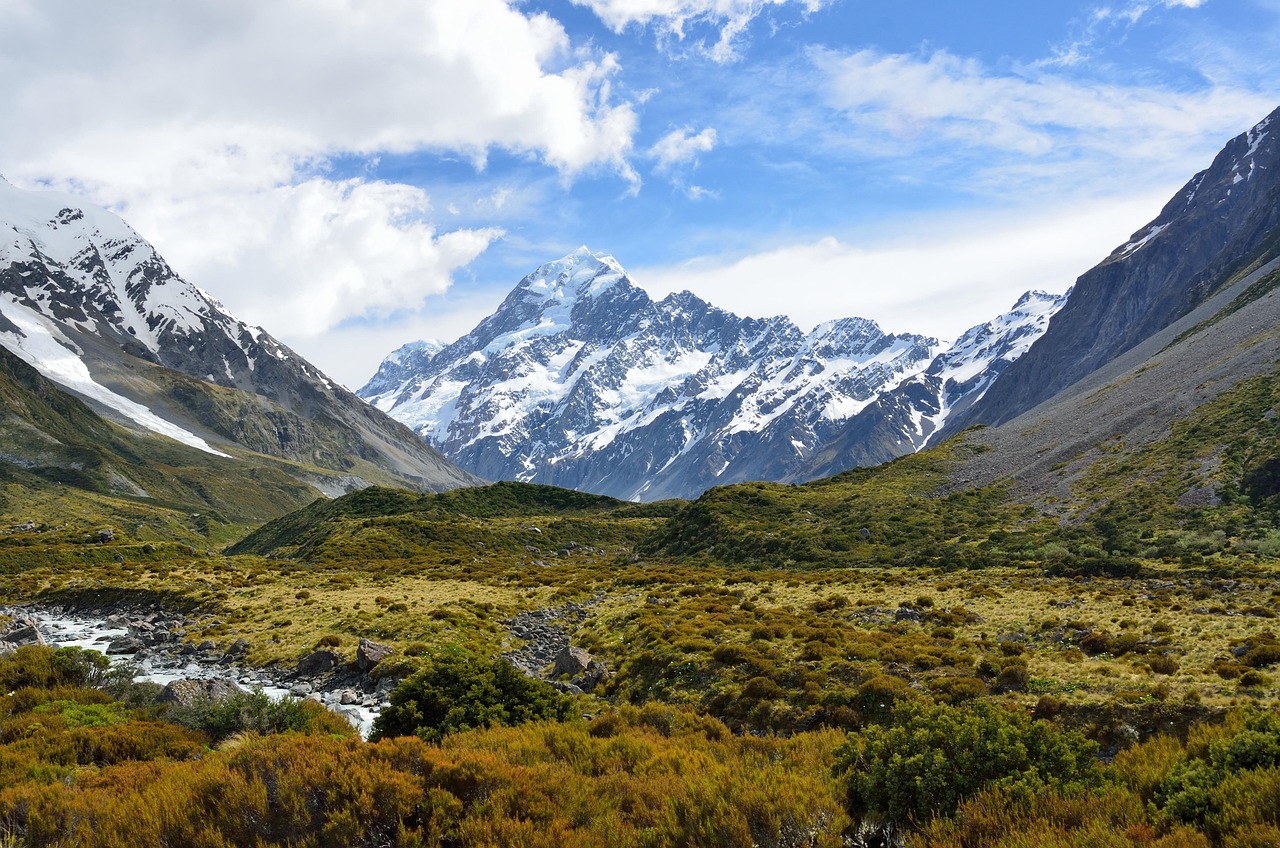
Fjords, Glaciers and a Land Made for Road Trips
New Zealand is an island country in the southwestern Pacific Ocean, known for dramatic scenery, Maori culture and adventure travel. It is made up of two main islands, the North Island and South Island, plus smaller islands, and Wellington is the capital while Auckland is the largest city. Fiordland National Park, with Milford Sound and Doubtful Sound, forms part of a UNESCO World Heritage area, and the Southern Alps rise above glacial lakes, vineyards and farmland.
Maori culture, Aotearoa's founding heritage, runs through the country. In Rotorua, geothermal pools and cultural performances introduce haka and hangi feasts, while the Waitangi Treaty Grounds in the Bay of Islands tell the story of 1840. The landscapes inspired the Lord of the Rings films, and Hobbiton near Matamata remains a popular visit. Food is excellent: lamb, green-lipped mussels, pavlova, Central Otago pinot noir and Marlborough sauvignon blanc, all drawn from the fertile land and clean sea.
Queenstown, Rotorua and the Bay of Islands
Queenstown is the adventure capital, beside Lake Wakatipu and below the Remarkables, with skiing in winter and hiking, jet-boating and bungy in summer. Nearby Wanaka, Arrowtown and Glenorchy offer quieter alternatives. The Milford Track and the Routeburn Track are among the best-known multi-day walks, and the Tongariro Alpine Crossing crosses a volcanic landscape of emerald lakes and steaming vents on the North Island.
Coastlines add variety. The Bay of Islands holds more than 140 islands and sheltered anchorages, Abel Tasman National Park is known for golden sand and clear water, and Kaikoura offers whale watching beside snow-capped peaks. A hotel group or lodge collection can build a compelling story around these places. Many guests combine New Zealand with Australia and Melbourne, or continue to Fiji and the Cook Islands for a Pacific beach finish.
Seasons, Skiing and the Long-Haul Journey
Summer, from December to February, is the classic season for walking, beaches and festivals, with long daylight hours. Autumn brings golden vineyards and settled weather, while the ski season runs from about June to October around Queenstown, Wanaka and the central North Island. Spring brings lambs, wildflowers and fewer visitors, and the whole country is green and vivid after the winter rains.
Auckland is the main international gateway, with journeys from the UK usually lasting about 24 hours including a connection, often through Asia or the Gulf. Domestic flights, ferries between the islands and scenic rail routes such as the TranzAlpine make travel part of the experience. For airline and tourism partners, YourNewZealand.co.uk offers a place to tell this story clearly, from honeymoons to family campervan holidays.
Lodges, Lakeside Hotels and Campervan Bases
New Zealand stays range from city sleek to remote and rustic. In Auckland, the waterfront and Viaduct Harbour suit first and last nights, while Waiheke Island across the Hauraki Gulf adds beach houses and vineyards. Wellington has boutique hotels near Te Papa and the harbour, and Rotorua offers lakeside lodges beside geothermal parks. On the South Island, Queenstown has everything from lakeside suites to luxury lodges on the Remarkables, while Wanaka suits families and walkers, and Te Anau is the base for Milford Sound. Christchurch gives a creative city stay before the Southern Alps and the Canterbury plains.
Lodges are a national speciality, with small, all-inclusive properties in places such as Hawke's Bay, Marlborough and Central Otago, serving local produce and arranging guided walks and fishing. Boutique bed and breakfasts in Akaroa and Nelson suit couples, farmstays give families a hands-on experience, and holiday parks and campervan sites suit road trippers. Remote wilderness lodges beside Fiordland and Abel Tasman can be reached only by boat or floatplane, giving privacy and silence. A balanced trip combines two cities, one adventure base and one lodge, allowing travellers to see the contrast between city culture and open country.
Hangi, Pinot and the Maori Cultural Year
New Zealand's food is built on its farms and seas. Lamb, venison, Bluff oysters, whitebait fritters, crayfish at Kaikoura and green-lipped mussels are all local stars, with kumara, pavlova and hokey pokey ice cream rounding out the sweet side. A hangi, food cooked in an earth oven, is a signature Maori feast, while a flat white, fish and chips on the beach and a meat pie are everyday pleasures. Wine regions include Marlborough, Central Otago, Hawke's Bay and Martinborough, celebrated for cool-climate sauvignon blanc and pinot noir, and many vineyards offer long lunches, cycling trails and cellar door tastings.
Maori culture is woven through travel. Te Papa in Wellington, Auckland Museum and Rotorua's Te Puia show carving, weaving and haka, while Matariki, the Maori new year, brings lights and gatherings in midwinter. Summer events include Wellington's Fringe Festival and Auckland's Pasifika, while autumn has the Marlborough Wine and Food Festival. Spring has blossom in the Otago valleys and the Hokitika Wildfoods festival. Winter fills Queenstown with skiers and the Winter Festival. The 1840 Waitangi Treaty Grounds tell national history, and Waitangi Day on 6 February is the key national date.
Great Walks, Glaciers and Island-Hopping Add-Ons
Active travellers have a feast of options. The Great Walks include Milford, Routeburn, Kepler, Abel Tasman and Tongariro, with huts and campsites booked early. Cyclists ride the Otago Central Rail Trail and Queenstown's lakeside paths, while kayakers explore Abel Tasman and Milford Sound. Helicopter and ski-plane flights land on Fox and Franz Josef glaciers, and whale watching at Kaikoura runs year-round. Golf at Kauri Cliffs, Cape Kidnappers and Jack's Point draws international players, and wellness fans enjoy hot pools in Rotorua, Hanmer Springs and Wanaka. Families love Waitomo's glow-worm caves and Hobbiton near Matamata.
Day trips and add-ons are plentiful. From Auckland, visit Waiheke, the Bay of Islands or Rotorua; from Queenstown, Milford Sound by air, Arrowtown and Glenorchy; from Christchurch, Akaroa and the TranzAlpine train. Travellers heading onwards can combine the country with Fiji, Samoa or Melbourne, and long-haul visitors often add Singapore as a break in the journey. A tourist board could use the dense map of short trips to promote slow, regional travel, and Tahiti offers a Polynesian counterpoint for guests extending across the Pacific.
Planning your stay
The North Island has Auckland, geothermal Rotorua, the Bay of Islands, the Waitomo caves and the capital Wellington. The South Island has the more dramatic scenery: the Southern Alps, Queenstown's adventure sports, fiords at Milford Sound, glaciers and wine regions.
Most UK visitors fly into Auckland and out of Christchurch or Queenstown, or the reverse, and drive or take internal flights between them. New Zealand is close to Australia and Melbourne, and the Pacific islands of Fiji, the Cook Islands, Samoa and Tahiti are popular stopovers.
When to go
December to February is summer, with the warmest weather and the longest days, and it is also the busiest and most expensive period. March to April is calm and settled with autumn colour, and September to November brings spring flowers and lambs. Winter, from June to August, is the ski season on the South Island.
Entry rules and forms
The Foreign, Commonwealth and Development Office says your passport must have an expiry date at least three months after the day you plan to leave. UK visitors can visit New Zealand without a visa for up to six months, but you must have a New Zealand Electronic Travel Authority (NZeTA) before you travel, and you will pay an International Visitor Conservation and Tourism Levy when you apply. Allow up to 72 hours for processing. Your NZeTA is valid for up to two years.
At the border you will need to show proof of a return or onward ticket and proof that you have enough money for your stay. Everyone entering must also complete a free New Zealand Traveller Declaration, online or via the app. Transit passengers usually also need an NZeTA or transit NZeTA. You must have a visa to work or study.
Driving and getting around
Read the New Zealand Road Code before you drive, because rules and conditions differ from the UK, including on one-lane bridges and give-way rules.
Campervan trips are popular, so check where you are allowed to park overnight.
Before you travel
Entry requirements and official travel guidance are updated regularly, so check the latest position with your government before booking. The sources we used are listed at the foot of this page.
Why New Zealand matters to the industry
New Zealand is a long-haul, high-spend market where travellers research each step for months. YourNewZealand.co.uk lets a tourist board, hotel or lodge group or airline publish clear answers on the NZeTA, driving, seasons and routes, and our AI platform carries them to assistants.
See our other destination guides for how the Pacific fits together, or our OTA partnerships page.
Questions travellers ask about New Zealand
Do UK citizens need a visa for New Zealand?
No visa is needed for up to six months, but you must have an NZeTA before you travel and pay the International Visitor Conservation and Tourism Levy. You must also complete the New Zealand Traveller Declaration.
How long does an NZeTA take?
Allow up to 72 hours for processing. It is valid for up to two years.
Can I drive in New Zealand on a UK licence?
Yes. You can use a UK photocard licence for up to 18 months. Highways can be narrow, winding and hilly, so read the Road Code and allow extra time.
What is the best time to visit New Zealand?
December to February is the warmest and busiest. March and April are settled and calm, and September to November is spring. Winter is the ski season.
What is New Zealand best known for?
New Zealand is best known for Milford Sound, Queenstown's adventure scene, Maori culture, geothermal Rotorua, Lord of the Rings locations and its wine and food. Its compact islands put fjords, glaciers, beaches and volcanoes within a few hours of each other.
When is the best time to visit New Zealand?
December to February is the classic summer season for walking and beaches, March to April is calm and golden, and June to October is ski season around Queenstown and Wanaka. Spring is quieter and scenic.
Where should I stay in New Zealand?
Queenstown suits adventure and lakeside luxury, Rotorua suits Maori culture and geothermal sights, Auckland and Waiheke suit city and vineyards, and Wanaka suits quieter walking. Lodges in Hawke's Bay and Marlborough are ideal for food and wine.
What can I do in New Zealand on a wet or off-season day?
Visit Te Papa in Wellington, soak in Rotorua or Hanmer Springs hot pools, explore Waitomo's glow-worm caves, tour a winery, or ride the TranzAlpine train. Winter adds skiing around Queenstown and Wanaka.
In the Visit Travel Group portfolio: YourNewZealand.co.uk.