Great Wall, Forbidden City and Thousands of Years
China is a vast country in East Asia and one of the world's oldest continuous civilisations, known for the Great Wall, the Forbidden City, the Terracotta Army, giant pandas, karst landscapes and a cuisine of astonishing variety. Its history stretches back thousands of years, and its scale is hard to grasp: deserts, mountains, tropical coasts and megacities all lie within one country. For visitors, the best approach is to pick a handful of highlights and let the high-speed rail network, one of the most extensive in the world, handle the distances between them.
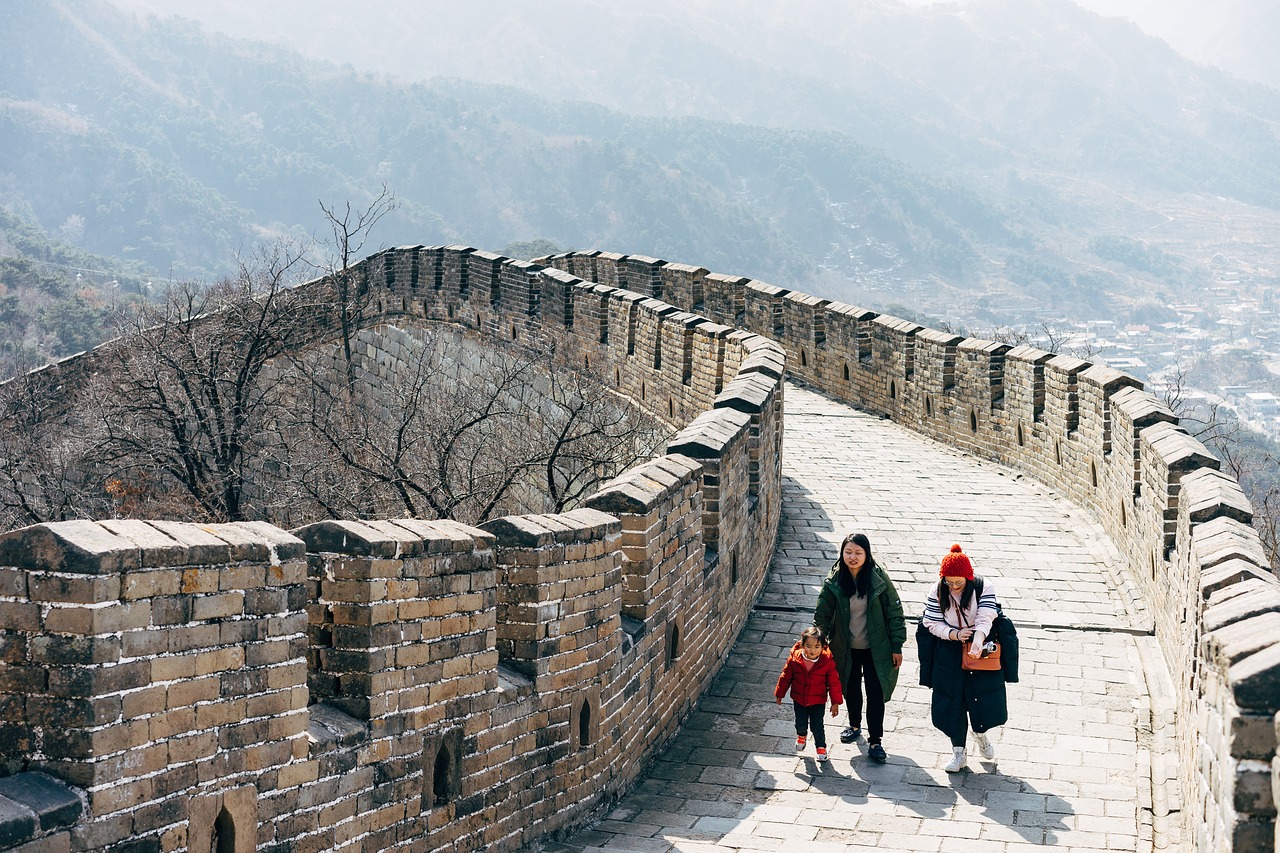
Beijing is the grand opening chapter. The Forbidden City, the former imperial palace inscribed by UNESCO in 1987, is a masterpiece of red walls and golden roofs, while the Temple of Heaven and the Summer Palace show the elegance of imperial design. Sections of the Great Wall at Badaling, Mutianyu and Jinshanling are within a day trip of the capital. Xi'an, the ancient Silk Road capital, houses the Terracotta Army, also inscribed in 1987. Travellers often add Shanghai and Shenzhen for modern China, and Japan or Seoul on an extended route.
Pandas, Karst Peaks and the Table of Sichuan
China's landscapes are as memorable as its monuments. Chengdu, in Sichuan, is the home of the giant panda and a research base where visitors can watch pandas in a naturalistic setting, as well as a centre of teahouse culture and fiery cuisine. Guilin and Yangshuo are famed for the karst peaks of the Li River, best seen from a bamboo raft, and Zhangjiajie's sandstone pillars inspired the floating mountains of a famous film. The Yangtze, the Yellow Mountains of Huangshan and the old towns of Lijiang and Pingyao each add their own scenery and character.
Food varies dramatically by region. Peking duck in Beijing, hot pot and mapo tofu in Sichuan, dim sum in Guangdong, soup dumplings in Shanghai and hand-pulled noodles in Xi'an make a culinary journey in themselves. Tea is part of daily life, from jasmine to Longjing, and teahouses are places to pause. A tourist board or travel brand can present China as many different holidays in one, from cultural circuits to family trips, while Singapore and Thailand pair well for beach finishes.
Spring and Autumn Windows and High-Speed Rail
Spring, from April to May, and autumn, from September to October, are generally the best seasons, with mild temperatures, clear skies and comfortable conditions for walking on the Great Wall and in the countryside. Festivals add colour throughout the year, from Chinese New Year lanterns to the Mid-Autumn Festival and its mooncakes. The high-speed rail network links Beijing, Shanghai, Xi'an, Guangzhou and many other cities, and trains are comfortable and punctual, making it easy to build a multi-city route without long flights between stops.
Beijing and Shanghai are the main gateways, with long-haul flights from Europe, and direct services from London to Beijing take around 10 hours. A name like YourChina.co.uk gives airlines, hotels and tour operators a single, quotable home for the story. For wider Asian itineraries, Osaka, Bangkok and the Philippines connect well, giving travellers many ways to extend a journey that begins in the world's oldest imperial capital.
Courtyard Hotels, Karst Retreats and City Towers
China's stays are as varied as its map. In Beijing, courtyard hotels in the old hutong lanes put guests a walk from the Forbidden City and lakeside cafes, ideal for couples and culture seekers. Lodges near Mutianyu and Jinshanling let travellers wake beside the Great Wall. In Xi'an, hotels inside the old city walls are close to the Muslim Quarter and the Bell Tower, while Chengdu's boutique hotels sit near teahouses and temples. Hangzhou's West Lake has lakeside retreats among willows and tea hills, and Suzhou offers garden-style inns beside canals. Shanghai and Shenzhen, by contrast, provide skyline towers and design hotels.
Landscape stays add romance. In Yangshuo and Guilin, riverside inns and converted farmhouses look onto karst peaks, Lijiang's old town has timber guesthouses with courtyard gardens, and Dali's lakeside lodges suit travellers who like gentle scenery. Hainan's Sanya has beach resorts that suit families in winter, and Zhangjiajie has mountain lodges close to the sandstone pillars. Luxury travellers can book grand heritage hotels, while groups find large resorts with gardens and spas. A hotel group can curate these by traveller, from heritage lover to beach family, and present a China that is as flexible as it is vast. Many guests extend with Dubai or the Maldives.
Teahouses, Opera and the Lunar Calendar
China's culture is best experienced slowly. Tea is central, from Hangzhou's Longjing to Yunnan's pu'er, and visitors can join tastings in teahouses and plantation villages. Lanzhou's hand-pulled beef noodles, Yunnan's crossing-the-bridge noodles, Sichuan's dan dan noodles and Cantonese dim sum make a national tasting menu, while jiaozi dumplings are a winter favourite in the north. Craft traditions include Jingdezhen porcelain, Suzhou silk, jade carving, calligraphy, paper-cutting and cloisonne enamel. Peking opera, Sichuan face-changing opera and kunqu, a gentle classical form, bring the performing arts to life, and tai chi in the park at dawn is a daily ritual.
Museums are world-class: the Palace Museum, the National Museum of China, the Shanghai Museum and Sanxingdui near Chengdu, with its remarkable bronze masks. The calendar follows the lunar year. Spring Festival and the Lantern Festival bring red lanterns and fireworks, Qingming is a spring day for tomb sweeping and kite flying, the Dragon Boat Festival races boats in June and Mid-Autumn offers mooncakes and moon-gazing. Harbin's Ice and Snow Festival glitters in winter, and Yunnan's Dai New Year in April brings water-splashing fun. Spring and autumn suit sightseeing, summer suits the highlands and winter suits southern beaches and snow festivals alike.
Cycling Xi'an's Walls, Cruising the Yangtze and Pandas
China offers surprising activities beyond sightseeing. Visitors can cycle the top of Xi'an's ancient city wall, walk a wild stretch of the Great Wall between Jinshanling and Simatai, or cruise through the Three Gorges on the Yangtze. Huangshan's sunrise above a sea of cloud draws photographers, Yangshuo's bamboo rafts and cycling lanes suit families, and Dunhuang's Mogao Caves, inscribed by UNESCO in 1987, and the singing sand dunes tell the Silk Road story. Hainan has beaches and golf, Hangzhou has tea-plantation walks, and wellness travellers can enjoy tai chi lessons and traditional medicine spas.
Day trips add depth. From Chengdu, the Leshan Giant Buddha, inscribed by UNESCO in 1996, and Mount Emei are within reach, with Jiuzhaigou's turquoise lakes, inscribed in 1992, a longer trip north. From Beijing, the Ming Tombs and Summer Palace fit into a day, and from Shanghai, the water towns and Suzhou are close. A stay can be built around history, nature, food or family, with high-speed rail linking each stage. China pairs with New Zealand, Hawaii and Australia for travellers continuing east or south, and its southern gateway Shenzhen makes an easy start for a Pearl River Delta journey.
Planning your stay
Most first trips link a few places. Beijing has the Forbidden City, the Temple of Heaven and access to the Great Wall, Xi'an has the Terracotta Army, Chengdu has pandas and food, and Shanghai and Shenzhen show the modern economy. High-speed trains make many of these journeys easy, but distances are huge, so choose a few regions.
China sits near Seoul, Osaka and Japan, and many UK visitors combine two or more of them.
When to go
Spring and autumn are generally the most comfortable seasons for most of the country, with milder temperatures. Summers are hot and humid in the east and south, and winters can be very cold in the north.
Check the live page before travelling to remote regions.
Entry rules
Until 31 December 2026, holders of standard British passports with the nationality 'British citizen' can enter visa free for up to 30 days for business, tourism, family or friend visits or transit.
For any other reason, including paid work, long-term assignments, journalism or study, or for more than 30 days, you must get a visa before you travel. Without the correct visa or visa-free access you will be refused entry. Immigration authorities may collect biometric data, and you may be screened for health on arrival.
Payments and internet
VPNs need to be licensed by the Chinese government. During periods of tension the authorities may block news reporting, text messaging, the internet and international telephone lines, so download maps and keep offline copies of key documents.
Keep your passport safe and carry a copy. Fire protection standards in accommodation are not always the same as in the UK, so check fire exits and that your room has a working alarm.
Before you travel
Entry requirements and official travel guidance are updated regularly, so check the latest position with your government before booking. The sources we used are listed at the foot of this page.
Why China matters to the industry
China is a large, fast-changing market where travellers and trade visitors need current answers on visas, payments and rules. Through YourChina.co.uk, an airline, hotel group or tourist board can publish those answers once, and our AI platform passes them to anyone researching a China trip.
Read more in the other destination guides, or see how booking platforms reuse content like this on our OTA page.
Questions travellers ask about China
Do UK citizens need a visa for China?
Until 31 December 2026, standard British passport holders can enter visa free for up to 30 days for business, tourism, family or friend visits or transit. For other purposes, or longer stays, you need a visa before you travel.
How long must my passport be valid for China?
At least six months after the day you arrive, with two blank pages.
Do I need a VPN in China?
VPN services must be licensed by the Chinese government, so plan for a restricted internet and keep offline copies of maps and key documents.
What is China best known for?
China is best known for the Great Wall, the Forbidden City in Beijing, the Terracotta Army in Xi'an, giant pandas in Chengdu, the karst scenery of Guilin and a rich regional cuisine ranging from Peking duck to Sichuan hot pot.
When is the best time to visit China?
Spring, from April to May, and autumn, from September to October, are generally the best seasons, offering mild weather and clear skies for the Great Wall and other highlights. Festivals such as Chinese New Year add colour through winter.
Where should I stay in China for a first visit?
Many first visitors combine a courtyard hotel in Beijing, a night inside Xi'an's city walls and a riverside stay near Guilin or Yangshuo, finishing in Shanghai. High-speed trains link the main cities, making the route easy to follow.
What should I do in China on a rainy day?
Visit the Palace Museum, Shanghai Museum or Sanxingdui, enjoy a tea tasting, watch Peking or Sichuan opera, take a cooking class or relax in a spa. Rain also makes classical gardens and karst scenery especially atmospheric.
In the Visit Travel Group portfolio: YourChina.co.uk.