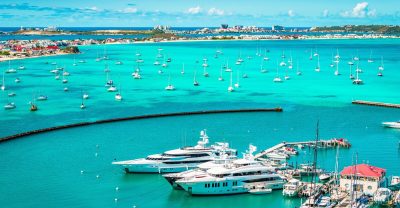
One Island, Two Flags, Endless Flavour
Saint Martin is an 88-square-kilometre island in the northern Leeward Islands, shared since 1648 between France (53 square kilometres) and the Netherlands (34), and known for beaches, markets and one of the Caribbean's strongest restaurant scenes. The Treaty of Concordia created the arrangement, and the result is a place where French boulangeries and Dutch-side boardwalks sit within a short drive. The island had about 73,800 residents in 2019 and over 70 nationalities, with English-based Creole as a common language and an easy, cosmopolitan mix.
Two capitals give the island its rhythm. Marigot, on the French side, has a harbourside market where stalls sell spices, fruit and crafts, and a hilltop fort with long views. Philipsburg, on the Dutch side, curves along a bay with a beach-fringed boardwalk and plenty of shopping. The hills of the interior rise to Pic Paradis at 424 metres, giving walkers a wide view over both halves of the island. It is a compact destination with a very international pulse.
Grand Case Dining and Orient Bay Days
Food is the island's signature. Grand Case, a village on the French side, is celebrated for a seafront street of restaurants where French technique meets Creole spice, from simple roadside grills known as lolos to polished tables with sea views. Orient Bay, with its long, lively beach, is the place for water sports and relaxed beach clubs, while Simpson Bay and the lagoon offer a calmer, marina-side atmosphere. Each corner of the island offers a different mood, and visitors can sample several in a single week.
Maho Beach, beside Princess Juliana International Airport, gives plane-spotters one of the Caribbean's best-known viewpoints, with aircraft passing low over the sand. Beyond the beaches, the island's market stalls, cheese shops and rum counters provide a different kind of discovery. For an airline or booking partner, the combination of international gateway and two-flag culture is a strong selling point, particularly for travellers who want variety within a single trip.
A Hub for Island Hopping
St Martin is a natural springboard. Regular ferries link Marigot with Anguilla's Blowing Point in about 20 minutes, and further services reach St Barths, so guests can add one or two very different islands to the same holiday. Anguilla offers barefoot calm, while St Barths adds French polish. Together, the three form one of the Caribbean's most popular and easily planned island-hopping circuits, with the airport on the Dutch side acting as the gateway.
The dry season from January to April is the most popular, with sunny days and calm seas, while the greener months from August to December bring a quieter, lush island and lighter crowds. Further afield, St Kitts and the British Virgin Islands are comfortable next steps for sailors and island-hoppers. A name like VisitSaintMartin.co.uk gives tourist boards and hotels a single, memorable home for the whole two-flag story.
Where to Stay on the Friendly Island
St Martin offers a wide spread of stays, and each area has a clear personality. Grand Case, on the French side, suits food lovers and couples, with small boutique hotels and apartments steps from its famous restaurant street. Anse Marcel and Baie Longue give a quieter, resort-style experience with calm bays and views over the water. Terres Basses, on the western peninsula, is the home of villa estates with private pools, ideal for large groups and multigenerational holidays. Orient Bay is the choice for active guests, with beach clubs, water sports and lively afternoons, and Marigot offers hotels close to the harbour, the market and the ferry to Anguilla.
On the Dutch side, Simpson Bay wraps around a lagoon and a marina, a favourite for sailors, families and anyone who likes restaurants within walking distance. Maho and Cupecoy are the places for polished beach resorts and apartment-style stays, with lively dining and nightlife nearby, and Maho is the closest base to the airport and its famous beach. Philipsburg suits shoppers and cruise guests with a long boardwalk, while Dawn Beach and Guana Bay on the east give a calmer atmosphere. The island is small enough to move between sides in minutes, so a stay can include both flags without effort.
Johnnycakes, Lolos and the Carnival Calendar
Food is the island's best cultural export. The lolos of Grand Case, simple open-air grills serving ribs, chicken and lobster with rice and peas, sit just along the street from polished French dining rooms, and the contrast is part of the charm. Markets in Marigot sell spices, hot sauces, handmade crafts and fresh fruit, while bakeries produce croissants and baguettes at dawn. Johnnycakes, saltfish and conch stew show the Caribbean side of the island, and guavaberry, the local berry, features in sweets and traditions. Architecture ranges from colourful gingerbread houses in Philipsburg to the hilltop ruins of Fort Louis above Marigot.
The calendar is festive on both sides. Carnival is celebrated in the weeks before Lent in Marigot and in Philipsburg later in the spring, with parades, costumes, steel pan and calypso. Early March brings the island's big regatta, when sailing yachts fill Simpson Bay and the lagoon bridge opens for racing crews, and Bastille Day on 14 July is marked on the French side with fireworks. The dry months from January to April are the sunniest, while the quieter autumn suits long lunches and low-key beach days. A Philipsburg or Marigot stay in carnival week gives a lively way to meet the island's people.
Sailing, Hikes and Island-Hopping Day Trips
St Martin is a good place to be active. Sailing is a signature, with 12 Metre yachts from America's Cup racing offering a chance to crew on a real racing boat, and catamarans heading to Tintamarre, an uninhabited island with turtles and calm turquoise water. Pinel Island, a short ferry ride from Cul de Sac, has beach cafes and snorkelling, and kayaks explore the Oyster Pond and Simpson Bay lagoon. Walkers can climb Pic Paradis, where an adventure park at Loterie Farm offers ziplines and forest paths, and a coastal trail links beaches on the French side. Diving sites include reefs and wrecks close to shore.
The best day trips are a ferry or a short sail away. Anguilla makes a barefoot day of beaches and grilled lobster, and St Barths offers a polished lunch and boutique shopping in Gustavia. Quieter islands such as Saba and Sint Eustatius are reached by boat or short flight for walks and diving, and longer journeys reach St Kitts and the British Virgin Islands. A stay can be planned around food, with a week of tasting from lolos to polished dining rooms, or around sailing and snorkelling, with the lagoon as home base. Airlines and hotel partners can promote the island as a gateway, and a hotel group can offer a two-flag stay with a night on each side.
Planning your stay
The island is divided between France in the north and the Netherlands in the south. The French side, St Martin, is quieter and more relaxed, with Grand Case known for its restaurants and Orient Bay for its beach clubs. The Dutch side, Sint Maarten, is busier, with the cruise port at Philipsburg, the casinos and the main airport.
Because the two sides use different systems, the practical details differ. The French side uses the euro and the Dutch side uses its own currency, although US dollars are widely accepted. Prices, food and nightlife differ too, so decide which side suits you before you book a base.
The gateway to the northern islands
The Dutch side's airport, Princess Juliana International, is the main regional hub and is where most UK travellers connect, with no direct UK flight but one-stop options from Amsterdam (KLM) and Paris (Air France). From here small aircraft and ferries serve neighbouring islands. Anguilla is a short ferry crossing, and St Barths is a short flight or sail. Even for visitors going elsewhere, a day or two on St Martin is a useful way to break a long journey.
If you are building a longer trip, St Kitts and Nevis are logical next stops. Plan connections carefully, because small aircraft have strict baggage limits. Our Caribbean guide shows where this shared island sits among the Leewards.
Entry rules for UK visitors
Because you are likely to cross between the two sides, meet the stricter passport requirement.
When to go
December to April is the dry, busy period with the highest prices. The shoulder months are quieter, and some restaurants close for part of the autumn.
Check the status of any hotel you plan to use, because some properties have changed or reopened since storm damage. Reviews and official websites are the best guide.
Why it matters to partners
St Martin is a hub, which makes it an unusual commercial case. A traveller passing through is a potential guest for a neighbouring island, and an accurate guide turns a connection into a booking. That is the idea behind our airline partnerships and our OTA partnerships.
Our AI platform answers the questions that cause friction here, such as which side to stay on and which passport rules apply.
Before you travel
Entry requirements and official travel guidance are updated regularly, so check the latest position with your government before booking. The sources we used are listed at the foot of this page.
What to do on the island
Grand Case on the French side is known for its seafront restaurants, and Orient Bay for its beach clubs and water sports. On the Dutch side, Maho Beach is famous for the low flights landing over the sand, and Philipsburg has the boardwalk and shops. Driving is on the right, hire cars are easy to arrange, and a day exploring both sides is simple. If you want to continue to another French island, Guadeloupe is reached by regional flights, and the hotel and villa choice here is wide.
Questions travellers ask about St Martin and Sint Maarten
Which airport do I fly into?
Most international flights use Princess Juliana International Airport on the Dutch side, which is also the regional hub for connections to Anguilla, St Barths and other islands.
What is St Martin best known for?
St Martin is best known for being shared between France and the Netherlands since 1648, for Grand Case's restaurants, Orient Bay's beach clubs and Maho Beach beside the airport. It also offers duty-free shopping, markets and easy ferries to Anguilla and St Barths.
How do I visit Anguilla or St Barths from St Martin?
Regular ferries run from Marigot to Anguilla in about 20 minutes, and other services link St Martin with St Barths. This makes St Martin an ideal base for a three-island trip that combines different atmospheres in one holiday.
Which side of St Martin should I stay on?
The French side suits food lovers and couples, with Grand Case, Anse Marcel and Orient Bay. The Dutch side suits lively stays around Simpson Bay, Maho and Cupecoy. Terres Basses has villas for groups. The two sides are only minutes apart.
What are the best day trips from St Martin?
Take a ferry to Anguilla for beaches and lobster, or to St Barths for boutique shopping and lunch in Gustavia. Catamarans visit Tintamarre and Pinel Island for snorkelling, and Pic Paradis offers forest walks and ziplines at Loterie Farm.
In the Visit Travel Group portfolio: VisitSaintMartin.co.uk, VisitSintMaarten.co.uk, VisitStMartin.co.uk, StMartin.co.uk, StMartin.uk.