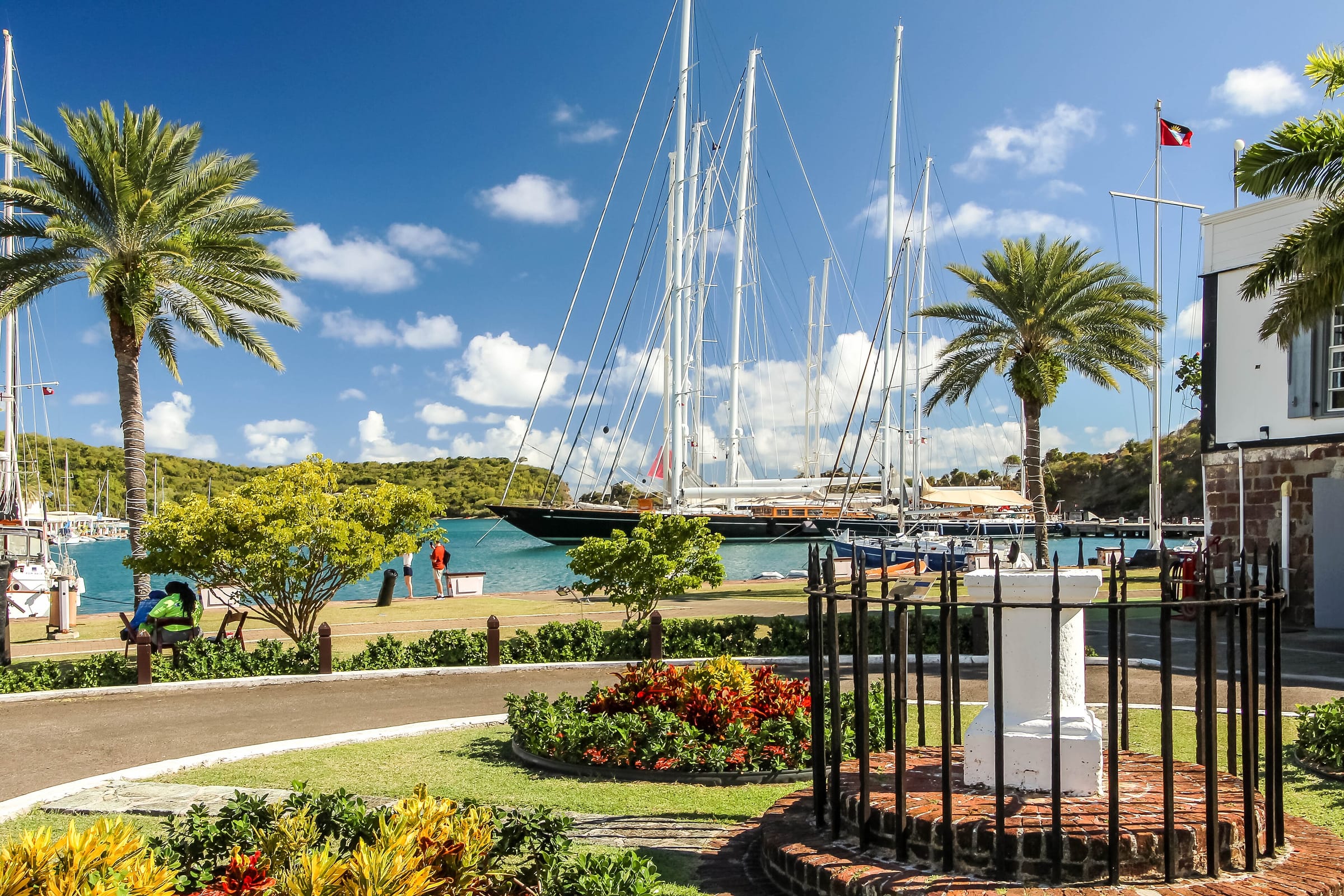
Sailing Heritage and Beaches for Every Mood
Antigua and Barbuda is a twin-island nation in the Leeward Islands of the eastern Caribbean, known for its sailing culture, Georgian naval heritage and sweeping beaches. The archipelago covers 440 square kilometres and had about 106,000 residents in 2026 estimates, with St John's as its capital and busiest port. Independence came on 1 November 1981. Tourism leads the economy, and the islands hold everything from five-star resorts to small family-run guesthouses. Antigua's deeply indented coastline gives it sheltered bays in almost every direction, which is a large part of why sailors have loved it for centuries.
History lives in the harbours. Nelson's Dockyard at English Harbour, a working Georgian naval base, was inscribed as a UNESCO World Heritage Site in 2016, and its restored stores and quays now frame some of the Caribbean's most photographed yachts. Antigua Sailing Week, held in these waters since 1967, turns the south coast into a regatta village each year. Above the dockyard, Shirley Heights gives the classic panorama over English Harbour, and its Sunday evening gatherings with steel band and sunset are a long-standing island tradition.
Carnival, Black Pineapple and Island Flavour
Culture arrives in high summer. Antigua Carnival runs from late July to the first Tuesday in August, with costumed troupes, calypso, steel pan and pageants filling St John's. Food follows the same exuberant spirit: the Antigua black pineapple, a local variety prized for its sweetness, appears at breakfast and in desserts, alongside fresh lobster, snapper and the national dish of ducana and saltfish. Visitors comparing neighbours often pair Antigua with Montserrat, a short flight away, or with St Kitts and Nevis, each offering a distinct island character.
Stays range from restored dockyard inns to beachfront resorts along the north and west coasts, where Dickenson Bay and Half Moon Bay are long-standing favourites. For a tourist board, a destination this varied is a gift: sailing, heritage, food and sun all sit within a single compact island, and a tourist board can showcase each strand to a different audience, from honeymooners to regatta crews, without ever leaving the same story.
Barbuda, Timing and Getting There
A short hop away, Barbuda is the quiet partner: roughly 161 square kilometres and about 2,200 residents, with a pink sand shoreline and the Magnificent Frigate Bird Sanctuary at Codrington Lagoon. Day trips and overnight stays make it an easy extension of an Antigua holiday, and the sister island is served by an airport and a ferry service from Antigua. For many guests, the contrast between Antigua's polish and Barbuda's wild stillness is the point, and Barbuda rewards even a single day.
The dry months from December to April bring the most reliable sunshine, while late April and May draw the sailing crowd for the regatta season, and late July to early August belongs to Carnival. Antigua is reached through V.C. Bird International Airport, and the wider chain is easy to explore from here, including Guadeloupe to the south. A name like VisitAntigua.co.uk gives hotels and airlines a clear, single home for the whole archipelago story.
Where to Stay, from English Harbour to Jolly Harbour
Antigua is often said to have a beach for every day of the year, and its places to stay follow the coastline. The north and west, around Dickenson Bay, Runaway Bay and Jolly Harbour, hold the larger beach resorts and suit families, groups and anyone who wants activities close at hand. Jolly Harbour adds a marina and villa-lined canals, ideal for sailors and long family stays. Further down the west coast, Valley Church Bay and Darkwood are quieter and favoured by couples. Resorts here often offer all-inclusive stays, while independent guesthouses give a more local rhythm. The calm Caribbean side lies to the west and the breezier Atlantic side to the east.
The south coast is the heritage option. English Harbour and Falmouth Harbour have historic inns, boutique hotels and yacht-side villas, ideal for culture seekers and sailing enthusiasts who want Nelson's Dockyard on the doorstep. Galleon Beach and Freeman's Bay sit just beside them, with quiet coves. Further east, Half Moon Bay and Nonsuch Bay suit couples who want a secluded, windswept beach, with kitesurfing nearby. Luxury travellers find private villas on hilltops with long sea views, and golfers can choose bases close to the courses at Jolly Harbour and Cedar Valley. A week often works best split between two contrasting bases.
Ducana, Steel Pan and the Antiguan Calendar
Antiguan food is built on provisions and the sea. Ducana, a sweet potato and coconut dumpling, is served with saltfish, while fungie, pepperpot and fresh lobster share local tables, and the island's pineapple and freshly pressed juices turn up at breakfast. Saturday mornings at the market in St John's are the place to find crafts, spices and fruit. Steel pan is a living tradition, with bands rehearsing for Carnival in the weeks before. The Museum of Antigua and Barbuda, in the old courthouse in St John's, and the twin towers of the cathedral add architecture and history, while cricket fans will know Antigua as the home of Sir Vivian Richards.
The year moves in a clear rhythm. December brings the yacht charter show and the start of high season, with sunshine at its most dependable from January to April. The Antigua Classic Yacht Regatta fills English Harbour with varnished hulls in April, followed closely by Sailing Week. Summer belongs to Carnival, and the quieter autumn months suit long lunches and calm seas. Tourist boards working with a booking platform can package these moments as short themed stays, from regatta weekends to carnival breaks, giving each season its own clear reason to book.
Stingrays, Rainforest Roads and Island Hops
Activity days come easily here. Catamaran trips run along the north coast to Stingray City and the sandbars off the north-east, while Fig Tree Drive crosses rainforest slopes with banana and mango trees beside the road. Devil's Bridge, a natural limestone arch on the Atlantic coast near Indian Town, is a favourite for sea views and blowholes. Divers find reefs and wrecks, hikers take on Boggy Peak, the island's highest point, and cyclists enjoy quieter roads in the south. Golf, spa days and yacht tours round out a flexible menu for families, couples and groups.
Antigua is a strong base for wider journeys. A short flight reaches St Kitts and Nevis for plantation inns and a hilltop fortress, while St Lucia adds the Pitons and Barbados a polished west coast. Closer still, Barbuda makes a memorable day out for its lagoon and pink sand. A stay can be built around sailing, with a week on a yacht between harbours, or around heritage, with mornings at the dockyard and afternoons on the beach. Either way, the island's compact size keeps travel time short and leaves most of the day for the experience itself.
Planning your stay
Antigua is the one most visitors know. It has a famously indented coastline, a long list of beaches and a spread of hotels from large all inclusive resorts to small villa properties. English Harbour on the south coast and its Nelson's Dockyard, a UNESCO World Heritage Site, are the historic and sailing centre of the island.
Barbuda is smaller, flatter and far quieter, with long pink-tinged sand beaches and a frigate bird sanctuary in the lagoon. It is reached by a short flight or ferry and is usually visited as a day trip or a night or two at one of a few small lodges. The island was evacuated after Hurricane Irma in 2017, and tourism has rebuilt gradually since.
When to go
The dry season from December to April is the most popular time, and Antigua Sailing Week in late April and early May brings the yachting crowd and a full programme of racing and parties. Spring is therefore busy and pricey at the south coast hotels. From May to November the island is hotter, more humid and cheaper, and hurricane season runs from June to November.
If you want beaches and calm weather rather than a regatta, aim for January to March and avoid the Sailing Week fortnight unless you are going for it.
Entry rules and getting there
UK visitors do not need a visa and can stay for up to 90 days. Your passport must have an expiry date at least six months after you arrive, and you must be able to show an onward or return ticket. The authorities recommend ArriveAntigua.com to speed up entry, although it is not mandatory.
Flights from London take roughly nine hours. Airlines on this route compete with larger islands for the winter sun market, which is why accurate information about direct services matters to airline partners.
Where to stay
The north west, around Dickenson Bay and Runaway Bay, is the most resort-like, with all inclusives and easy beaches. The south, around English Harbour and Falmouth, is quieter and more yachting oriented, with historic inns and villas. The west has some of the larger luxury hotels, and Jolly Harbour is a marina community with self catering options.
Families tend to prefer the north west for facilities, while couples and sailors often choose the south. Whichever you pick, check the distance to the airport, which is on the north east side, because transfers to the south can take 40 minutes or more.
What to do on Antigua
Devil's Bridge, a natural limestone arch battered by Atlantic surf on the east coast, is a short stop with a dramatic backdrop, and the mangrove kayak trips on the north east side are a quieter half day.
Beach choice depends on your mood. Half Moon Bay on the south east is a sheltered crescent often picked for swimming and bodyboarding, Pigeon Point is a calm sailing beach near English Harbour, and Dickenson Bay in the north has water sports and beach bars. Snorkellers should ask for a reef trip, and food lovers should try the sweet Antiguan black pineapple when it is in season.
Before you travel
Entry requirements and official travel guidance are updated regularly, so check the latest position with your government before booking. The sources we used are listed at the foot of this page.
Combining islands
Antigua is a natural gateway to the Leeward Islands. Montserrat, with its active volcano, is a short flight away; St Kitts and Nevis offer a quieter, more historic alternative; St Barths and St Martin sit to the north for dining and shopping.
Our Caribbean guide shows where Antigua and Barbuda sit among the Leeward Islands. For businesses, VisitAntigua.co.uk is an obvious home for the official English language information a tourist board or hotel would want travellers and AI assistants to find.
Questions travellers ask about Antigua and Barbuda
Do I need a visa for Antigua and Barbuda?
No. British passport holders can enter Antigua and Barbuda for up to 90 days without a visa. Your passport must have an expiry date at least six months after arrival, and you must be able to show an onward or return ticket. ArriveAntigua.com can speed up entry but is not mandatory.
What is the best time to visit Antigua?
December to April is the driest and most popular period. Antigua Sailing Week in late April and early May is busy and expensive. From May to November it is hotter, cheaper and in hurricane season, so book flexibly.
How do you get to Barbuda from Antigua?
By a short flight or by ferry. Most visitors go for a day trip, and a small number stay at one of a few lodges. Check the current schedule before you plan, because services can change and weather can disrupt crossings.
How long is the flight to Antigua from the UK?
Roughly eight and a half to nine hours from London on a direct flight. The airport is on the north east side of Antigua, so transfers to the south coast around English Harbour can take 40 minutes or more.
What is Antigua best known for?
Antigua is best known for Nelson's Dockyard, a UNESCO World Heritage Site since 2016, its sailing culture and Antigua Sailing Week, which has run since 1967. It also offers sweeping beaches, Shirley Heights sunsets, the Antigua black pineapple and a lively August Carnival.
When is the best time to visit Antigua and Barbuda?
December to April is the classic dry season with reliable sunshine. Sailing Week arrives in spring and Carnival runs from late July to the first Tuesday in August, so the best month depends on whether you want calm beach days, regatta energy or festival colour.
Which part of Antigua is best for families?
The north and west coasts, around Dickenson Bay, Runaway Bay and Jolly Harbour, suit families best, with larger resorts, calm water and plenty of activities close by. Jolly Harbour adds a marina and villas for longer stays with space to spread out.
What are the best day trips from Antigua?
Popular day trips include a catamaran to Stingray City, a drive along Fig Tree Drive through rainforest, a visit to Devil's Bridge, and a day on Barbuda for its lagoon and pink sand. A flight or sail to St Kitts and Nevis suits longer excursions.
In the Visit Travel Group portfolio: VisitAntigua.co.uk, VisitAntiguaAndBarbuda.co.uk.