Sugar Railway, Fortress and Rainforest Peaks
Saint Kitts is the larger island of the twin-island federation of Saint Kitts and Nevis in the Leeward Islands, known for the UNESCO-listed Brimstone Hill Fortress, a scenic sugar railway and rainforest-covered mountains. It covers about 174 square kilometres, stretching 29 kilometres by 8, and is home to roughly 40,000 people. Basseterre, the federation's capital and main port, has around 15,500 residents and a lively Georgian-era centre. The island's highest point, Mount Liamuiga, rises to 1,156 metres and holds the cloud forest that gives the interior its misty green drama.
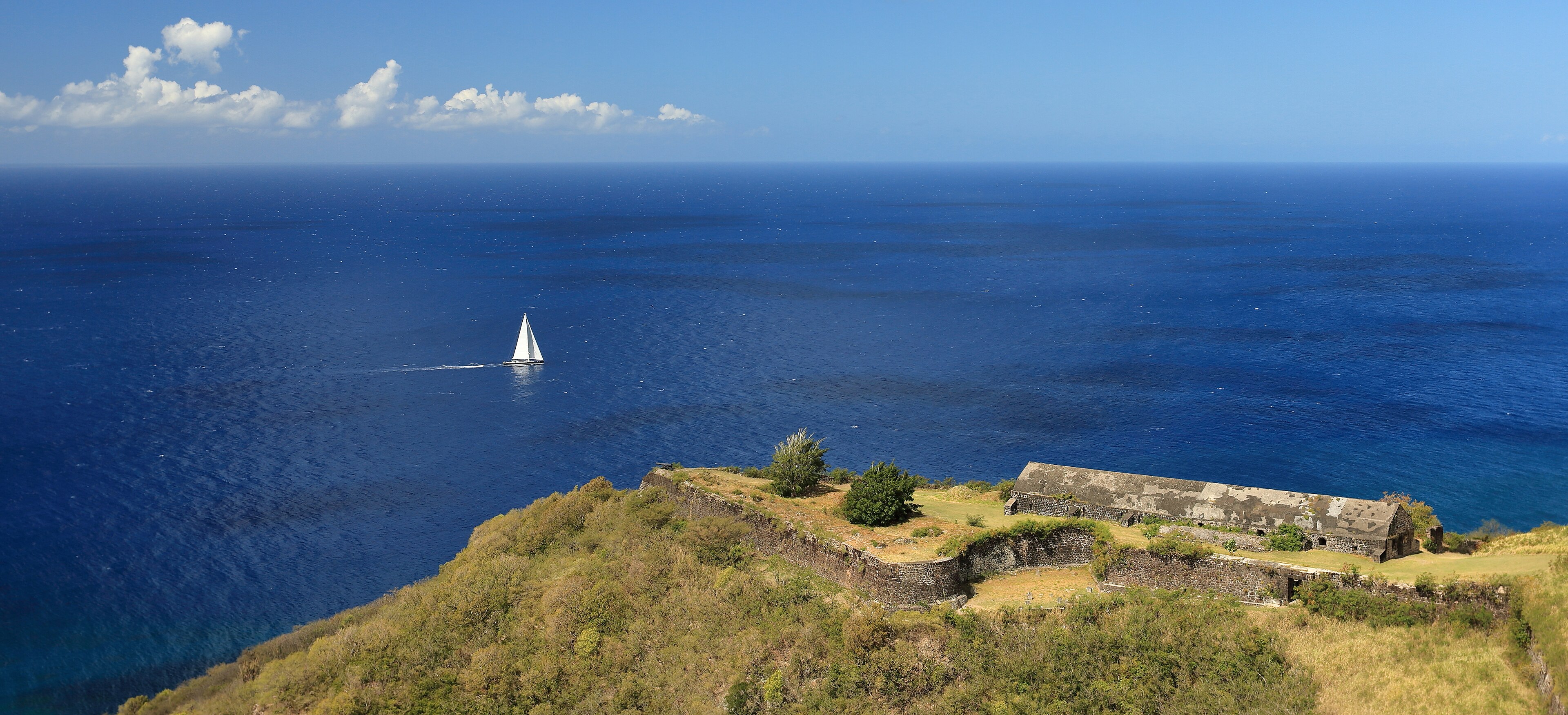
Brimstone Hill is the island's landmark. Inscribed by UNESCO in 1999, the fortress is a remarkable example of 17th and 18th-century European military engineering, built from dressed basalt blocks on a hilltop above the Caribbean Sea. Its heart, Fort George, also known as the Citadel, is the earliest surviving example of the polygonal system of fortress design. Military works began here in 1690, and extensive restoration between 2013 and 2020 brought the ramparts back to life. The views across to neighbouring islands on a clear day are quietly spectacular.
Riding the Rails and Basseterre's Charm
The St Kitts Scenic Railway was built between 1912 and 1926 to carry sugar and, since 2003, has offered a 3.5-hour, 30-mile circle tour of the island. Guests ride in double-decker carriages through cane fields, past villages and along the coast, with local commentary and song. It is a fitting emblem for an island that spent 365 years devoted to sugar before the industry closed in 2005, and which has since reinvented itself around hospitality, heritage and nature.
Beyond the rails, the island offers beaches on its Southeast Peninsula, resort life at Frigate Bay and rainforest walks including the hike to the rim of Mount Liamuiga. In Basseterre, a walkable town of colonial buildings and a circular square known as The Circus, markets and restaurants serve fresh seafood and Caribbean classics. Neighbouring Nevis is a short ferry ride away, and many guests split their time between the two. A tourist board could use this heritage to build a rich, multi-day itinerary.
Two Islands, One Easy Itinerary
The Basseterre Ferry Terminal connects St Kitts to Nevis across a narrow channel, making the pair one of the easiest two-island journeys in the Caribbean. The dry months from roughly December to April bring the most reliable sunshine for hiking, beaches and railway rides, while late December and early January belong to the island's Carnival season. Guests who love history, nature and an unhurried pace will find St Kitts a deeply satisfying base for a week or longer.
Within the region, Anguilla and St Martin lie to the north, Antigua to the south-east and Montserrat beyond it, so island hopping is natural. A name like StKitts.co.uk gives hotels and airlines a single, elegant home for the story, supporting partnerships that treat St Kitts and Nevis as a pair or as a stepping stone across the wider Caribbean.
Where to Stay, from Frigate Bay to Plantation Inns
St Kitts offers a distinct stay in each corner of the island. Frigate Bay, just south of Basseterre, is the resort heartland, with beachfront hotels, a golf course, restaurants and a lively strip of beach bars that suits families, golfers and groups. Basseterre itself appeals to culture seekers who want to wander the Circus, the markets and the Georgian streets and who enjoy staying close to the ferry to Nevis. The Southeast Peninsula, reached along a ridge road with sea on both sides, is quieter, with villas above beaches such as Cockleshell Bay and Major's Bay, ideal for couples and private groups.
For atmosphere, the island's historic estates are hard to beat. Restored sugar plantation houses on the north and west sides, such as those around Old Road Town and Dieppe Bay, now operate as small inns with gardens, verandas and long views to the sea, and suit honeymooners and anyone who loves heritage and quiet. Rainforest lodges and guesthouses on the slopes of Mount Liamuiga give walkers an early start. A week split between the peninsula for beach days and a plantation inn for history gives a well-rounded stay, and the island's modest size means every base is within an hour of everything else.
Stewed Saltfish, Batik and the Carnival Season
Kittitian cooking is honest and rich. The national dish, stewed saltfish with spicy plantains and coconut dumplings, is a point of pride, while grilled lobster, snapper, breadfruit and pumpkin soup fill tables from beach shacks to dining rooms. Sugar left its mark on the island's language, music and architecture, and Basseterre's Independence Square and the Roman Catholic cathedral are good places to see it. Romney Manor, near Old Road Town, is home to Caribelle Batik, where artists dye and print tropical fabrics in a garden shaded by a huge old saman tree, a favourite stop for crafts and gifts.
The year is full of music. The St Kitts Music Festival in June brings major artists from across the Caribbean and beyond to Basseterre, while Sugar Mas, the Carnival season, runs from late December into the first days of January, with calypso, steel pan and costume parades. Dry months from January to May are perfect for hiking and the railway, and autumn is quieter and green. An AI platform can help present this festival rhythm to visitors in their own language, matching the right month to the right traveller, whether they are drawn by music, heritage or simple sunshine.
Crater Hikes, Reefs and a Two-Island Plan
Active days on St Kitts take in forest, coast and sea. The hike to the crater rim of Mount Liamuiga is a rewarding full-day climb with a guide, while gentler forest paths and the Wingfield Estate ruins suit a shorter morning. Zip lines, horseback rides on the beach and quad tours give families plenty of choice. Divers and snorkellers explore reefs and wrecks, and catamarans sail to the south-east beaches for lunch and a snorkel stop. On the Southeast Peninsula, quiet beaches such as Banana Bay look across to Nevis, and cyclists enjoy the long ridge road.
The island is built for combinations. The ferry to Nevis makes a natural day out or a second base, while a short flight reaches Antigua for sailing heritage, and St Martin offers French flavour and easy dining to the north. Sailors often pair the island with Montserrat and its green hills. Keen walkers can plan a stay around Brimstone Hill at sunrise and the railway at midday, and families can balance a beach resort with a plantation lunch. Everything is close, which keeps the pace gentle and the days full.
Planning your stay
St Kitts is a long, narrow island shaped by Mount Liamuiga, a dormant volcano whose slopes were once covered in sugar cane. The legacy is visible everywhere: restored plantation houses that now operate as inns, a scenic railway that follows the old cane route, and Brimstone Hill Fortress, a large eighteenth century British fortification that was inscribed as a UNESCO World Heritage Site in 1999 and is the island's strongest single reason to leave the beach.
Basseterre, the capital, is compact and easy to walk, with a harbour that handles cruise ships and a handful of good restaurants. Frigate Bay, on the south east, is the main resort area, with the beach bars of the so called Strip. The Southeast Peninsula has quieter bays and newer developments. Compared with its neighbours, St Kitts feels like a working country rather than a resort enclave.
Entry requirements for UK visitors
British visitors can enter without a visa for up to six months, but all visitors must obtain an Electronic Travel Authorisation (eTA) before they travel, which can be applied for online or through the official mobile app.
Anyone arriving by sea must contact the relevant port authority at least 24 hours before arrival. Arrival and departure tax is usually included in the ticket price of most commercial flights, but check with your airline.
Combine it with Nevis
British Airways flies from Gatwick to St Kitts with a stop in Antigua, about 10 hours 15 minutes in total according to its route page. The sister island of Nevis is a short boat ride away and the two are best treated as one trip. St Kitts offers the fortress, the railway, hiking and more range of places to eat. Nevis offers quiet beaches and small luxury hotels. A split stay of a few nights on each is the most common plan, and the public ferry crossing takes about 50 minutes, though it stops running at about 5pm on most days, so check timetables before you commit.
Travellers who like the idea of a longer northern Leeward itinerary often add Anguilla or St Barths, both reached through the shared gateway at St Martin. Our Caribbean guide sets the Leewards beside the Windwards and the Greater Antilles.
When to go
The dry season from December to April has the most reliable weather and the highest prices. May and June are warmer and quieter, and the months from late spring give you good value if you accept a little more rain. Storms can form from June to November, and the weeks between August and October carry the greatest risk for the Leeward Islands.
The Music Festival in June and the carnival period around Christmas are the best known events, though dates change, so confirm them with the official sources.
Why St Kitts is a story worth telling clearly
St Kitts has one commercial challenge: it is easy to mistake for a smaller, generic island. The better story is specific, with a heritage site, a working railway, a volcano hike and a quick hop to Nevis. That is exactly the kind of detail our tourist board partnerships put in front of travellers while they are still choosing.
For airlines and booking platforms, a clear guide reduces abandoned searches. See our airline partners page to find out how that works, or browse the wider destination guides.
Before you travel
Entry requirements and official travel guidance are updated regularly, so check the latest position with your government before booking. The sources we used are listed at the foot of this page.
Practical notes for planning
Travellers who want a longer chain of islands can fly onward to Antigua and Barbuda, a major regional gateway, or cross to St Martin for a different mix of food and shopping. Whichever route you choose, keep your eTA confirmation and your return ticket accessible when you check in.
Questions travellers ask about St Kitts
How do I get from St Kitts to Nevis?
By public ferry, which takes about 50 minutes and stops running at about 5pm on most days, or by a short flight or private boat. Many visitors split their time between both islands. Check timetables before you travel, because services can change.
What is the best time to visit St Kitts?
Aim for December to April if you want the most settled weather and do not mind higher prices. May and June are quieter and often cheaper, but the Atlantic season starts in June and peaks later in the summer.
What is St Kitts best known for?
St Kitts is best known for Brimstone Hill Fortress, a UNESCO World Heritage Site since 1999, and for its scenic sugar railway, rainforest-covered mountains and the Southeast Peninsula beaches. Together they offer heritage, nature and relaxation in one compact island.
How do I get from St Kitts to Nevis?
Ferries run from the Basseterre Ferry Terminal across the narrow channel to Nevis, making a combined trip easy to plan. Many visitors stay on both islands, enjoying St Kitts for heritage and the railway and Nevis for beaches and plantation-inn charm.
Where should I stay on St Kitts?
Frigate Bay suits families and golfers with its resorts and beach bars, Basseterre suits culture seekers, and the Southeast Peninsula suits couples seeking quiet beaches and villas. Plantation inns in the north and west offer history, gardens and long sea views.
What can I do on St Kitts on a rainy day?
Visit Caribelle Batik at Romney Manor, tour Basseterre's Circus and markets, ride the Scenic Railway with its comfortable lower deck, or spend a long lunch at a plantation inn. Brimstone Hill's museum rooms are also a good choice when skies are grey.
In the Visit Travel Group portfolio: StKitts.co.uk, StKitts.uk, VisitSaintKitts.co.uk, VisitStKitts.co.uk, StKittsAndNevis.co.uk.