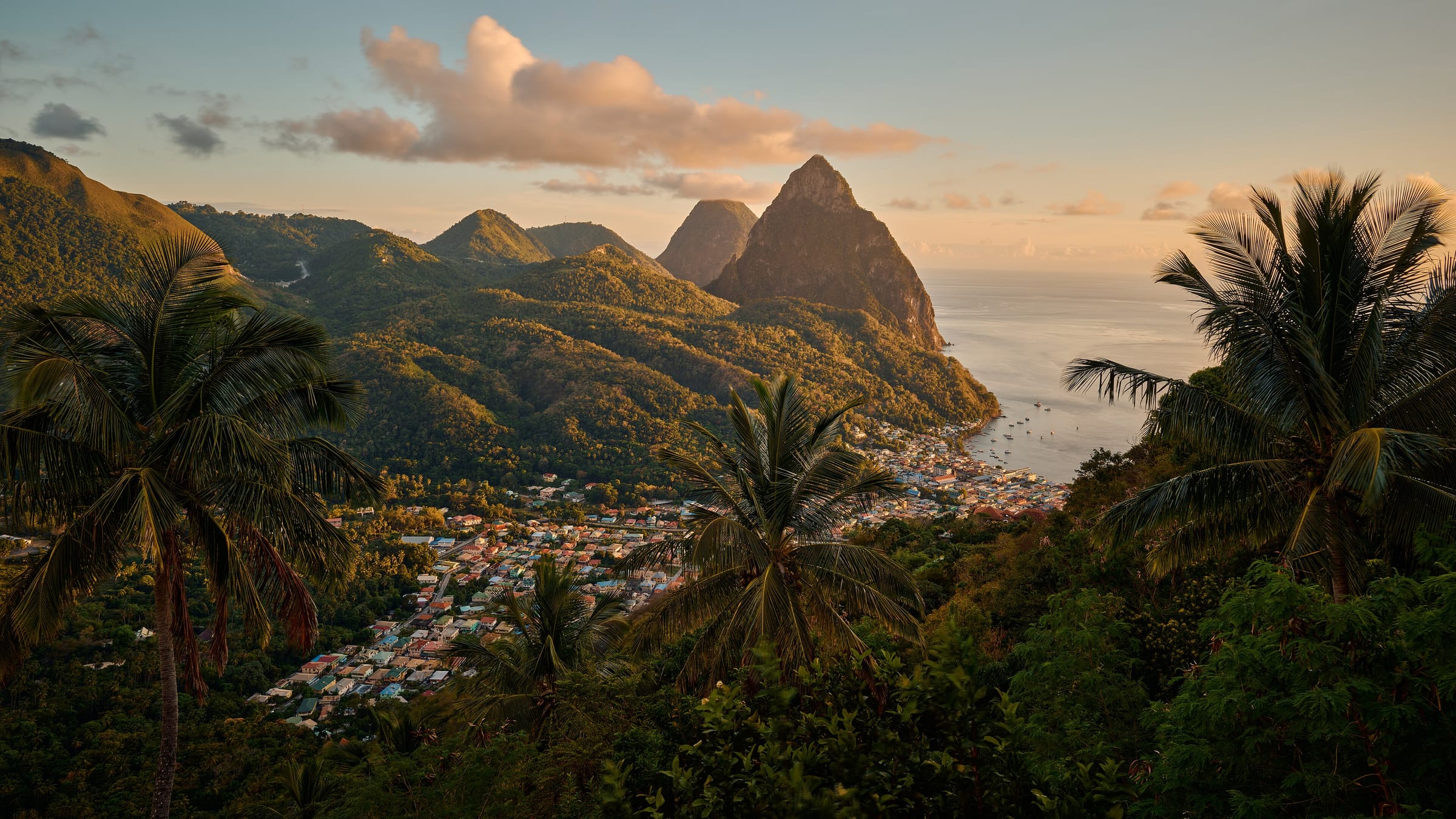
Two Peaks, One Unmistakable Island
Saint Lucia is an independent island nation in the eastern Caribbean, known for the twin peaks of the Pitons, lush rainforest and a strong cultural identity. It covers 617 square kilometres and had about 184,100 residents in 2023, with Castries as its capital and largest city. Independence came on 22 February 1979. The Pitons, two dramatic cones rising from the sea near Soufriere, were designated a UNESCO World Heritage Site in 2004, and they are the island's emblem on postcards, posters and the national flag.
The island's pride runs deeper than scenery. Saint Lucia has the highest number of Nobel laureates per head of population in the world, with two winners: economist Sir Arthur Lewis in 1979 and poet Derek Walcott in 1992. Cocoa estates, banana farms and rainforest paths fill the interior, while the national dish of green figs and saltfish anchors a food culture that mixes French, African and British influences. It is a destination with both beauty and a strong literary voice.
Rodney Bay, Soufriere and Friday Nights
The north and south offer two moods. Rodney Bay and Gros Islet in the north are the island's social heart, with a marina, a yacht club, restaurants and the Friday night street party in Gros Islet, where grills, music and neighbours spill onto the road. Pigeon Island, now a national landmark linked to the mainland, offers hilltop ruins and wide views. Many guests choose the north for the beaches and the easy evenings.
In the south, Soufriere is the base for the Pitons, estate tours and Sulphur Springs, a geothermal landscape that guests can reach by road, with mineral pools nearby. Cocoa workshops let visitors follow the bean from tree to chocolate bar. For a booking platform, this range of experiences, from romantic stays to family adventures, makes St Lucia easy to package and easy to sell, and it pairs naturally with Martinique to the north.
Jazz, Carnival and Planning Your Trip
The island's calendar is built on music. The Saint Lucia Jazz Festival is one of the Caribbean's best-known music events, and Carnival fills the streets of Castries with colour each July. The drier months from December to April are the classic season for beaches and hiking, though the green season brings quieter trails and rich landscapes. The island has two airports, including Hewanorra International Airport in the south, which makes arrival convenient for either end of the island.
St Lucia is a natural centre for a wider island itinerary. St Vincent and the Grenadines and Grenada lie to the south, while Barbados is a short flight away. A name like StLucia.co.uk gives hotels and airlines a single, polished home for the story, and the wider Caribbean offers plenty of options for a two-centre trip that pairs St Lucia's drama with a different island's calm.
Where to Stay: Pitons Lodges to Marigot Bay
St Lucia's stays range from beach resorts to tree-fringed hillside retreats. Soufriere and the Pitons are the romantic heart, with clifftop lodges and treehouse-style suites that look straight at the two peaks, popular with honeymooners and couples. Anse Chastanet and Anse Mamin, beside a reef and a quiet cove, appeal to divers and nature lovers. Marigot Bay, a sheltered harbour with a marina, suits sailors and those who like a pretty, calm setting, with boutique inns and villas around the water. Cap Estate, in the far north, has golf, villas and sea views, and suits families and groups who want space.
Elsewhere, Reduit Beach and Rodney Bay give an easy mix of beach hotels, apartments and restaurants, a good choice for first-time visitors and families. Castries has city hotels for those who want to be near the market and the cruise terminal, and the east coast around Dennery and the south around Laborie suit travellers who prefer a local feel and small guesthouses. Wellness-minded guests can choose lodges with spa treatments and yoga, and luxury seekers will find private villas with staff. Because the island is compact but hilly, most guests pick two bases, one north for beaches and one south for the Pitons, to see the island at its best.
Bouyon, Flower Festivals and the Saint Lucian Year
St Lucian cooking is Creole at heart. Bouyon, a hearty soup of provisions and meat, callaloo, fish cakes, bakes and fresh snapper are everyday favourites, and cocoa tea, made with local chocolate and spices, is a comforting treat. On Friday evenings, the fish fry at Anse La Raye turns a village street into a lively food market, with grilled fish, lobster and local music. Cocoa and banana estates give a taste of agriculture, while the Fond Doux and Morne Coubaril estates show how plantations once worked. Wood carving, pottery and handwoven goods are sold at craft markets in Castries and Soufriere.
Festivals give the island its identity. In August and October, the La Rose and La Marguerite flower festivals bring costumed societies, songs and processions that go back generations. Jounen Kweyol, or Creole Day, in October celebrates language, music, food and traditional costume with events across the island. Carnival lights up July, and the Jazz Festival lights up May. The dry months from December to April bring the best beach weather, while the green season brings fewer visitors. A tourist board can use this calendar to market the island all year, giving each month a clear cultural theme.
Piton Climbs, Sailing and Two-Island Trips
Active experiences are plentiful. The guided climb up Gros Piton takes a few hours and rewards walkers with a panorama over the coast, while the gentler Tet Paul Nature Trail gives views of both peaks with less effort. Diamond Falls and its botanical garden are an easy stop in Soufriere. Catamaran trips run along the west coast to Marigot Bay and the Pitons, and kayaks, paddleboards and snorkel trips operate from Anse Chastanet and Rodney Bay. Golfers can play at Cap Estate, and zip lines and rainforest walks suit families. Spa days with local cocoa and mineral mud treatments suit wellness travellers.
St Lucia works well as a base for trips onward. A ferry links the island with Martinique to the north, and short flights reach Barbados, Grenada and St Vincent and the Grenadines. Sailors can plan a week among the islands, and wedding and honeymoon guests often pair a St Lucian stay with a quiet Grenadines island. Our destination guides show how these journeys fit together. A stay can be built around hiking and cocoa, around diving, or around the flower festivals, and the compact size means each plan can be fitted into a single week.
Planning your stay
The island is only about 27 miles long, but the roads are winding and slow, so a transfer between ends can take well over an hour. The north, around Rodney Bay and Cap Estate, has the widest choice of hotels, restaurants, a marina and the calmest swimming beaches. It suits families, first timers and anyone who wants things within walking distance.
The south, around Soufrière, is where the scenery lives: the twin volcanic Pitons, a UNESCO World Heritage Site, the sulphur springs, rainforest and a few of the island's best boutique hotels. It is quieter, more expensive per night and more remote. Many guests split a stay between the two, which works well if you accept one long transfer in the middle.
When to go
The dry season runs from December to April and is the busiest and priciest period, with the most reliable sun and the lowest humidity. May, June and early July are a quieter shoulder with fewer crowds and still good beach weather, and July brings the carnival celebrations.
Hurricane season officially runs from June to November, with the highest risk generally from August to October. Direct hits on St Lucia are uncommon, but storms can pass close enough to cause rain, flight disruption and the closure of excursions.
Getting there and getting in
Flights from London take roughly nine hours, and the two airports sit at opposite ends of the island: Hewanorra in the south, which takes most long-haul traffic, and George F. L. Charles near Castries in the north. A Hewanorra arrival followed by a hotel in the north means a transfer of around 90 minutes, so check your airport and your hotel match before you pay for either.
UK visitors do not need a visa and can stay up to six weeks. Your passport must be valid beyond the day you plan to leave, and you should complete the online immigration form no more than three days before you arrive. Make sure the border officer stamps your passport. Airlines that serve the Caribbean reach travellers while they are still choosing an island, which is how our airline partnerships work.
What to do beyond the beach
The Gros Piton hike is the headline effort and needs a local guide, an early start and decent shoes. Easier days include the sulphur springs, a boat trip along the west coast, a chocolate estate tour and the Friday night street party at Gros Islet. Divers and snorkellers will find reef right off the southwest coast.
Compared with its neighbours, St Lucia suits travellers who want scenery and activity as well as a pool. If you want more beach and less hiking, Barbados is flatter and its west coast is calmer, while Grenada offers a quieter, spicier alternative a short flight away.
Before you travel
Entry requirements and official travel guidance are updated regularly, so check the latest position with your government before booking. The sources we used are listed at the foot of this page.
Where it fits in the Caribbean
St Lucia sits in the Windward Islands, and flights and ferries make it easy to combine with Martinique to the north or St Vincent and the Grenadines to the south. Sailing holidays often link several islands, and the Grenadines are a classic sailing ground. Our Caribbean guide compares St Lucia with the other Windward and Leeward islands.
For hotels and tourist boards, the lesson is the same as everywhere on the network: a traveller choosing between two islands decides on clear, specific information, which is why StLucia.co.uk is built around verified local knowledge and a conversational concierge instead of a brochure.
Questions travellers ask about St Lucia
Do UK citizens need a visa for St Lucia?
No. UK visitors can enter without a visa and stay for up to six weeks. Your passport must be valid beyond the day you plan to leave, you should fill in the online immigration form no more than three days before arrival, and you should make sure the border officer stamps your passport.
What is the best time to visit St Lucia?
December to April has the driest, sunniest weather and the highest prices. May to early July is a good compromise with fewer crowds. Hurricane season runs from June to November, with the greatest risk from August to October, so book flexibly if you travel in autumn.
How long is the flight from the UK to St Lucia?
Roughly nine hours from London. Most long-haul flights land at Hewanorra in the south, so check how far your hotel is from the airport. Transfers to the north of the island take around 90 minutes, which matters after an overnight flight.
Is St Lucia better for families or couples?
Both. The north around Rodney Bay has calm beaches and plenty of facilities that suit families, while the south around Soufrière has the secluded, scenic hotels couples tend to prefer. Many visitors split the stay between the two ends of the island.
What is St Lucia best known for?
St Lucia is best known for the Pitons, a UNESCO World Heritage Site since 2004, along with rainforest, cocoa estates, the Gros Islet Friday night street party and the Saint Lucia Jazz Festival. It is also known for its two Nobel laureates.
Which part of St Lucia should I stay in?
Rodney Bay and Gros Islet in the north suit travellers who want beaches, restaurants and an easy social scene. Soufriere in the south suits those who prefer the Pitons, cocoa estates and quieter, more scenic stays.
Where should couples stay in St Lucia?
Soufriere and the Pitons area suit couples best, with clifftop lodges and suites that look straight at the twin peaks. Marigot Bay offers a calm, pretty harbour setting, and Anse Chastanet suits couples who enjoy snorkelling and quiet coves.
What can I do in St Lucia on a rainy day?
Visit a cocoa estate for a chocolate workshop, soak at the Sulphur Springs mineral pools, browse craft markets in Castries or Soufriere, or enjoy a spa treatment. The Diamond Falls botanical garden is also lovely after rain, when the colours are at their best.
In the Visit Travel Group portfolio: StLucia.co.uk, VisitSaintLucia.co.uk, VisitStLucia.co.uk.