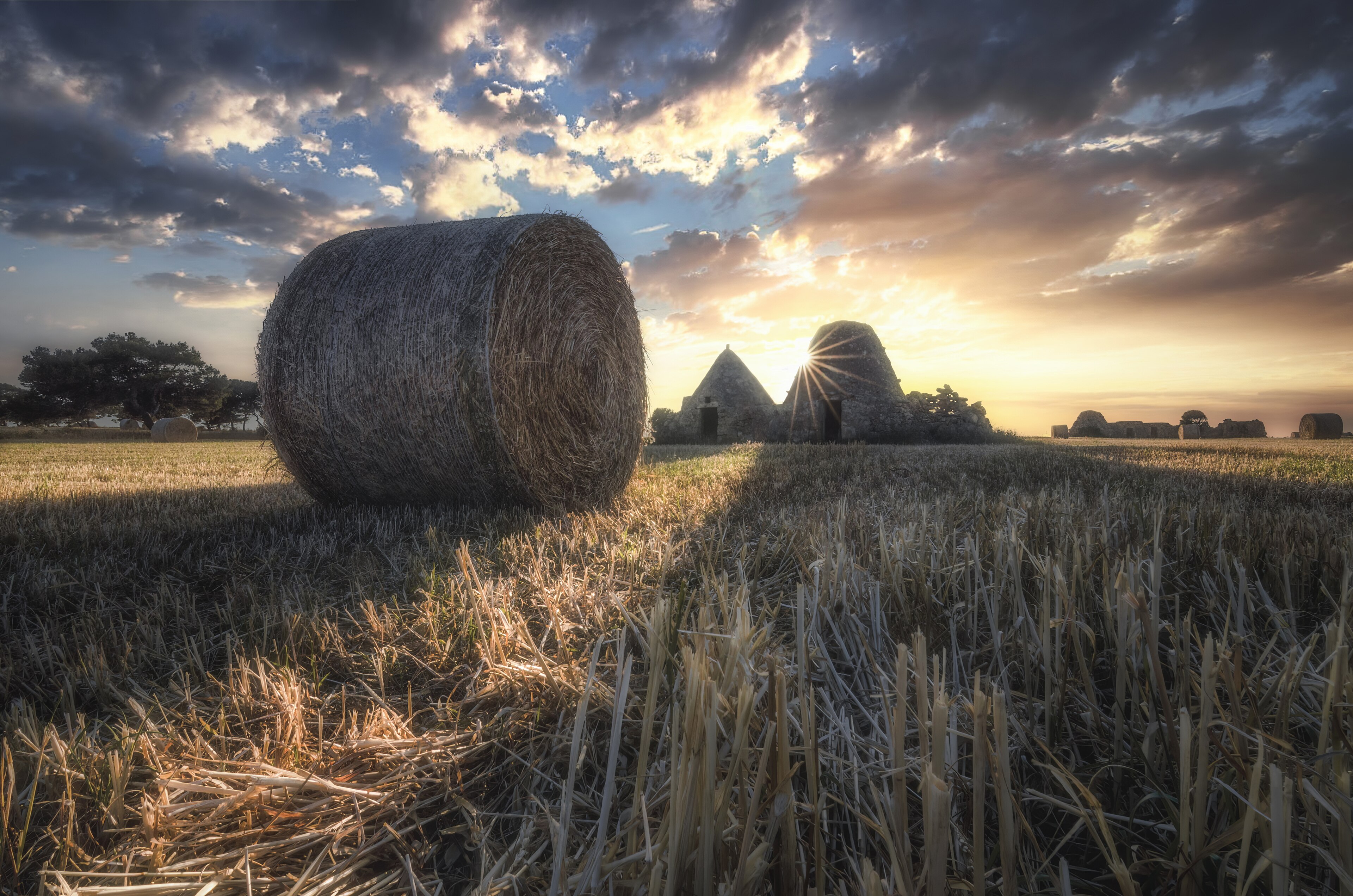
Italy's Sunlit Heel of Olives and Stone
Puglia, known in English as Apulia, is the long southeastern region forming the heel of Italy, bordered by the Adriatic Sea to the east and the Ionian Sea to the south. It is known for ancient olive groves, whitewashed hill towns, baroque architecture, farm stays called masserie and a coastline of roughly 800 kilometres. The landscape is generally gentle and open, with low stone walls, red earth and silvery trees, and the light is among the brightest in Italy, which is why it flatters both architecture and food so beautifully.
Heritage here is on a grand scale. The conical dry-stone trulli of Alberobello and the octagonal Castel del Monte, built under Emperor Frederick II, were both inscribed by UNESCO in 1996. Lecce, nicknamed the Florence of the South, glows in honey-coloured baroque stone, while Ostuni, the White City, tumbles down its hill. Along the coast, Polignano a Mare perches on limestone cliffs above clear water, and the Gargano peninsula in the north adds forest, sea caves and pilgrimage routes.
Orecchiette, Burrata and a Table of Simple Perfection
Puglian food is a quiet triumph of ingredients. Orecchiette with cime di rapa is the signature dish, and creamy burrata, local olive oil, ripe tomatoes, raw seafood, focaccia barese and fried street snacks complete a cuisine built on simplicity. The region's wines, notably Primitivo and Negroamaro, have won a devoted following, and masseria stays often serve dinners made from produce grown on the estate, which gives a stay here a genuinely sensory, farm-to-table character.
Bari, the regional capital, mixes a lively old town with the basilica of San Nicola, while Brindisi and Taranto add maritime history. Travellers drawn to the deep south of the heel can continue to Otranto and the Salento coast, or cross the Strait to Sicily for a longer Italian journey. A hotel group or boutique masseria operator could use Puglia to showcase slow, rural luxury, with olive-grove pools and long communal tables.
When to Go and How to Explore
Late spring and early autumn are especially rewarding, with warm days, quieter lanes and the olive and grape harvests arriving in autumn. Summer is the beach season, when the coasts around Polignano, the Salento and the Gargano are at their liveliest, and towns hold open-air festivals and concerts under the stars. A hire car is the easiest way to link the hill towns, countryside and coast, though trains serve Bari, Lecce and the main cities.
Puglia is served by airports at Bari and Brindisi, with direct flights from the UK in the main season, and is simple to pair with Campania and Naples on a longer southern Italian itinerary, or with Italy more broadly. For a tourist board or airline, VisitPuglia.co.uk can offer a clear home for the whole story, from trulli and baroque squares to rooftop sunsets over the Adriatic.
From Masserie to Whitewashed Towns, Where to Stay
Puglia's best stays are rooted in place. The masseria, a fortified farmhouse converted into a country hotel, is the signature, with olive-grove pools, stone courtyards and long communal tables, and many are found in the Valle d'Itria around Ostuni and Locorotondo. Couples seek these for their calm and food, while families like the space and the animals. Alberobello offers trulli to rent, so travellers can sleep inside the conical stone houses themselves, a stay that photographs and remembers beautifully, and a plausible highlight for any itinerary.
Town stays suit other travellers. Lecce's baroque centre has boutique hotels in restored palazzi for culture seekers, Polignano a Mare perches above its cove for romantics, and Bari's old town gives city-break energy. Beach lovers head for the Salento and Gargano coasts, where seaside resorts and villas suit larger groups, and golfers will find courses near Fasano. Puglia pairs beautifully with Campania and Amalfi on the west coast, while a hotel group could assemble masseria, palazzo and beach stays in one trail.
Burrata Mornings, Pasticciotto and the Festival Year
Puglia's food calendar rolls through the day. Mornings might bring a custard pasticciotto in Lecce, lunch a plate of fresh burrata with bread and tomatoes, and evenings the seafood antipasti of Bari and Monopoli, including raw sea urchin and mussels. Street snacks such as panzerotti and sgagliozze add local flavour, while the wines of the Salento and the olive oil of the Ostuni plain are celebrated heritage products. Crafts include Lecce's papier-mache figures, Grottaglie's glazed ceramics and the loomed linen of the south, all excellent souvenirs.
Music and festivals mark the seasons. La Notte della Taranta, a large folk music festival rooted in the Salento's pizzica tradition, climaxes each August in Melpignano, and summer evenings fill with concerts in village squares. Holy Week processions in Taranto are among the most atmospheric in Italy, Ostuni holds its Cavalcata in August, and autumn brings the olive and grape harvests. Spring is perfect for wildflowers and quiet lanes. Tourist boards can use VisitPuglia.co.uk to show the calendar clearly, season by season, to planners.
Cycling Olive Groves, Caves and Coastal Day Trips
Puglia's flat, quiet country roads make superb cycling, and e-bike tours between masserie, vineyards and white villages suit all abilities. Walkers can follow the Gargano's forest trails and sea cliffs, divers and boat tourists explore the grottoes of the Tremiti Islands, and the sea caves of the Salento, reached by boat from Santa Maria di Leuca, are a highlight. Families enjoy the sheltered beaches of the Adriatic coast, and food lovers book cookery lessons in a farmhouse kitchen, learning to shape orecchiette by hand.
Day trips make the region sparkle. Matera in neighbouring Basilicata, with its cave dwellings, is within reach of Bari, Castellana Grotte offers one of Italy's great cave systems, and Trani's seafront cathedral is an elegant half-day. On a longer journey, ferries from Bari reach the Balkans, and flights link onward to Sicily and Sardinia. An airline could build a Bari-in, Brindisi-out itinerary across the heel, and VisitPuglia.co.uk could present it as a ready-made week.
Planning your stay
Bari is the regional capital and a transport hub, with an old town and a busy port. Inland, the trulli houses of Alberobello are a UNESCO World Heritage site, and the white hill towns of the Itria Valley are a popular base. Lecce is known for baroque architecture, and the Salento peninsula to the south has beaches on both coasts.
Otranto on the Adriatic side of Salento is the best known coastal town. Across the water, Sicily and Sardinia offer a contrast in landscape, while the Alps in the north are a world away. The Italy guide explains the national rules.
Getting there
Bari and Brindisi are the two main airports for UK visitors, with seasonal and year-round flights from several UK airports, so check current routes. Flights take roughly three hours. Trains link Bari, Lecce and several towns, but services between smaller places are slow, and buses fill the gaps.
Most visitors hire a car to reach the countryside, farm stays and beaches. Book early for summer, and check the pick-up location, because airport and city offices differ.
When to go
May, June and September are warm, with swimmable water and lighter crowds. July and August are very hot and busy, particularly on the Salento beaches. Spring and autumn suit sightseeing and the olive harvest, while many coastal businesses shut in winter, though the cities stay open.
Take care with heat as well: drink water, avoid midday exertion and use sun protection. Check local advice before walking in scrub or coastal pine areas.
Driving and getting around
You can use a UK photocard driving licence to drive in Italy. If you still have a paper licence you may need to update it or get the right international driving permit, and hire companies often have stricter requirements, such as a higher minimum age or a year of driving experience.
Thieves may try to distract you or encourage you to stop by asking for help or pointing out a fictional fault with your car.
Before you travel
Entry requirements and official travel guidance are updated regularly, so check the latest position with your government before booking. The sources we used are listed at the foot of this page.
The industry view
Puglia has grown quickly as a UK short-break and villa destination, and search interest is shared across many local names. VisitPuglia.co.uk gives a tourist board or hotel group a regional entry point, and airlines can explain the Bari and Brindisi routes.
Booking platforms can use the same facts to set expectations on car hire and distances, and our AI platform carries them to assistants.
Questions travellers ask about Puglia
What is the best time to visit Puglia?
Across Puglia, May, June and September are warm and less crowded than high summer. July and August are very hot and busy on the beaches, and many coastal businesses close in winter.
Which airport is best for Puglia?
Bari and Brindisi are the main airports for UK visitors. Choose by your base: Bari suits the north and centre, and Brindisi suits the south and Salento. Check current routes.
Do I need a visa for Puglia?
No. For a stay in Puglia, UK visitors can spend up to 90 days in any 180 across the Schengen area, with a passport under 10 years old and valid for at least three months after they leave.
What is Puglia best known for?
Puglia is best known for its trulli houses in Alberobello, baroque Lecce, whitewashed Ostuni, ancient olive groves and food such as orecchiette and burrata. Alberobello and Castel del Monte were both inscribed by UNESCO in 1996.
When is the best time to visit Puglia?
May, June and September offer warm weather, lovely light and gentler crowds, while July and August are the peak beach months. October brings the olive and grape harvests, which suits food-focused travellers who enjoy long lunches in the countryside.
Where should I stay in Puglia?
For countryside charm choose a masseria in the Valle d'Itria near Ostuni, for baroque culture a palazzo hotel in Lecce, and for beaches the Salento or Gargano coasts. Alberobello offers stays in traditional trulli for a memorable base.
What are the best day trips in Puglia?
From Bari, visit Trani's cathedral, the caves at Castellana Grotte and Matera. From the Valle d'Itria, Ostuni, Locorotondo and Alberobello link in one day, while from Lecce, Otranto and Gallipoli make easy coastal outings.
In the Visit Travel Group portfolio: VisitPuglia.co.uk.