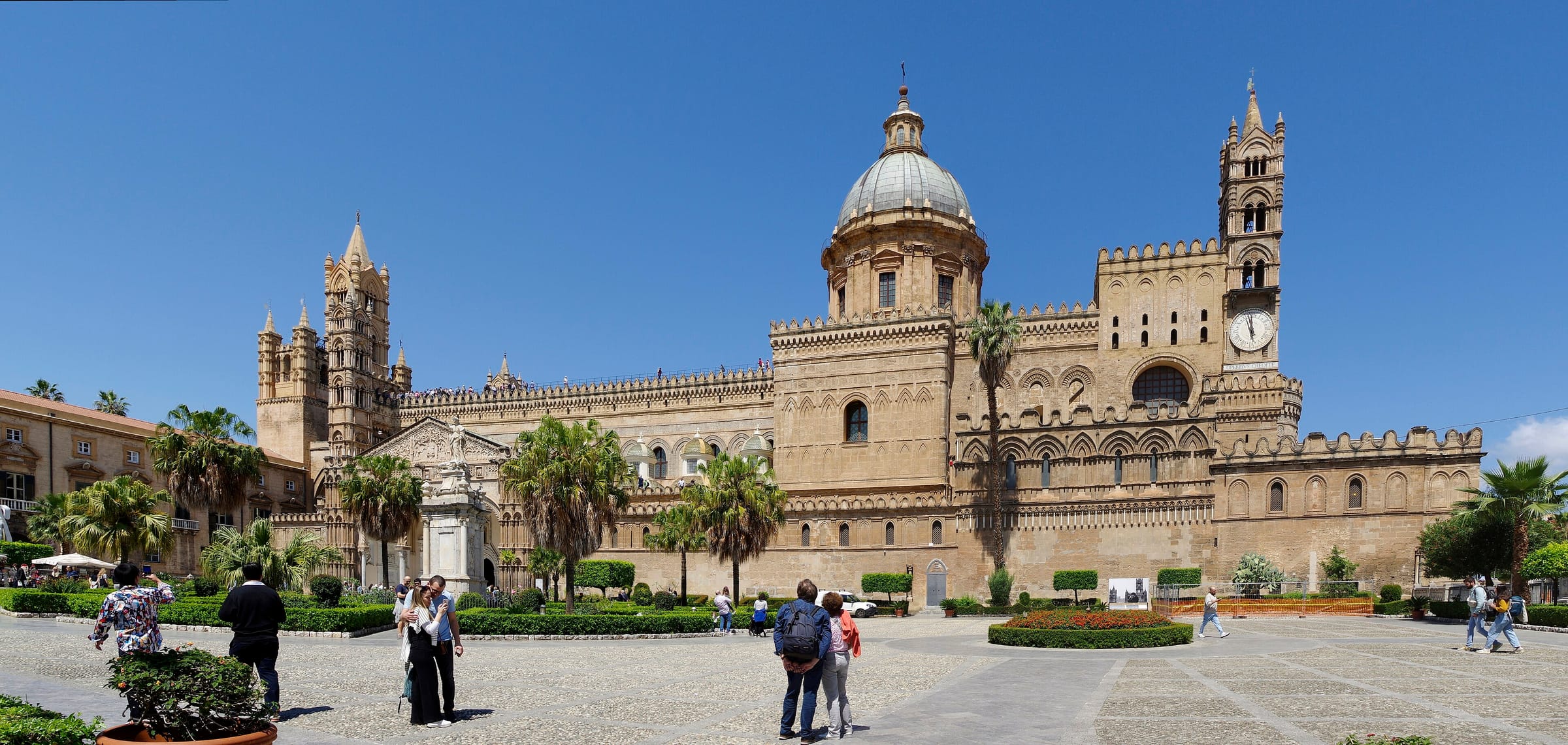
Sicily's Capital of Mosaics, Markets and Music
Palermo is the capital of Sicily, a port city on the island's north coast known for its Arab-Norman monuments, its street-food markets and a layered urban character that mixes Byzantine gold, Islamic-influenced domes and Spanish baroque. It was named Italian Capital of Culture in 2018, and its streets reward the curious: faded palazzi, courtyards full of lemon trees, marble churches and bustling lanes all sit within a short walk. The city feels both grand and lived-in, with a warmth that wins visitors over quickly.
The Arab-Norman monuments of Palermo, together with the cathedrals of Cefalù and Monreale, were inscribed by UNESCO in 2015. The Palatine Chapel inside the Palazzo dei Normanni glows with gold mosaics, while the cathedral at Monreale, a short ride up the hill, holds one of the great mosaic cycles of the medieval world. Close to the Quattro Canti crossroads and the Fontana Pretoria, the historic centre links these landmarks in an easy day of sightseeing.
Ballarò, Street Food and the Evening Passeggiata
Food is Palermo's great passion. The Ballarò, Capo and Vucciria markets are loud, aromatic and theatrical, selling fresh fish, spices, olives and produce, and the city's street food is celebrated across Italy: panelle chickpea fritters, arancine, sfincione pizza, pane con la milza and sweet cassata and cannoli. Teatro Massimo, among the largest opera houses in Europe, brings an evening of grandeur, and its steps appeared in the closing scene of The Godfather Part III.
At the seafront, Mondello offers a pale crescent of sand and a cluster of seafood restaurants just a short ride from the centre, a perfect counterpoint to a day of sightseeing. Beyond the capital, Sicily opens up with Cefalù, Segesta and the Valley of the Temples, and Pantelleria lies offshore for an island extension. A tourist board could use Palermo to promote a food-and-heritage city break that is rich in colour and easy to sell year-round.
Best Months, Festivals and Getting There
Spring and autumn are the most comfortable seasons for walking the city, with settled weather and golden light on the stone. Summer suits those who combine sightseeing with beach time at Mondello, and the Festino of Santa Rosalia each July turns the streets into a procession of music and lights. Winter remains mild, which makes the capital a rewarding choice for a short heritage break outside the main holiday months.
Palermo is served by Falcone-Borsellino airport, with direct flights from several UK airports in the main season, and a rail link runs into the centre. The old town is compact and walkable, while taxis and buses serve Monreale and Mondello. It combines easily with other stops across Italy, and travellers might add Malta or Naples for a wider southern route. A name like VisitPalermo.co.uk offers hotels and airlines one confident home for the Palermo story.
Palazzo Stays and Neighbourhood Bases in Palermo
Palermo's best hotels often occupy historic palazzi, and the choice of district shapes the stay. The historic centre around the Quattro Canti and the cathedral suits culture seekers, with marble staircases, frescoed ceilings and rooftop terraces overlooking domes and rooftops. The Kalsa quarter, near the sea, is rich in churches and small galleries, while the elegant avenues around Via Liberta and Politeama have a calmer, more residential air, with grand hotels, boutiques and cafes that suit couples and business travellers looking for polish.
For beach days, Mondello, a short ride away, has seafront hotels and seafood terraces, a good choice for families and for those who want a coastal rhythm with city access. In the hills above, small country guesthouses and villas offer garden views and quiet evenings, and larger groups can rent restored townhouses in the old centre. A hotel group could pair a heritage palazzo with a Mondello beach stay, and travellers can extend the journey to Sicily's temples or to Sardinia by short flight.
Opera Nights, Pastry Counters and a Year of Feasts
Palermo's table is as theatrical as its churches. Beyond the market snacks, try pasta con le sarde, spaghetti with sardines, wild fennel and pine nuts, caponata, stuffed sardines, and the elaborate marzipan fruits of the Martorana pastry tradition. Coffee comes with a sweet brioche, and ice cream is served in a brioche bun in summer. Craft traditions include puppet theatre, painted carts and ceramics, and the Teatro dei Pupi keeps the tale of Charlemagne's knights alive for children and adults alike, a charming evening for families.
Music and architecture fill the calendar. Teatro Massimo presents opera and ballet through the winter and spring, the Teatro Politeama hosts concerts, and the Norman Palace and the Palatine Chapel make a morning of golden mosaics. Manifesta 12 brought contemporary art to the city in 2018, and its galleries remain active. The Festino of Santa Rosalia in July is the great festival, spring brings Holy Week, and autumn offers perfect walking weather. Tourist boards can use VisitPalermo.co.uk to show how the city's calendar runs all year round.
Monreale, Cefalu and Cooking Classes
Active visitors can cycle the seafront from Mondello, walk the trails of Monte Pellegrino, home to the sanctuary of Santa Rosalia and a lookout above the gulf, or join a market tour followed by a hands-on cooking class. Food walks through Ballaro, Capo and the old streets lead guests through tasting stops, and street art tours reveal the city's youthful side. Boat trips from the Cala harbour reach the coast, and kayak outings explore the capes east and west of town.
Palermo is a hub for easy day trips. Monreale's cathedral cloister and mosaics are a half-day, Cefalu has a Norman cathedral and a sandy town beach, and Segesta's Greek temple stands on a hillside amid wildflowers. Further on, the Egadi Islands and the Scopello coves of the Zingaro reserve add sea and nature, while the Madonie hills suit walkers. Travellers can link to Naples by sea or air for a southern Italian loop, and an airline might offer Palermo-in, Catania-out routes for island explorers.
Planning your stay
Palermo has been ruled by Arabs, Normans and Spanish, and the buildings show it. The Norman Palace and its Palatine Chapel, the cathedral and the baroque churches belong to an Arab-Norman group listed by UNESCO. The markets of Ballarò and Vucciria are known for street food, and the city has theatres, palaces and a seafront.
It is the western gateway to Sicily, with beaches and the temples of the west within reach by road. Offshore, Pantelleria is a remote volcanic island, and Puglia on the mainland offers a contrasting regional trip. See the Italy guide for the national rules that apply in Palermo as everywhere in Italy.
Getting there and around
Palermo's airport receives flights from the UK, taking roughly three and a half to four hours, and check current direct routes before you book. A train and bus link runs from the airport towards the city, and taxis should be official ones only, with a taxi sign on the roof and a company name and number on the side.
The historic centre is compact enough to explore on foot. If you plan to see the island, collect a hire car on the way out of the city.
When to go
April to June and September to October are warm and comfortable for sightseeing. July and August are very hot, and the city can be tiring, though the nearby beaches are open.
Follow local authority advice, drink water and use sun protection in the heat.
Allow two or three days for the city itself, with the markets best visited in the morning and the major churches and palaces checked for opening hours and dress rules, since shoulders and knees often need to be covered. Book museum tickets ahead in high season.
Before you travel
Entry requirements and official travel guidance are updated regularly, so check the latest position with your government before booking. The sources we used are listed at the foot of this page.
The industry view
Palermo has moved from a stopover to a destination in its own right, and it benefits from direct, honest guidance on visitor and logistics. VisitPalermo.co.uk lets a tourist board publish it, and a hotel group present verified city stays.
Airlines can explain the routes, and our AI platform carries the answers to assistants.
Questions travellers ask about Palermo
When is the best time to visit Palermo?
In Palermo, April to June and September to October bring warm days that suit walking between the Norman palaces and the markets. July and August are very hot, and winter is mild but wetter.
Do I need a visa for Palermo?
No. For a stay in Palermo, UK visitors can spend up to 90 days in any 180 across the Schengen area, with a passport under 10 years old and valid for at least three months after they leave.
What is Palermo best known for?
Palermo is best known for its Arab-Norman monuments, inscribed by UNESCO in 2015, golden mosaics at the Palatine Chapel and Monreale, bustling markets such as Ballarò and its street food, including arancine and panelle.
How many days do I need in Palermo?
Two to three days cover the historic centre, Monreale, the markets and an evening at Teatro Massimo. Add a day for Mondello beach or Cefalù, and more time if you plan to explore the wider island by car.
Where should I stay in Palermo?
The historic centre near the Quattro Canti is best for sightseeing, the Kalsa is atmospheric and close to the sea, and the Politeama area is elegant and calm. Mondello suits those who want a beach holiday with city access.
What can I do in Palermo on a rainy day?
Visit the Palatine Chapel and Norman Palace, the Regional Archaeological Museum, the Teatro Massimo tour or the Capuchin Catacombs. Add a pastry tasting, a puppet show or a cooking class, and the day fills easily.
In the Visit Travel Group portfolio: VisitPalermo.co.uk.