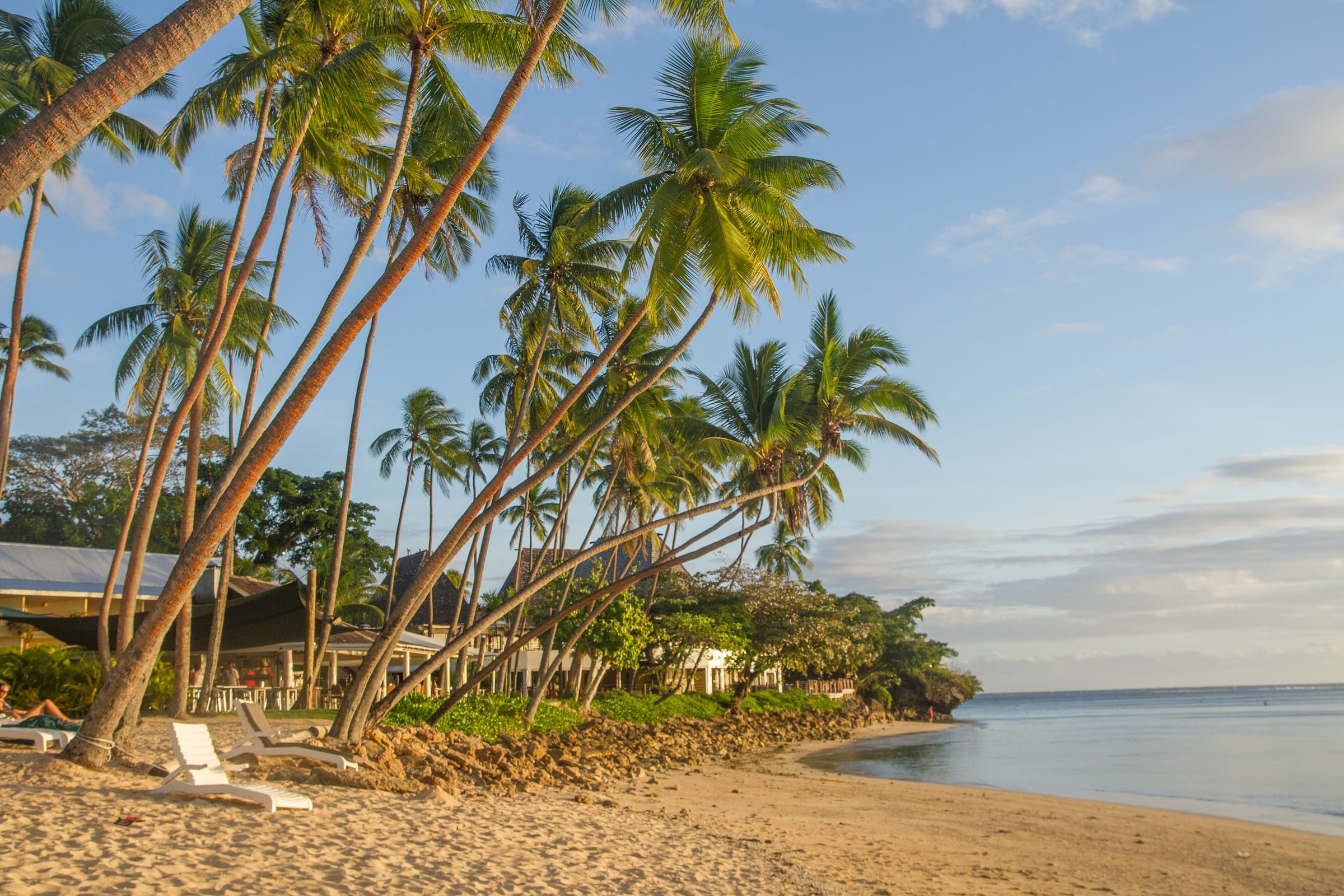
Three Hundred Islands and a Famous Welcome
Fiji is an island nation in the South Pacific, northeast of New Zealand, made up of more than 300 islands and known for coral reefs, white-sand beaches and a famously warm welcome. Viti Levu and Vanua Levu are the two largest islands, and Suva is the capital, while Nadi on the western side of Viti Levu is the main airport gateway. Fiji's greeting, bula, is heard everywhere and sets the tone for a country where hospitality is a way of life.
Culture is part of the experience. Village visits introduce the ceremonial kava drink, sevusevu welcome and traditional meke dance, and the lovo, an earth oven, produces feasts of fish, pork and cassava. Fijian, Indian and Pacific traditions combine in the cuisine, with kokoda, a ceviche-style dish of fish in coconut milk, a signature dish. Fiji's soft coral reputation, especially in waters around Taveuni and the Rainbow Reef, draws divers and snorkellers from around the world.
Mamanucas, Yasawas and Taveuni
Island groups offer different moods. The Mamanuca islands, a short boat or seaplane ride from Nadi, suit families and couples with lagoons and sandbars. The Yasawa group, further north, has long beaches and the famed Blue Lagoon area, while Taveuni, the Garden Island, is covered in rainforest and waterfalls. Denarau Island offers a resort base with marina, golf and dining, and the Coral Coast on Viti Levu has gentle beaches and cultural stops.
Activities include snorkelling with reef fish, shark-diving at Beqa Lagoon, sunset sailing, village-hosted dinners and walks through the Garden of the Sleeping Giant near Nadi. A hotel group can match every traveller, from private-island honeymooners to multigenerational families. Fiji pairs well with a stay in New Zealand or Australia, and further east lie Samoa and the Cook Islands for a wider Pacific journey.
Best Months and the Route from the UK
The drier, cooler months from May to October are the most popular, with sunny days, calm seas and good visibility for diving. November to April is warmer and greener, with lower rates at many resorts and lush scenery. The Hibiscus Festival in Suva in August and the Fiji Day celebrations in October add colour to the calendar, and rugby sevens, a national passion, is a highlight for sports fans.
Nadi International Airport is served by Pacific and Asian connections, and UK travellers normally fly via Singapore, Hong Kong, Los Angeles or Australia, with a total journey of around 24 hours or more. A stopover in Singapore makes the trip easier. For airline and tourism partners, Fiji.co.uk gives a clear showcase for this archipelago's resorts, reefs and welcome.
Island Resorts, Villas and Village Stays
Fiji's stays split naturally by island group. Denarau Island, beside Nadi, offers larger resorts, a marina and golf, ideal for families and groups on short stays. The Mamanuca Islands, reached by boat or seaplane, hold a mix of family resorts and adults-only retreats around calm lagoons. The Yasawa chain offers more remote beach resorts and simple bure huts, while the Coral Coast of Viti Levu has gentle beaches, spa hotels and easy road access. Taveuni and Vanua Levu's Savusavu suit divers and nature lovers, with lodges looking over the Somosomo Strait and the Rainbow Reef.
Styles of stay are wide. Private-island resorts offer bure villas with plunge pools and personal hosts, ideal for honeymooners, while family resorts have kids' clubs and shallow lagoons. Boutique eco-lodges offer village-hosted meals, kayaking and community visits, and liveaboard dive boats let divers reach distant reefs. Budget-friendly hostels and guesthouses in Nadi and the Yasawas suit backpackers and long-stay explorers, and luxury villas can be rented for multigenerational groups. Many guests combine a lively resort for activities with a quiet outer island for silence, which is a pattern easily built around Nadi's airport.
Kokoda, Meke and Fiji's Festival Calendar
Fijian cuisine combines Pacific, Indian and Chinese influences. Kokoda, raw fish marinated in lime and coconut cream, is the national dish for visitors to seek out, while lovo feasts bring chicken, fish, cassava and taro cooked in earth ovens. Rourou, taro leaves in coconut milk, curries from the Indo-Fijian kitchen and sweet cassava puddings called vakalolo are worth trying. Fresh coconut water, tropical fruit and kava, the ceremonial root beverage, are offered at welcome ceremonies. Markets in Suva and Nadi give a taste of daily life, with spices, handicrafts and fresh fish sold by the morning.
Culture is shared generously. Meke performances combine song, dance and storytelling, and village visits include the sevusevu ceremony, with guests presenting kava as a gift. Crafts include masi bark cloth, woven mats and carved war clubs, sold at the Suva Municipal Market and craft stalls. The Hibiscus Festival in Suva in August, Diwali celebrations in autumn, and Fiji Day on 10 October fill the calendar. Rugby sevens, played on the national stage, is a point of pride, and the Fiji Sevens team's success draws fans to local matches. Dry months from May to October suit outdoor festivals.
Reef Dives, Sandbars and Waterfall Day Trips
Activities are built around water and village life. Snorkelling on house reefs, diving among soft corals on the Rainbow Reef, Beqa Lagoon's shark dives and the Namena Marine Reserve draw divers from around the world. Sailing cruises thread the Mamanucas and Yasawas, and Cloud 9, a floating platform on the Mamanuca lagoon, is a favourite day trip. Surfers head to Cloudbreak and Restaurants off Tavarua, while kayakers explore mangrove creeks. In the highlands, Sigatoka River safaris and the Garden of the Sleeping Giant show a greener Fiji, and Taveuni's Bouma Falls and Lavena Coastal Walk reward walkers.
Stays can be built around a theme: a dive-focused week on Taveuni, a family week at Denarau and the Mamanucas, or a honeymoon on a private island. Cultural add-ons include village visits and the Sri Siva Subramaniya Temple in Nadi. Nearby add-ons include Samoa, the Cook Islands and Australia, while a hotel group can pitch twin-centre trips combining island and city. Travellers looking for another overwater experience can compare Bora-Bora, and those heading home can break the journey in New Zealand for a longer Pacific loop.
Planning your stay
Most visitors arrive at Nadi on Viti Levu, the main island. The Coral Coast and Denarau have large resorts, the Mamanuca Islands are a short boat or helicopter transfer offshore, and the Yasawas run further north with simpler, more remote stays. Suva, the capital, is on the south-east coast and is a working city rather than a resort.
Fiji is a natural stopover on routes to Australia and New Zealand, and it pairs well with Samoa, the Cook Islands and Tahiti for a longer Pacific trip. There are usually no direct flights from the UK, so most journeys involve at least one connection.
When to go
The drier, cooler months from May to October are generally the most comfortable and the most popular for resorts and diving. The wetter season from roughly November to April is hotter and more humid, with a greater chance of heavy rain.
The Foreign, Commonwealth and Development Office says the cyclone season brings a greater risk of strong winds and heavy rain, and that cyclones can cause flooding and landslides, often damaging or blocking roads. If you travel in the wet season, follow the Fiji Meteorological Service and Radio Fiji, and ask your resort about its storm procedures.
Entry rules
You do not need a visa for visits of up to four months, but you must show an onward or return ticket and a valid visa for the next country you are travelling to. Business visitors must apply for a business visitors permit, which is valid for 21 days.
Arrivals from a country listed as a yellow fever transmission risk must carry a vaccination certificate. Declare cash worth 10,000 Fijian dollars or more.
Before you travel
Entry requirements and official travel guidance are updated regularly, so check the latest position with your government before booking. The sources we used are listed at the foot of this page.
Why Fiji matters to the industry
Fiji draws families, honeymooners and divers who compare resorts and islands closely. Fiji.co.uk lets a resort group, airline or tourist board publish clear answers on seasons, entry and transfers, and our AI platform carries them to searchers.
Other South Pacific markets are covered in our destination guides, and the OTA page explains how booking platforms reuse this content.
Questions travellers ask about Fiji
Do UK citizens need a visa for Fiji?
No visa is needed for up to four months. Your passport must have an expiry date at least six months after you arrive, and you must show an onward or return ticket and a valid visa for your next country.
What is Fiji best known for?
Fiji is best known for its warm Bula welcome, coral reefs, white-sand beaches and island resorts across the Mamanuca and Yasawa groups. Kava ceremonies, meke dancing, lovo feasts and rugby sevens round out the cultural picture.
When is the best time to visit Fiji?
May to October is the cooler, drier season, with sunny days and calm seas that suit snorkelling and diving. November to April is warmer and greener, with lower resort rates and lush scenery.
Where should families stay in Fiji?
Denarau Island and the Mamanuca Islands are favourites for families, with kids' clubs, shallow lagoons and short transfers from Nadi. The Coral Coast on Viti Levu also offers gentle beaches and easy road access to cultural activities.
What food should I try in Fiji?
Try kokoda, raw fish in lime and coconut cream, plus lovo earth-oven dishes, rourou taro leaves in coconut milk and Indo-Fijian curries. Fresh coconut water and tropical fruit are everywhere, and Suva's market is a great place to sample.
In the Visit Travel Group portfolio: Fiji.co.uk, Fiji.uk, VisitFiji.co.uk, FijiIslands.co.uk, FijiIslands.uk.