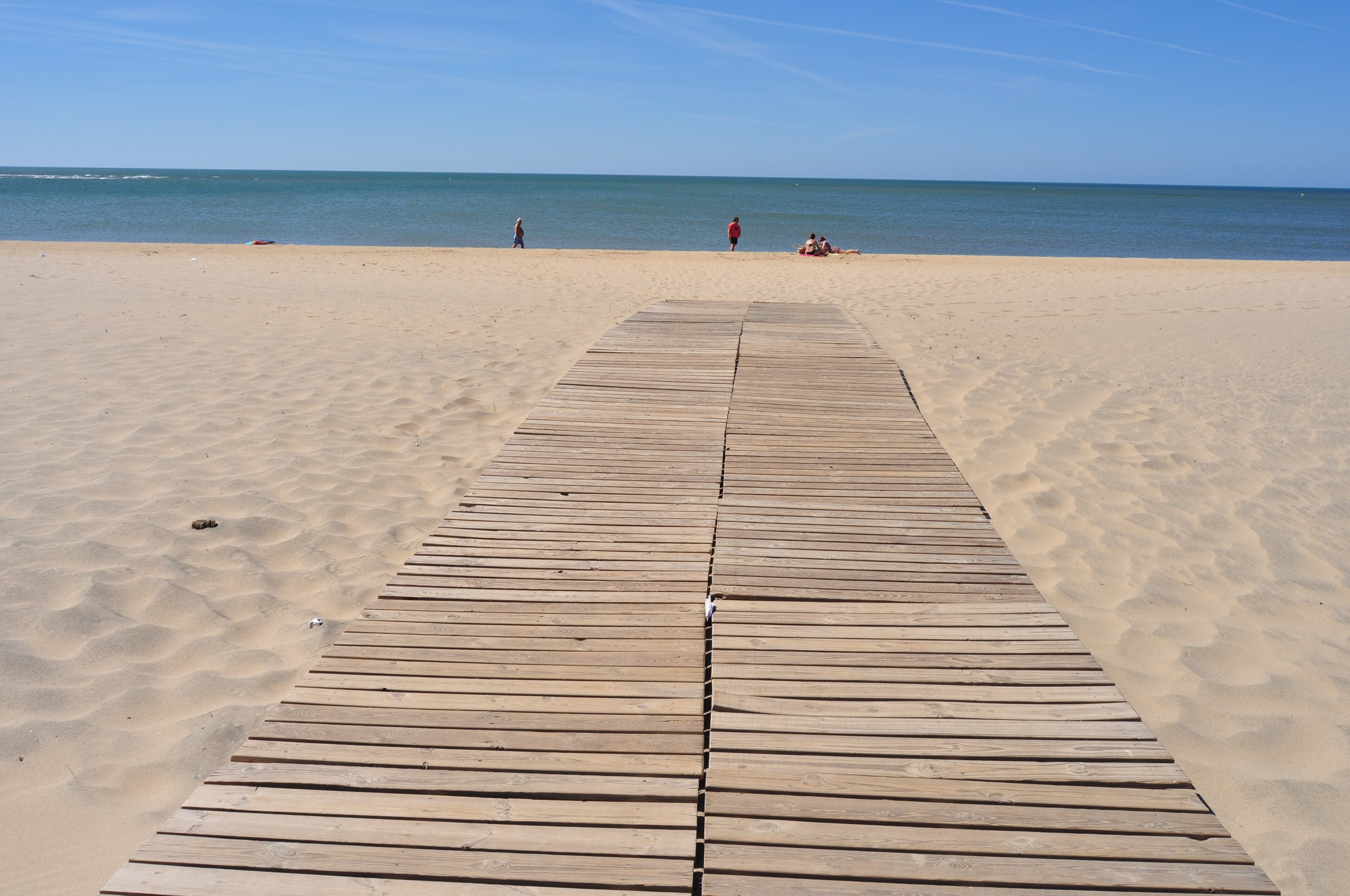
Where the Guadiana Meets the Atlantic
Isla Canela is a beach resort peninsula in the municipality of Ayamonte, in Huelva province, at the far south-western tip of Andalusia where the River Guadiana reaches the Atlantic and Spain gives way to Portugal. Part of the Costa de la Luz, it is known for long, wide sands, low-rise resort calm, golf and a seafood tradition rooted in the estuary. The landscape is flat, open and luminous, with salt marsh on one side and Atlantic surf on the other, and the clear light that gave the coast its name is very much the star of every sunrise and sunset.
The river is part of the pleasure. A passenger ferry links Ayamonte with Vila Real de Santo António across the water, so lunch in Spain can become an afternoon on the Algarve and back again by evening. Behind the beaches, the marshes along this coast draw wading birds and walkers, while Ayamonte itself offers a whitewashed old town, a riverside promenade and a Parador overlooking the Guadiana. The wider region is explored in the guides to Huelva and Andalusia, and Isla Canela makes a calm, sea-facing base for both.
Golden Sands, Golf and Gambas
Beaches define the stay. Playa de Isla Canela is a broad Atlantic strand with soft, pale sand and room to spread out even in high summer, and nearby Punta del Moral gives a more traditional fishing-village feel, with simple restaurants a short stroll from the water. The sea-facing resort pace suits families, golfers and couples alike, and cycle paths and boardwalks make it easy to travel between sands and tables without a car. Sunsets over the Atlantic, with the estuary glowing pink, are a ritual that guests plan their evenings around.
The table is every bit as strong as the shoreline. Huelva province is celebrated for its white prawns, or gambas blancas, grilled with sea salt or served simply boiled, and for salt-cured tuna known as mojama, a speciality of this coast. Nearby Isla Cristina is a working fishing port with an excellent daily catch, and Ayamonte's tapas bars turn it into plates of fried fish, clams and local ham. Ayamonte's Carnival is a lively regional highlight, and a hotel group can build a whole seasonal programme around the coast's food, golf and sunsets.
Seasons, Connections and Easy Journeys
Late spring and early autumn bring warm sea, soft light and a relaxed pace, while summer is the classic beach season, with long evenings and a busy calendar of local fiestas along the coast. Winter days remain bright, which suits golfers and walkers looking for outdoor time in the Spanish sun. The Costa de la Luz is generally breezier and less crowded than the Mediterranean coast, a character that appeals to guests who prefer wide open beaches over big-resort buzz.
Faro airport on the Portuguese side is the most convenient gateway for UK visitors, with Seville the main alternative for those combining Isla Canela with the great cities of Spain. A coast road and motorway link the area to Huelva and onward to Andalusia's cultural highlights, so this peninsula pairs easily with Malaga or Marbella on a longer tour. A destination name like IslaCanela.co.uk gives hotels, boards and airlines a single place to tell the story of this Atlantic border country.
Where to Stay Along the Guadiana Coast
Isla Canela offers a compact, easy choice of stays, mostly low-rise beach hotels and apartment-style resorts set behind the dunes, with golf greens and the Atlantic never more than a short walk away. Families favour the resort strip for its wide sand, gentle slopes into the sea and cycle paths, while golfers value the links-style course on the peninsula and its neighbours on both sides of the river. Couples often choose a quieter room with a terrace facing the marshes, where flamingos and spoonbills wade at dusk. Villas and townhouses in the wider Ayamonte area suit larger groups who want a kitchen and a garden between beach days.
Ayamonte itself gives a different style of stay. The Parador sits on the hilltop above the Guadiana and suits culture seekers who want river views and old-town lanes at the door, while small guesthouses in the whitewashed centre put cafés and the riverside promenade on the step. Punta del Moral and Isla Cristina, a little further along the coast, bring a working-harbour flavour, with family-run hostals and fish counters close by. Across the water, Vila Real de Santo António and Monte Gordo add Portuguese options, so one trip can mix Spanish beach days with a night on the opposite bank.
Tuna, Tapas and a Calendar of Fiestas
Cooking here is shaped by the estuary and the Atlantic. Beyond the famous prawns, look for coquinas, tiny clams steamed with garlic, chocos, the local cuttlefish grilled or fried, and tuna prepared in several traditional ways, a legacy of the almadrabas, the coastal tuna fisheries that shaped the ports for centuries. Breakfast in Ayamonte means strong coffee and tostada with olive oil and tomato, taken at a plaza table. Huelva province also produces cured Iberian ham from the hills around Jabugo, and the spring markets glow with local strawberries and oranges, so every meal has a clear sense of place.
The cultural year follows the coast. Carnival in Ayamonte brings costumed parades and satirical song groups in February, Holy Week fills the old town with processions, and summer fiestas along the river bring music, fireworks and open-air dancing. The Romería del Rocío, held at Pentecost, sees pilgrims travel from villages across Huelva and Andalusia towards El Rocío near Doñana, a spectacle of horse-drawn carriages and flowered costumes. Autumn keeps the sea warm and the terraces open, and winter golf days are bright. Heritage-minded guests can look inland to Cordoba for a very different chapter of Andalusian history.
Marshes, Fairways and Day Trips to Portugal
Active days are easy to build. The Marismas de Isla Cristina natural park, a mosaic of salt marsh and tidal creeks, rewards slow cycling and birdwatching, and boat trips on the Guadiana glide past reed beds and fishing villages. Golf can fill a week, kitesurfing and paddleboarding use the open Atlantic winds, and horse riding along the sand is a classic evening activity. Guests who like to learn can follow Columbus trails around Palos de la Frontera, La Rábida and Moguer, where the story of the 1492 voyage is told in monastery cloisters, quiet squares and riverside museums, a rewarding half-day from the coast.
Day trips add range. The passenger ferry to Vila Real de Santo António opens the eastern Algarve, with Tavira's old town and the Ria Formosa islands a short hop away, while the road north leads to Huelva and the wetlands of Doñana National Park. An airline could package Faro and Seville as twin gateways with a hotel base here in the middle. A three-night beach stay, a Portuguese day and a Columbus morning make a balanced itinerary, and the wider Spain guide shows how the peninsula fits into a longer Iberian journey.
Planning your stay
Isla Canela is a coastal resort in the municipality of Ayamonte, at the western end of the Costa de la Luz. It has long sandy beaches, a golf course, apartments and low-rise hotels, and a calmer pace than the Costa del Sol. Ayamonte itself has a town centre, a marina and a riverside promenade.
The River Guadiana separates this part of Spain from the eastern Algarve, and visitors can cross by the car ferry to Vila Real de Santo António or by the Guadiana International Bridge, which opened in 1991. The wider province is covered in our Huelva guide, and Andalusia explains how the region fits together.
When to go
The beaches are best from late spring to early autumn, with June and September offering warm weather and fewer crowds. July and August are the busiest, mostly with Spanish families. Winter is mild but many seasonal businesses reduce their hours, so check what is open.
Getting there
Most UK visitors fly to Faro, in the Algarve, and continue by road, because it is the nearest major airport. Wikipedia puts Faro 65 km from Vila Real de Santo António, the Portuguese town opposite Ayamonte, and Seville is a longer drive.
Spain is one hour ahead of Portugal and the UK, so check clocks if you cross the Guadiana for a meal or a day out.
Entry rules and the border
Ayamonte is in Spain, so Spanish Schengen rules apply even if your flight lands in Faro. Your passport needs to be under 10 years old on arrival and have three months left after you plan to leave the Schengen area, which allows up to 90 days in any 180. Time in Spain and Portugal counts together towards that limit.
The Entry/Exit System may take fingerprints and a photo on your first visit to the Schengen area, and it can add time at the airport.
Before you travel
Entry requirements and official travel guidance are updated regularly, so check the latest position with your government before booking. The sources we used are listed at the foot of this page.
Why Isla Canela matters to the industry
Isla Canela sits where two markets meet, which makes it useful to hotels, golf operators and airlines serving both Spain and Portugal. IslaCanela.co.uk lets a hotel group, airline or tourist board publish clear guidance, and our destination guides show the wider approach.
A practical point for planners: guests staying here often want a day in Portugal, so questions about the ferry, the bridge, the one hour time difference and where to rent a car arise before they book. Answering them on one trusted page helps reservations teams, and it links the resort with Spain as a whole and with the rest of Andalusia for visitors who want a longer route.
Questions travellers ask about Isla Canela
Which airport is closest to Isla Canela?
Faro, in the Algarve, is the usual choice, then a road transfer across the border. Seville is a longer drive.
Can I visit Portugal from Isla Canela?
Yes. The River Guadiana marks the border, and you can cross by ferry or by the international bridge. Carry your passport and remember Portugal is an hour behind Spain.
Do I need a visa for Isla Canela?
UK passport holders can stay in Isla Canela for up to 90 days in any 180 without a visa. Your passport should be under 10 years old with three months of validity beyond the day you leave the Schengen area, and the same count covers your day trips into Portugal.
What is Isla Canela best known for?
Isla Canela is best known for its wide Atlantic beaches, relaxed resort atmosphere and golf, with the whitewashed town of Ayamonte close by. The Costa de la Luz light, Huelva prawns and easy access to Portugal across the Guadiana add to its appeal.
How do I reach Isla Canela from the UK?
Most UK visitors fly to Faro in Portugal or Seville in Spain and continue by road, with Faro the closest main gateway. A short ferry also links Ayamonte with Vila Real de Santo António, making Portugal an easy day trip.
Where should couples stay near Isla Canela?
Couples often choose a quiet resort room facing the marshes on Isla Canela, or a small guesthouse or Parador in Ayamonte's old town for river views and evening strolls. Both keep beaches, sunset walks and seafood tables close at hand.
What is there to do on a day trip from Isla Canela?
Take the ferry to Vila Real de Santo António and continue to Tavira, visit the Columbus sites around Palos de la Frontera and Moguer, or explore Doñana National Park. Cycling the Isla Cristina marshes is a lovely local alternative.
In the Visit Travel Group portfolio: IslaCanela.co.uk.