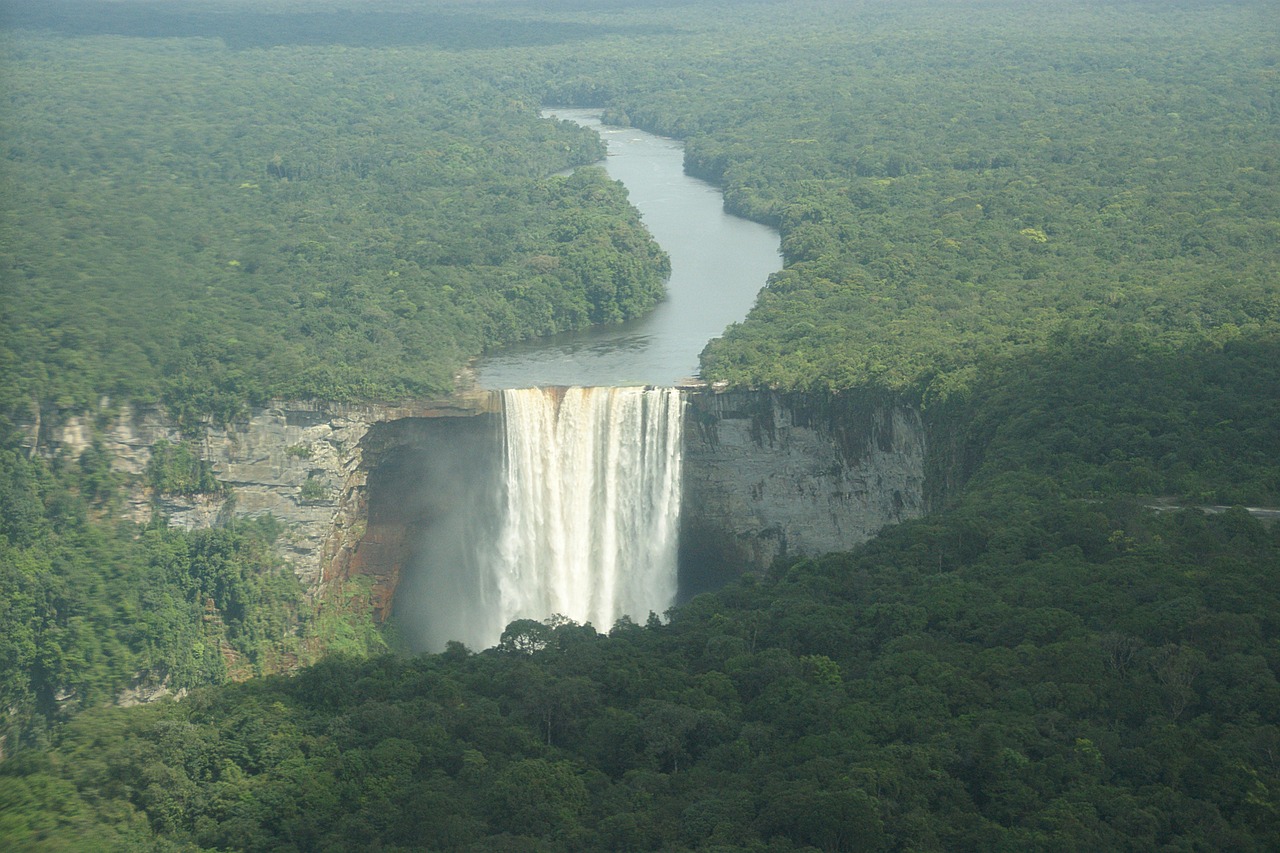
Land of Many Waters and Wild Forest
Guyana is a country on the north-east coast of South America, known for its enormous tracts of intact rainforest, its mighty rivers and its Caribbean character. Its name is widely said to come from an Indigenous word meaning land of many waters. English is the official language, the country is a member of the Caribbean Community, and independence from Britain came on 26 May 1966, which makes Guyana a natural bridge between the Caribbean and the Amazon region.
The coast is home to most of the population, with Georgetown the capital, a city of canals, tall wooden buildings and the Stabroek Market with its cast-iron clock tower. St George's Cathedral is often cited as one of the tallest wooden buildings in the world. Inland, the landscape changes dramatically: rainforest, savannah, mountains and rivers run for hundreds of miles, and the nation's food reflects Indian, African, Indigenous and Chinese traditions in dishes such as pepperpot and roti.
Kaieteur Falls, Rupununi and Wild Encounters
Kaieteur Falls is the headline, a single-drop waterfall in Kaieteur National Park that plunges roughly 226 metres in one unbroken sweep, among the most powerful single-drop falls in the world by volume. Most visitors arrive by light aircraft, and the flight over unbroken forest is an experience in itself. Orinduik Falls, a cascading series of terraces, makes a gentler companion stop on the same circuit.
The Rupununi savannah and the Iwokrama rainforest are where wildlife thrives: giant otters, jaguars, harpy eagles, giant anteaters and the arapaima, among the largest freshwater fish. Working ranches and community-run lodges offer birdwatching, river trips and guiding led by local Makushi communities. For a tourist board, Guyana is a story of authentic eco-adventure, with the added draw of Shell Beach, where marine turtles nest on the Atlantic coast.
Mashramani, Timing and Pairing With the Caribbean
Culture arrives each February with Mashramani, the Republic Day celebration of costume bands, steel pan and soca on Georgetown's streets. The two main dry periods, from about February to April and again from August to November, are favoured for travel to the interior, and the long rainy months bring the waterfalls to their fullest. Direct and connecting services reach Georgetown from North America and the Caribbean, and UK visitors typically connect through a regional hub.
Guyana pairs well with its neighbours. A trip through Trinidad and Tobago or Barbados adds a beach week to a rainforest expedition, and the wider Caribbean offers an easy second chapter. Travellers who also want Andean and Amazon scenery may continue to Colombia. VisitGuyana.co.uk gives airlines and lodges a place to present Guyana to both adventure travellers and nature lovers.
Rainforest Lodges and Colonial Georgetown Stays
Where you stay in Guyana shapes the whole journey. Georgetown offers comfortable hotels and guesthouses within reach of the Botanical Gardens, the seawall and the city's markets, and it makes a practical base for the first and last night. Inland, eco-lodges are the real draw: Surama in the Burro-Burro valley is a community-run lodge with Makushi guides, Karanambu Ranch on the Rupununi River is known for its work with giant otters, and Atta Rainforest Lodge lies beside the Iwokrama canopy walkway. Many lodges sit beside rivers, with hammocks, simple rooms and evening meals taken together.
Savannah ranches add a different texture. At places such as Dadanawa and Rock View, guests stay among working cattle country, with horses, big skies and the Kanuku Mountains on the horizon. Riverside lodges on the Essequibo suit those who like boat trips and birdwatching, and some properties offer fishing for the giant arapaima and other river species. Because Guyana is a small-group destination, stays are intimate and guides are often local people who grew up in the landscape. It suits birdwatchers, photographers, couples seeking true remoteness and families who enjoy outdoor learning.
Cook-Up, Cassava and the Colours of Phagwah
Guyanese cooking draws on Indian, African, Indigenous, Chinese and European roots. Cook-up rice, cooked with coconut milk and beans, is a Saturday favourite, and metemgee is a rich stew of root vegetables and dumplings. Amerindian communities make cassava bread and use casareep, the dark cassava syrup that gives pepperpot its depth. Demerara sugar takes its name from the Demerara River, and the country's rice fields are among its signature landscapes. Street stalls offer egg balls, pholourie and sweet treats, and a cup of fresh sugar cane juice is a natural refresher on a warm day.
The calendar is full of colour. Phagwah, the Hindu spring festival in March, fills Georgetown and the coast with coloured powders and music, while Diwali in autumn lights homes and streets with lamps. Easter sees the seawall dotted with kites, and in Lethem the Rupununi Rodeo brings cowboys and vaqueros to the savannah. September is Amerindian Heritage Month, with crafts, dance and food, and Christmas arrives with black cake, garlic pork and steel pan. Craft stalls sell woven baskets, beadwork and carved wood, and the many faiths of the country give festivals a warm, shared character.
Canopy Walks, Giant Lilies and River Journeys
Experiences go well beyond the falls. The Iwokrama Canopy Walkway lifts visitors into the treetops at dawn for toucans, macaws and howler monkeys, and the Guiana cock-of-the-rock, a flame-orange bird, is a highlight for birdwatchers on forest trails. In Georgetown's Botanical Gardens, the giant Victoria amazonica water lily and manatees in the ponds give an easy first taste of the wild. Horseback rides across the Rupununi, boat trips to spot caiman at night and community homestays in Amerindian villages add variety, and a visit to the Kanuku Mountains offers hiking through remote forest.
Day trips and add-ons are easily arranged. From Georgetown, travellers can visit the Essequibo River and its islands, or fly to Kaieteur and return the same day. Combining Guyana with Tobago gives a beach finish after forest and river, and those who want a larger South American itinerary can continue to Rio de Janeiro or the Andes. A tourist board can show Guyana as a destination for slow, guided nature travel, and a stay of eight to ten days allows time for both the interior and the coast.
Planning your stay
Guyana is on the north-east coast of South America, but it shares history, language and institutions with the English-speaking Caribbean, and the regional trading bloc CARICOM is based in Georgetown. Most of the country is rainforest or savannah, and much of the appeal lies in the interior.
The best-known attraction is Kaieteur Falls, a very tall single-drop waterfall in the Potaro River gorge, usually visited on a flight from Georgetown. Other trips include the Rupununi savannahs, river lodges and wildlife watching, which suit birders, naturalists and experienced travellers.
Entry rules for UK passport holders
UK visitors do not need a visa, and can normally stay for 30 days, with one-month extensions available from Guyana's immigration authorities.
Getting there and planning
Cheddi Jagan International Airport near Georgetown is the main entry point, and there is no direct UK flight. British Airways flies from Gatwick in about 11 hours 30 minutes including a stop, and KLM connects through Amsterdam. Pack insect repellent, sturdy footwear and a rain layer, and take cash in small notes for remote areas where cards are not always accepted. The wet seasons can affect road and river access, so check timing with your lodge.
Airlines that connect the region reach travellers while they are choosing, which our airline partner page explains.
Before you travel
Entry requirements and official travel guidance are updated regularly, so check the latest position with your government before booking. The sources we used are listed at the foot of this page.
Where it fits in the region
Guyana sits outside the island chain but is often grouped with it. See our Caribbean overview for how the region compares, and our West Indies guide for the wider cultural link. Because Guyana is a mainland South American country, its entry rules, health advice and visitor notes are set separately from those of the islands, so do not assume the rules you know from the Caribbean apply here. Travellers who combine the country with a beach holiday should check the entry requirements for each stop, keep to one booking where possible, and allow plenty of time for connections, because a missed connection can cost a day of a short trip. Compare the island chain before you commit, and read the West Indies history if you are curious about the shared heritage.
For operators, lodges and tourist boards, a destination with little mass-market awareness depends on accurate information, and VisitGuyana.co.uk pairs verified details with a conversational concierge. Browse our destination guides or the tourist board partner page for more.
Questions travellers ask about Guyana
Is Guyana part of the Caribbean?
Geographically it is in South America, but it is culturally and politically linked to the English-speaking Caribbean and is a CARICOM member.
What is Guyana best known for?
Guyana is best known for Kaieteur Falls, one of the world's most powerful single-drop waterfalls, vast intact rainforest and rich wildlife including giant otters, jaguars and harpy eagles. It is also the only English-speaking country in South America, with a strong Caribbean cultural identity.
When is the best time to visit Guyana?
The drier periods from about February to April and August to November are popular for interior travel and wildlife viewing. The wetter months bring Kaieteur and other falls to full power, so timing depends on whether you prefer easier access or the most dramatic water.
Where should I stay in Guyana?
Spend a night or two in Georgetown for the Botanical Gardens, seawall and markets, then head inland to eco-lodges such as Surama, Karanambu or Atta Rainforest Lodge. Rupununi ranches suit travellers who enjoy horses and open savannah, while riverside lodges are ideal for birdwatching.
What local food should I try in Guyana?
Try pepperpot, cook-up rice, metemgee, cassava bread and fresh roti with curry. Street stalls offer egg balls and pholourie, and festivals add black cake, sweets and seasonal specialities. Fresh sugar cane juice and tropical fruit are widely available.
In the Visit Travel Group portfolio: VisitGuyana.co.uk, VisitGuyana.de, VisitGuyana.nl, VisitGuyana.se, VisitGuyana.uk.