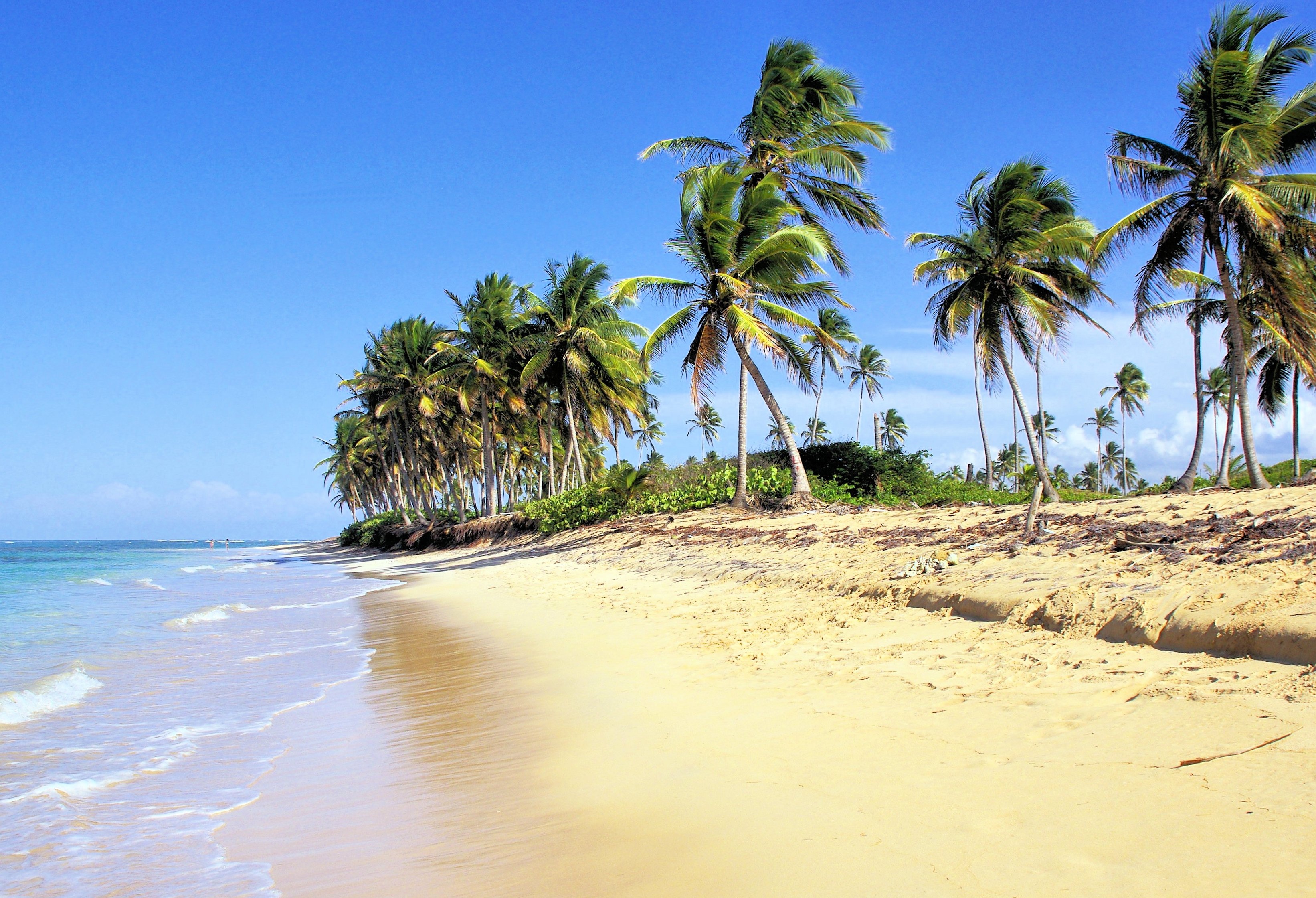
Where the Americas' First City Meets the Beach
The Dominican Republic is a Caribbean nation occupying the eastern two-thirds of the island of Hispaniola, known for its beaches, its colonial heritage and its music. It has about 11 million people, with Santo Domingo as its capital, and a landscape that runs from Caribbean coast to Atlantic surf and from palm-lined resorts to high pine forest. Pico Duarte, at about 3,100 metres, is the highest peak in the Caribbean. The mix gives the country an unusual range: beach holidays, mountain trails, whale watching, golf and city culture in one trip.
The Colonial Zone of Santo Domingo, founded in the 1490s and inscribed by UNESCO in 1990, is the oldest European-built city in the Americas. Its cobbled streets include the Catedral Primada de América, the Alcázar de Colón and Calle Las Damas, the first paved street of the New World. Merengue was inscribed on UNESCO's intangible heritage list in 2016 and bachata in 2019, a sign of how deeply music shapes the culture. Neighbouring Puerto Rico and Jamaica are natural companions on a wider Greater Antilles route.
Punta Cana, Samaná and the North Coast
Beaches define much of the tourist map. Punta Cana on the east coast is known for white sand, coconut palms and large resorts, while Samaná, in the north-east, is greener and more intimate, with the humpback whale season from January to March drawing visitors to the bay. On the north coast, Puerto Plata, Sosúa and Cabarete offer a mix of beach, kitesurfing and surf culture. Saona Island and Los Haitises National Park add boat trips through mangroves, caves and hidden shoreline for those who want more than a sun lounger.
Inland, the 27 Charcos waterfall trail near Puerto Plata is a favourite adventure, and the central mountains around Jarabacoa and Constanza offer cool air, river rafting and coffee farms. Food centres on la bandera, a plate of rice, beans and stewed meat, plus mangú, sancocho and fresh seafood. A tourist board could show the country's range by pairing city, coast and mountain itineraries, offering every kind of traveller a different way in.
Seasons, Flights and Getting Around
December to April is the main high season, with dry weather, calm seas and the whale watching window in Samaná, while Carnival in February, with colourful devil masks, fills the streets of towns such as La Vega and Santiago. Summer is warm and lively, with festivals and lower rates. The country is large enough that many visitors choose a single base for the beach and one or two day trips, while others take a longer road itinerary from Santo Domingo to the north coast.
Punta Cana International Airport, Las Américas near Santo Domingo, Puerto Plata's Gregorio Luperón and the Samaná and La Romana airports give the country several gateways. Roads connect the main regions, and domestic flights and tours help with longer distances. The country pairs easily with the Caribbean circuit, and hotels or airlines can use VisitDominicanRepublic.co.uk to present each region as its own story under one clear national brand.
Where to Stay Across the Dominican Republic's Regions
The Dominican Republic is best planned region by region. Punta Cana and Bávaro on the east coast offer the largest choice of beach resorts, with family, adults-only and all-inclusive options on long white sand. Around La Romana, Bayahibe and Casa de Campo, a landscaped resort community with golf, polo and a marina, the mood is more polished, and Juan Dolio and Boca Chica suit short stays close to Santo Domingo. In the capital, boutique hotels in restored colonial houses along the cobbled streets of the Colonial Zone appeal to culture seekers who want to walk to cathedrals and museums.
The north and north-east are more varied. Puerto Plata, Sosúa and Cabarete have resorts, apartments and surf lodges for active travellers and kitesurfers, while the Samaná Peninsula, with Las Terrenas and Las Galeras, offers boutique hotels, French-influenced cafés and quiet palm-lined bays for couples. Miches has emerging luxury stays on a quieter coast, and Jarabacoa and Constanza have mountain lodges, cabins and eco-retreats among pine forest and coffee farms. Villas suit big groups and extended families, and golfers can plan a stay around some of the Caribbean's most celebrated courses on the south and east coasts.
Sancocho, Larimar and a Calendar Full of Music
Dominican cuisine is comforting, generous and rooted in the land. Breakfast often means mangú, mashed plantain with sautéed onions, alongside fried cheese and eggs, while lunch is la bandera, and sancocho, a rich stew of several meats and root vegetables, is served at family gatherings. Chivo guisado, tostones, yuca and fresh fish with coconut sauce appear on beach menus. Sweet tooths enjoy habichuelas con dulce, a creamy dessert of beans and spices eaten at Easter, and dulce de leche cortada. Dominican coffee and cacao are grown in the highlands and sold at farm stalls, and fresh juices of passion fruit, tamarind and lime fill the glass.
Craft and music matter equally. Larimar, a pale blue stone found only in the Dominican Republic, and amber from the northern mountains are turned into jewellery, and the Amber Museum in Puerto Plata is worth an hour. Carnival in February fills towns with devil masks, while merengue and bachata play from bars, plazas and radios throughout the year. Santo Domingo hosts a Merengue Festival in late July, Altos de Chavón, a stone village built above the Chavón River near La Romana, stages concerts in an amphitheatre, and baseball season in winter turns stadiums into party spaces. Every month offers a reason to arrive.
Fairways, Kitesurfing and Mountain Day Trips
Active travellers find a lot to love. The island's golf is world renowned, with Teeth of the Dog at Casa de Campo and Punta Espada at Cap Cana among the best-known courses. Cabarete is a global kitesurfing and windsurfing centre, with lessons on offer for beginners, and the 27 waterfalls of Damajagua near Puerto Plata make a splashy, family-friendly adventure. Hikers can attempt Pico Duarte, a multi-day trek through cloud forest, or enjoy gentler walks around Jarabacoa, while divers explore the reefs and wrecks off Bayahibe and the Samaná coast. Cyclists will find quiet coastal roads around Las Terrenas and the Samaná peninsula.
Day trips extend any stay. From a resort near La Romana, boats run to Catalina Island for snorkelling, and Santo Domingo makes a rewarding long day or overnight, with its cathedral, fortress and lively waterfront. Zipline parks, horseback rides and river rafting fill an adventurous afternoon, and Samaná's Cayo Levantado is a favourite beach picnic spot. Beyond the island, Turks and Caicos and the Bahamas lie to the north, with Cayman to the west. An airline with several Dominican gateways could promote open-jaw itineraries, flying into one coast and home from another, so travellers see more of the island in a single trip.
Planning your stay
The Dominican Republic shares the island of Hispaniola with Haiti and is far larger than most Caribbean destinations. The east coast around Punta Cana is dominated by large all inclusive resorts on long beaches. The north coast around Puerto Plata and Sosúa offers a mix of resorts and local towns, and the Samaná Peninsula in the north east is greener, quieter and known for humpback whales in winter.
Santo Domingo, the capital, has the Zona Colonial, a UNESCO World Heritage Site and the oldest European settlement in the Americas. It makes a good day trip or two night stay for travellers who want history alongside a beach holiday.
When to go
The dry, busy months run from December to April. Summer and autumn are hotter, wetter and cheaper, and the official hurricane season spans June to November, with storms most likely to approach Hispaniola from August to October. Humpback whales visit Samaná Bay from roughly January to March, which adds a reason to travel in the winter.
Resort prices are among the lowest in the Caribbean for comparable quality, which is why the country is so popular with UK package and all inclusive holidaymakers.
Entry rules and the entry form
You can visit for tourism without a visa for 30 days. You may be refused entry if you cannot show proof of onward or return travel, and border officials take fingerprints and a photograph.
You must complete an entry and exit form, which includes a customs declaration, before arriving and before leaving. You can fill it in up to seven days before you travel and will receive a QR code to show at check-in or on arrival. Check the Dominican Republic Ministry of Tourism website for any change to these rules, particularly for trips planned beyond 2026.
Choosing a base
For a first visit, the big resorts of Punta Cana and Bávaro offer the simplest logistics and most direct flights from the UK. For something more local, Puerto Plata and Sosúa have a more varied setting, and Samaná suits nature-focused trips. Many travellers pair a beach week with a day in Santo Domingo.
Check which airport your flight uses and how far your hotel is from it, because transfers between regions can take several hours. Flights from London to Punta Cana take around nine hours.
Before you travel
Entry requirements and official travel guidance are updated regularly, so check the latest position with your government before booking. The sources we used are listed at the foot of this page.
The Dominican Republic and its neighbours
The country sits between Puerto Rico to the east and Jamaica and Cuba to the west, with Turks and Caicos a short distance to the north. Our Caribbean guide shows how Hispaniola compares with the islands around it.
For businesses, volume destinations compete on trust: a traveller who has seen visitor headlines wants a clear, current answer. VisitDominicanRepublic.co.uk lets a tourist board or hotel group give one, and our AI concierge can repeat it accurately. Compare every destination guide to see how it works.
Questions travellers ask about Dominican Republic
What is the entry and exit form?
It is an online form with a customs declaration and boarding information. You complete it before you arrive and before you leave, up to seven days in advance, and receive a QR code you may be asked to show.
What is the best time to visit the Dominican Republic?
Winter from December to April is the driest and busiest time, and Samaná Bay's whale season falls inside it. Package prices drop from May, when it turns wetter, and the hurricane season runs until November.
What is the Dominican Republic best known for?
It is best known for long beaches at Punta Cana and Samaná, the UNESCO-listed Colonial Zone of Santo Domingo, merengue and bachata, and Pico Duarte, the Caribbean's highest peak. Whale watching and adventure activities add further variety.
When is the best time to visit the Dominican Republic?
December to April offers the driest, sunniest weather and the humpback whale season in Samaná from January to March. Carnival in February adds colour, while the rest of the year offers warm weather and good value.
Which part of the Dominican Republic suits which traveller?
Punta Cana suits families and all-inclusive stays, Casa de Campo and La Romana suit golfers and polish, Santo Domingo suits culture seekers, Cabarete suits kitesurfers, and Samaná suits couples looking for quiet bays and boutique hotels.
What food should I try in the Dominican Republic?
Try mangú for breakfast, la bandera for lunch, sancocho at a family table, and fresh fish with coconut sauce on the beach. Tostones, chivo guisado, habichuelas con dulce and local coffee and cacao are also popular.
In the Visit Travel Group portfolio: VisitDominicanRepublic.co.uk, TheDominicanRepublic.co.uk.