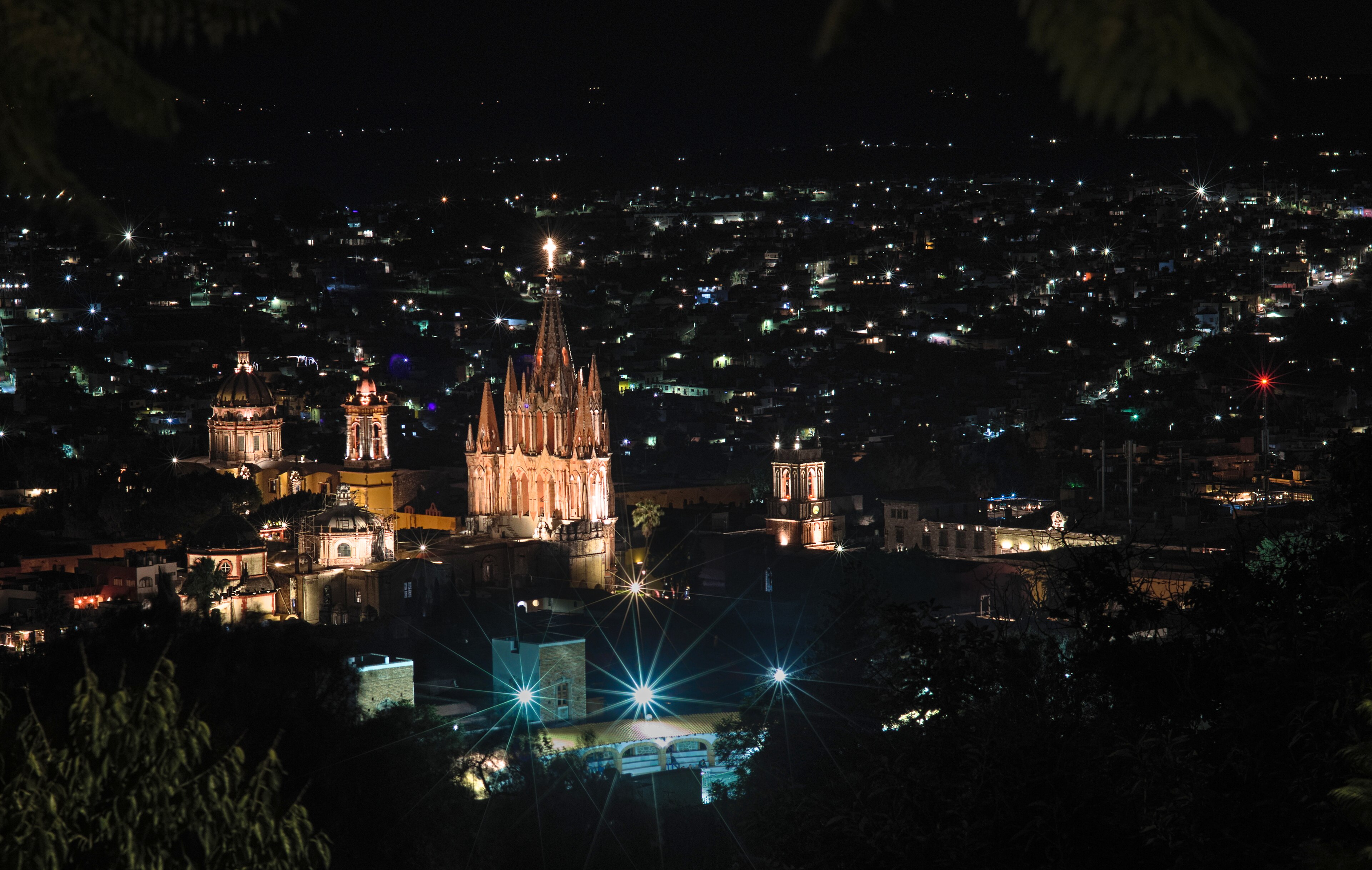
A Pink-Stone Colonial Town in the Highlands
San Miguel de Allende is a colonial town in the state of Guanajuato, in the central highlands of Mexico, known for its rose-pink stone architecture, cobbled streets and thriving arts community. Founded in 1542 and later renamed in honour of independence hero Ignacio Allende, it sits at about 1,900 metres, which gives clear light and mild evenings. The Historic Town of San Miguel de Allende and the Sanctuary of Jesús Nazareno de Atotonilco were inscribed as a UNESCO World Heritage Site in 2008.
The heart is the Jardín Principal, a shaded square where families, musicians and artists gather beneath the spires of the Parroquia de San Miguel Arcángel. Its neo-Gothic façade, designed in the nineteenth century, is the town's signature image and glows at sunset. Around it, narrow lanes lead to courtyard galleries, boutique hotels and craft shops selling tin, ceramics and textiles. The town is compact and made for walking, so every turn gives a new doorway, bougainvillea-draped wall or hidden patio.
Rooftops, Galleries and Atotonilco
Art is the town's lifeblood. Fábrica La Aurora, a converted textile mill, now houses design studios and galleries, and the Instituto Allende has long drawn painters and craftspeople from around the world. Evenings belong to rooftop terraces, where the parish church is lit against the hills, and to restaurants serving both traditional Guanajuato dishes and inventive modern Mexican cooking. Local wineries in the surrounding countryside offer a tasting-led day, and the hot springs near town give a gentle, restorative morning.
The sanctuary at Atotonilco, a short drive away, is often called the Sistine Chapel of Mexico for its vividly painted interiors. Fiestas shape the calendar: the Fiesta de San Miguel Arcángel in September, Day of the Dead in November and the Christmas posadas all fill the streets with colour. For a hotel group, a boutique stay here sells itself, and the neighbouring cities of Guanajuato and Querétaro add day trips of real depth for guests who want more.
When to Visit and How to Arrive
Spring and autumn are particularly pleasant, with warm days, cool nights and clear skies, and the dry season from November to April suits wandering the town on foot. The nearest major airports are Querétaro and Del Bajío at León, each within roughly an hour or two by road, and Mexico City is a scenic drive of a few hours, which makes a combined capital-and-highlands trip easy to plan.
Pairing San Miguel with the capital and a beach stay is a classic Mexican itinerary, whether that means the Caribbean glamour of Tulum and the Riviera Maya or the Pacific coast at Puerto Vallarta. A name like SanMiguelDeAllende.co.uk gives boards and airlines a single place to show this blend of heritage and style. Weekend couples, wellness guests and culture-seekers each find their own San Miguel, which is what makes it so easy to promote across the year.
Casas, Courtyards and Hacienda Hideaways
San Miguel rewards guests who choose their stay with care. The historic centre, or Centro, is the most atmospheric base: converted colonial mansions with shaded courtyards, fountains and rooftop terraces sit within a few minutes' walk of the Jardín Principal, galleries and restaurants. Barrio Guadalupe, a little to the east, has a creative, neighbourhood feel with small art spaces and relaxed cafés, while Colonia San Antonio offers quieter residential streets and good value for longer stays. Boutique hotels here are often only a handful of rooms, so each one has its own character, from antique-furnished suites to sleek contemporary design.
Outside the centre, other forms of stay appear. Haciendas and country retreats in the surrounding hills offer pools, gardens, spa treatments and sweeping views, and the thermal-spring hotels near Atotonilco suit wellness guests who want a restorative stay with the town close by. Private casas with terraces and kitchens are ideal for families, wedding parties and groups of friends, and many come with a cook on request. The shores of the Allende reservoir add a lakeside option with space for walks and birdlife. Whatever the budget, an evening on a rooftop is part of the package, as in Mexico City but with a village hush.
Cajeta, Chamber Music and the Festival Year
The table here has a gentle, rustic charm. Guanajuato's cooks are known for cajeta, the silky goat's-milk caramel from nearby Celaya, drizzled over crepes, churros and ice cream. Tortilla soup, slow-cooked cochinita and enchiladas mineras sit beside pan dulce baked in village ovens, and chiles en nogada, in late summer, are a patriotic dish of green, white and red. Mercado Ignacio Ramírez is the place for flowers, fruit and aguas frescas, and its stalls tempt breakfast browsers. Crafts include hammered tinwork, papel picado, blown glass and ceramics, all sold in studios and Saturday markets in the lanes around the centre.
Music and literature give the year its shape. The San Miguel Writers' Conference gathers authors each February, Holy Week brings solemn candlelit processions, and the Fiesta de San Antonio in June sends a costumed parade of Los Locos through the streets. The Fiesta de San Miguel Arcángel in September opens with a pre-dawn Alborada of fireworks, and the Chamber Music Festival fills churches and courtyards in August. Autumn and spring give the best light for walking, summer brings afternoon showers that leave the stone glistening, and winter days are crisp and sunny, perfect for terrace lunches and gallery visits.
Balloons, Ceramics and Colonial Day Trips
Active guests are well catered for. Dawn balloon flights drift over the roofs and reservoir, horse riding and mountain biking use the trails of the surrounding hills, and guided hikes climb to views over the town. Hands-on workshops in ceramics, painting, jewellery and cooking turn a stay into something creative, and many studios welcome visitors. Wellness days centre on the hot springs and spa gardens, with yoga and massage rounding out the schedule. Because the town is compact, it is easy to build a rhythm of a morning activity, a long lunch, an afternoon in the galleries and a sunset on a rooftop.
Day trips add depth. Guanajuato city, a UNESCO site, is a maze of tunnels, colourful houses and the narrow Callejón del Beso, while Dolores Hidalgo, the cradle of Mexican independence, is known for its eccentric ice-cream flavours and Talavera tiles. Querétaro, with its great aqueduct, and the old mining village of Mineral de Pozos make further outings. An airline or tour operator could link the highlands with Huatulco, Tulum or Isla Holbox, pairing mountain culture with a beach, and showing the breadth of Mexico in a single, easily sold journey.
Planning your stay
San Miguel de Allende sits at altitude in the central highlands, around a historic centre of cobbled streets, courtyards and the pink Gothic-style parish church that dominates the main square. It is a UNESCO World Heritage Site, and it has a long record as an art, craft and food town with a large community of foreign residents.
The pace is slow, and the appeal is walking, galleries, rooftop restaurants and design hotels rather than beaches or big sights. It pairs well with Mexico City, and our wider Mexico guide shows how a city and colonial stay can sit alongside a beach week.
When to go
Days are mild and dry for much of the year, and nights can be cool because of the altitude, so pack layers. The wet season brings afternoon rain from roughly June to September. Local festivals fill the town with visitors and fireworks, so book early if you plan to visit at a feast time.
Streets are cobbled and steep in places, so comfortable shoes matter, and the altitude can cause tiredness on arrival. Check which hotels have step-free routes if anyone in your party has limited mobility.
Getting there and entry rules
Most UK travellers fly non-stop to Mexico City and travel by road, a journey of a few hours, or fly to a regional airport such as Querétaro and transfer. Use a pre-booked transfer or a reputable first-class bus on toll roads rather than hailing a taxi.
For a stay in Guanajuato the passport has to remain valid until you leave, and the Mexican Embassy suggests 180 days. A connection at a US airport needs an ESTA or the correct visa.
Everyday precautions
In town, the usual advice applies: take care at ATMs, keep valuables out of sight and do not leave drinks unattended. Cobbled streets and low lighting at night make taxis from authorised ranks or your hotel the safer choice.
Before you travel
Entry requirements and official travel guidance are updated regularly, so check the latest position with your government before booking. The sources we used are listed at the foot of this page.
Why this name matters to the industry
San Miguel de Allende is a small, high-value destination where detail and trust decide bookings. SanMiguelDeAllende.co.uk lets a hotel group or tourist board publish clear guidance on access, seasons and logistics, an airline explain the route via Mexico City, and our AI platform answer questions from verified text. Browse our destination guides to compare.
Questions travellers ask about San Miguel de Allende
How do you get to San Miguel de Allende from the UK?
Fly to Mexico City and travel by road, or fly to a regional airport such as Querétaro and transfer. Use a pre-booked transfer or first-class bus on toll roads.
Do UK citizens need a visa?
No visa is needed for tourism. Your passport is stamped with the days allowed, up to 180, and must stay valid throughout your highland trip.
When is the best time to visit?
Mild, dry days for much of the year, with the wet season roughly June to September. Nights can be cool at altitude.
What is San Miguel de Allende best known for?
San Miguel de Allende is best known for its rose-pink colonial architecture, the neo-Gothic Parroquia de San Miguel Arcángel, its arts scene and rooftop restaurants. Its historic centre and the nearby Atotonilco sanctuary are inscribed on the UNESCO World Heritage list.
How do I get to San Miguel de Allende?
Most visitors fly into Querétaro or Del Bajío airports and drive for roughly an hour or two. From Mexico City, the road journey takes a few hours, making it easy to combine the capital with a highland stay.
Where should I stay in San Miguel de Allende?
The historic centre is the most atmospheric base, with boutique hotels in colonial mansions close to the Jardín Principal. Barrio Guadalupe suits creative travellers, while haciendas and thermal-spring hotels outside town are ideal for wellness and quiet escapes.
What local food should I try in San Miguel?
Try cajeta, the goat's-milk caramel from the region, along with tortilla soup, enchiladas mineras and fresh pan dulce. In late summer, look for chiles en nogada, and visit the market for aguas frescas, fruit and flowers.
In the Visit Travel Group portfolio: SanMiguelDeAllende.co.uk, VisitSanMiguelDeAllende.co.uk.