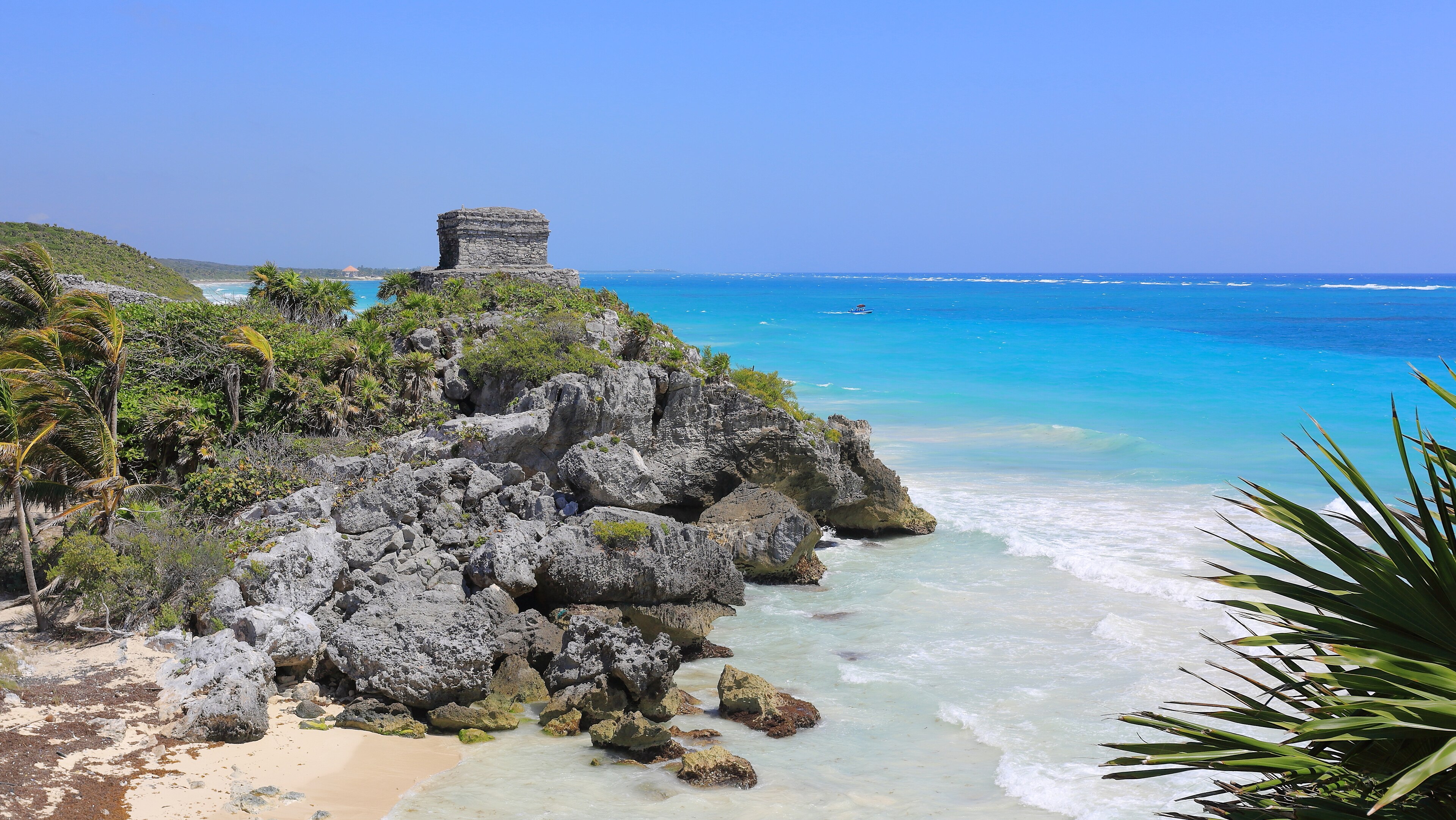
Maya Ruins Above a Turquoise Sea
Tulum is a town and archaeological site on the Caribbean coast of Quintana Roo, Mexico, known for its Maya ruins set on cliffs above a turquoise sea, its beach hotels and its cenotes. The walled Maya city flourished as a trading port in the later centuries before the Spanish arrival, and its coastal position gave it a role in sea trade along the peninsula. The Castillo, the Temple of the Frescoes and the Temple of the Descending God stand within the walls, with the Caribbean as an extraordinary backdrop.
The beach below the ruins is one of the most photographed in Mexico, with a small cove of white sand and bright water reached by steps. A few kilometres south, the beach road runs through jungle and palms, lined with boutique hotels, yoga studios and restaurants that have shaped Tulum's reputation for design-led, wellness-minded stays. The town itself has a more local feel, with taquerias, markets and cafes along the main avenue.
Cenotes, Coba and Sian Ka'an
Beyond the coast, the limestone landscape holds hundreds of cenotes, natural sinkholes filled with clear fresh water. Gran Cenote and Dos Ojos are among the best known, offering snorkelling and diving among stalactites and shafts of light. Inland, Coba, a Maya site with a towering pyramid, lets visitors cycle between temples in the forest. To the south, the Sian Ka'an Biosphere Reserve, a UNESCO World Heritage Site since 1987, protects a vast area of mangrove, lagoon and tropical forest.
Food is as important as scenery here. Tulum's restaurants range from beach shacks serving ceviche and grilled fish to chef-led kitchens using Yucatecan ingredients, and the town has become a draw for plant-based and wellness cooking. A hotel group can use Tulum to show a boutique, nature-led style of stay. Nearby Riviera Maya resorts to the north and Cozumel across the water make easy pairings for longer trips.
Seasons, Access and Where to Stay
The dry season from about November to April is the most popular, with warm sun, clear water and pleasant evenings, while the green season brings fewer visitors and lush jungle. Tulum now has its own international airport, and the coast is also reached from Cancun by road in around an hour and a half to two hours. That makes it simple to combine Tulum with a longer Mexico itinerary.
Stays range from jungle-edge boutique hotels to beachfront eco-lodges and larger resorts further along the coast, and small guesthouses in the town offer a gentler budget. For airlines and boards, VisitTulum.co.uk offers a single home to present Tulum's ruins, cenotes and beaches together, and to show how a single flight can open a week of history, nature and sea.
Jungle Cabanas, Beach Road Retreats and Town Stays
Tulum divides naturally into three stay areas. The Beach Road, running south from the ruins between the jungle and the sea, holds the most celebrated boutique hotels, with palm-thatched cabanas, open-air restaurants and wellness studios that blend design and nature. Aldea Zama and La Veleta, inland of the coast, offer modern apartments, villas and boutique hotels with pools in leafy gardens, and Tulum Pueblo, the town itself, has simple hotels and hostels near restaurants, markets and cenotes. The mix means travellers at many budgets can enjoy the area, and couples, friends and solo travellers each find a corner that suits them.
Further afield, the choice becomes more remote. Akumal and Soliman Bay to the north offer quieter beaches and relaxed villas, while the narrow road into Sian Ka'an leads to the fishing village of Punta Allen, where small lodges offer fly fishing, birdwatching and boat tours on the lagoon. Eco-lodges in the jungle provide off-grid stays with cenotes on the doorstep, and larger resorts to the north suit families who prefer a classic beach holiday. Many guests split their stay between the Beach Road and the jungle or lagoon, and add a few nights on Isla Holbox to finish.
City of Dawn: Culture, Cacao and Cold-Pressed Mornings
Tulum's original Maya name is often given as Zama, meaning dawn, and the place still feels best at first light, when the ruins are quiet and the sea turns gold. Maya culture is part of everyday life in the area, with the language spoken in local villages, traditional ceremonies such as the temazcal, a steam ritual of purification, and community-led cultural experiences that welcome visitors. Craft stalls sell hammocks, woven bags and embroidered textiles, and local guides bring the ruins to life with stories of trading canoes, astronomy and ritual.
Food shapes the mornings and the evenings. Cafes serve cold-pressed juices, smoothie bowls, fresh bread and Mexican coffee, while restaurants offer cochinita pibil, tacos, tamales, grilled fish and cacao-based sweets. In town, family kitchens and taquerias serve some of the best-value meals in the area. Yoga, meditation and wellness retreats run year-round, and the Day of the Dead in late October and early November brings altars and music. Winter is the busiest season, spring is bright and warm, summer is lush and green, and autumn is quiet, which makes it easy to pick a month that fits your pace.
Cave Dives, Turquoise Lagoons and Lost Villages
Tulum's limestone landscape offers some of the most memorable water experiences in Mexico. The nearby Sac Actun system, among the longest known underwater cave networks in the world, draws certified cave divers, while Dos Ojos and Gran Cenote suit snorkellers and open-water divers. Laguna Kaan Luum, a turquoise lagoon with a deep cenote at its centre, is a favourite for photographers, and kitesurfers use the winds along the coast. Muyil, a small Maya site on the edge of Sian Ka'an, can be combined with a gentle boat drift through narrow channels in the reserve.
Day trips make the area richer. Chichen Itza and Valladolid are an easy journey inland, and Punta Laguna offers a chance to see spider monkeys in the forest. Akumal is nearby for turtle encounters, and the Riviera Maya to the north offers eco-parks and a livelier beach scene. Further afield, Isla Mujeres and Mexico City allow a longer story, from island to capital. A stay of five to seven nights lets travellers sample the cenotes, the ruins and the coast. An airline can feature Tulum's airport to show how quickly a beach holiday can become a cultural journey.
Planning your stay
Tulum has three parts: the archaeological site, a walled Mayan port on a cliff above the sea; the town a few minutes inland, with restaurants and shops; and the beach road, a long strip of boutique hotels and clubs among palms. Cenotes, the freshwater sinkholes of the region, sit in the jungle around the town and are popular for swimming.
It sits south of the Riviera Maya resorts and Cancún, and many visitors combine it with a beach week elsewhere. Tulum is not a resort in the all inclusive sense, so prices for rooms and meals are high, and the beach road has patchy infrastructure, including narrow roads and limited street lighting.
When to go
December to April is the driest and busiest period, with peak prices at Christmas and New Year. Sargassum can affect beaches in spring and summer, so ask your hotel about current conditions. The ruins are hot and exposed, so visit early in the day.
Roads and low-lying jungle areas can flood after heavy rain.
Getting there and entry rules
Tulum has its own airport, and many visitors still arrive via Cancún, then travel south by road. Pre-book a transfer or use authorised services. British Airways flies non-stop from Gatwick to Cancún in about 10 hours 35 minutes, and connecting schedules to Tulum change, so check current routes.
Your passport should remain valid through your departure, and the Mexican Embassy advises 180 days of validity. Immigration officers can ask for your passport and entry stamp, and they do not accept copies or photos.
Nearby places
Beyond the beach, popular outings include the ruins, cenotes and the coastal reserve. For a quieter island, Cozumel and Isla Holbox are alternatives, and the whole picture is set out in our Mexico guide.
A practical note for planners: cenotes and the ruins both rely on early starts to avoid crowds and heat, so build mornings around them and keep afternoons for the beach. Check whether your hotel on the beach road has generator back-up and reliable Wi-Fi before you book, since power and connections can be patchy there.
Before you travel
Entry requirements and official travel guidance are updated regularly, so check the latest position with your government before booking. The sources we used are listed at the foot of this page.
Why this name matters to the industry
Tulum is a global lifestyle brand with demanding, well-informed visitors. VisitTulum.co.uk lets a hotel group or tourist board publish honest detail on seasons, logistics and access, which builds trust. An airline can explain routes, and an online agency can support planning. See our AI platform and other destination guides for the approach.
Questions travellers ask about Tulum
Do UK citizens need a visa for Tulum?
No visa is needed for tourism. Your entry stamp shows the days you may stay, up to 180, and the passport must be valid until you fly home from Tulum or Cancún.
When is the best time to visit Tulum?
December to April is driest and busiest, with Christmas and New Year at peak rates. Storms are possible from June to November, and sargassum varies by beach in spring and summer.
How do you get to Tulum from the UK?
Fly non-stop to Cancún, about 10 hours 35 minutes from Gatwick with British Airways, and transfer by road, or check connecting flights to Tulum's own airport.
What is Tulum best known for?
Tulum is best known for its Maya ruins on a cliff above the Caribbean, its white sand beaches, nearby cenotes such as Gran Cenote and Dos Ojos, and a beach road of boutique hotels, restaurants and wellness studios set among jungle and palms.
When is the best time to visit Tulum?
November to April is the most popular season, with dry, sunny days and warm sea. The green season from late spring brings fewer visitors and lush jungle, so the best time depends on whether you want classic beach weather or a quieter, more verdant setting.
Which part of Tulum is best to stay in?
The Beach Road suits couples and wellness seekers with jungle boutiques beside the sea. Aldea Zama and La Veleta offer apartments and boutique hotels with pools, while Tulum Pueblo is best for restaurants, markets and value. Punta Allen and Akumal offer quieter, more remote stays.
What are the best day trips from Tulum?
Popular choices include Coba, Chichen Itza, Valladolid, Muyil and Sian Ka'an, plus snorkelling at Akumal and visits to cenotes such as Gran Cenote and Dos Ojos. Laguna Kaan Luum is also popular for its turquoise water and open views.
In the Visit Travel Group portfolio: VisitTulum.co.uk.