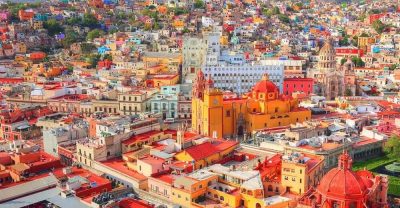
A Capital Built on an Aztec Lake
Mexico City is the capital of Mexico and one of the largest cities in the Americas, set in a high valley at about 2,240 metres above sea level. It stands on the site of Tenochtitlan, the Aztec capital founded on a lake island in 1325, and the Spanish city that followed in 1521 was built over its temples. The Historic Centre and the canals of Xochimilco were inscribed as a UNESCO World Heritage Site in 1987, and the scale of what you can walk through is remarkable.
Start at the Zócalo, the vast central square flanked by the Metropolitan Cathedral and the National Palace, where Diego Rivera's murals tell the country's story in colour. Just beside it, the Templo Mayor excavations reveal the Aztec ceremonial heart. A short walk away is the Palacio de Bellas Artes, a marble landmark of Art Nouveau and Art Deco design. The city rewards slow looking: every street seems to hold a courtyard, a mural or a bookshop worth entering.
Tacos, Tasting Menus and Frida's Blue House
Food is the city's loudest pleasure. Tacos al pastor carved from the spit, blue-corn quesadillas, tamales at breakfast and fresh churros by night sit comfortably beside inventive tasting menus in Polanco and Roma, two of the capital's most stylish neighbourhoods. Mercados such as Coyoacán and San Juan show the pantry of Mexico in a single hall, from chillies and mole pastes to tropical fruit. Condesa's tree-lined avenues and cafés give a leafy counterpoint, and the rooftop bars of the historic centre frame the cathedral at dusk.
Art and culture fill the days. The Museo Nacional de Antropología, in Chapultepec Park, holds some of the world's finest pre-Hispanic collections, while in Coyoacán the Casa Azul, Frida Kahlo's family home, is now a museum. Luis Barragán's house and studio is a UNESCO site, and the Day of the Dead celebrations of 1 and 2 November turn the city into a river of marigolds. For a hotel group, the capital's blend of design, gastronomy and history is a gift to storytellers.
Teotihuacan, Timing and Onward Journeys
Northeast of the city, the pyramids of Teotihuacan, a UNESCO site, make a classic day trip, with the Avenue of the Dead leading toward the Pyramid of the Sun. Hot-air balloons at dawn give a magical view of the plain. March to May is dry and bright, and the cooler months of November to February bring clear skies and the festival season. London has direct long-haul services to the capital, and the city is a natural gateway to the rest of the country.
From here, San Miguel de Allende is a few hours north by road, Puerto Vallarta and Cancun are short domestic flights, and Mexico as a whole opens in every direction. A name like VisitMexicoCity.co.uk lets airlines, boards and hotels present the capital as both a destination in its own right and the hub of a wider Mexican journey, with each neighbourhood a story waiting to be told.
Polanco, Roma and Centro: Picking Your Neighbourhood
Mexico City is a collection of villages, and the neighbourhood you choose shapes the trip. Polanco is the polished address, with tree-lined streets, designer boutiques, the sculptural Museo Soumaya and some of the capital's grandest hotels. Roma Norte and Condesa suit design-minded guests, with Art Nouveau mansions turned boutique stays, bookshops, parks and cafés on every corner. Centro Histórico is the choice for first-time visitors who want to wake beside the Zócalo, in restored colonial palaces with courtyards and rooftop terraces facing the cathedral. Along Paseo de la Reforma, the capital's grand avenue, towers and landmark hotels sit close to the Angel of Independence and Chapultepec Park.
For a calmer pace, Coyoacán and San Ángel offer cobbled lanes, flower-filled squares and small guesthouses within reach of the Casa Azul and weekend craft markets. Families often prefer the leafy spaces near Chapultepec, where the zoo, museums and boating lake are close at hand. Larger groups and long stays are well served by serviced apartments and townhouses in Roma and Condesa, while luxury travellers can choose palatial suites with private chefs. Metro and ride services link all of these areas, so a base in one never feels remote from the others, and the generous variety suits Los Cabos or Tulum guests adding a city chapter.
Chilaquiles, Mariachi and a Calendar of Spectacle
Beyond the famous tacos, the city eats in layers. Breakfast means chilaquiles in green or red salsa, with cream and a fried egg, and a mid-morning torta stuffed with avocado and milanesa is a street-side ritual. Esquites, corn kernels served in a cup with lime, chilli and cheese, are the evening snack, and café de olla, coffee spiced with cinnamon and brown sugar, warms the mornings. Pozole simmers in family kitchens at weekends, and pastry shops perfume the streets with conchas and fresh bread. Contemporary chefs now reinterpret all of this in celebrated dining rooms, giving the city a reputation that continues to grow.
Culture is just as generous. Mariachi bands play at Plaza Garibaldi, lucha libre wrestling fills the Arena México with colour, and the Ballet Folklórico stages dazzling regional dance. The murals of the main university campus, a UNESCO site, rival those in the old centre. The calendar sparkles: jacaranda trees turn the avenues violet in March and April, Independence celebrations light up the Zócalo on 15 and 16 September, and the Mexican Grand Prix brings a motor-racing carnival in the autumn. Day of the Dead adds a grand parade and altars in every plaza, while Christmas lights transform Reforma and the old centre.
Canals, Bicycles and Day Trips to Colonial Cities
Active and themed days abound. On Sunday mornings Paseo de la Reforma is closed to traffic for cyclists, joggers and families, and bikes can be hired for a flat, scenic loop to Chapultepec. At Xochimilco, colourful trajinera boats drift along ancient canals with mariachi boats alongside and picnic spreads on board. Cooking classes begin in the markets and end at the table, and gallery trails link Roma, Juárez and San Miguel Chapultepec. Chapultepec Castle, set on a hilltop in the park, rewards the climb with views across the park and the skyline, and the anthropology museum alone can fill a day.
The surrounding highlands offer superb excursions. Puebla, a few hours east, is a UNESCO city of talavera tiles, baroque churches and mole poblano, with the great pyramid of Cholula close by. Taxco, the silver town, climbs a hillside of white houses and workshops, Cuernavaca and Tepoztlán provide garden retreats and mountain-top trails, and Valle de Bravo offers lake sailing. A destination guides hub like this one lets hotels and airlines build capital-plus-coast packages, perhaps linking onward to Huatulco or the Riviera Maya, with every stay shaped by what the guest loves most.
Planning your stay
Mexico City is best approached as a set of districts. The historic centre has the great square known as the Zócalo, the cathedral and major museums. Roma and Condesa are leafy, café-filled neighbourhoods popular with visitors, while Polanco is upmarket, with galleries and restaurants, and Coyoacán has a village feel. Teotihuacán, the pyramids, is a day trip outside the city.
The scale is huge, so plan by area rather than trying to see everything. Most visitors need three to five days, and many pair the capital with San Miguel de Allende, a colonial town in the highlands, or add a beach stay elsewhere in Mexico.
When to go
The city is high, at more than 2,000 metres, so days are mild and nights can be cool. The wet season brings afternoon rain from roughly June to September, and spring and autumn are comfortable for walking. Altitude can cause headaches and tiredness on arrival, so go gently for the first day or two and drink water.
Check with your car hire company before you drive.
Getting there and entry rules
British Airways flies non-stop from Heathrow to Mexico City in about 12 hours, and the capital is also a hub for onward domestic flights to the coasts.
The passport must be valid for your whole visit, and the Mexican Embassy suggests 180 days of validity. Border officers may ask for the original passport and entry stamp, and they will not accept copies or photos.
Before you travel
Entry requirements and official travel guidance are updated regularly, so check the latest position with your government before booking. The sources we used are listed at the foot of this page.
Why this name matters to the industry
Mexico City is a business, culture and food destination with strong long-haul demand. VisitMexicoCity.co.uk lets a tourist board or hotel group publish clear guidance on neighbourhoods, seasons and logistics, an airline explain the route from London, and our AI platform answer questions from verified text. Compare it with other destination guides, or start with the Mexico guide.
Questions travellers ask about Mexico City
Do UK citizens need a visa for Mexico City?
No visa is needed for tourism. Immigration stamps the days you may stay, up to 180, and the passport must be valid for your whole time in the capital.
How long is the flight from London?
About 12 hours non-stop with British Airways. Check your flight status if the volcano Popocatépetl is active, as ash has disrupted the airport before.
When is the best time to visit?
Spring and autumn are comfortable. The wet season brings afternoon rain from roughly June to September, and the city's altitude means cool nights.
What is Mexico City best known for?
Mexico City is best known for its Aztec and colonial history, the Zocalo and Templo Mayor, world-class museums, the Casa Azul of Frida Kahlo and a food scene ranging from street tacos to tasting menus. Its Historic Centre is a UNESCO World Heritage Site.
When is the best time to visit Mexico City?
March to May is dry and bright, while November to February brings cooler, clear days. Early November is especially popular, as the Day of the Dead celebrations on 1 and 2 November fill the city with colour, music and marigolds.
Which area of Mexico City is best for first-time visitors?
Centro Histórico puts the Zócalo, cathedral and Templo Mayor on the doorstep, while Roma Norte and Condesa add cafés, boutiques and leafy streets. Polanco suits those who want luxury hotels, museums and tasting menus within a short walk.
What are the best day trips from Mexico City?
Puebla and its Cholula pyramid, the silver town of Taxco, garden-filled Cuernavaca and the mountain village of Tepoztlán are all popular. Teotihuacan is the classic option, and Xochimilco's canals make an easy half-day within the city.
In the Visit Travel Group portfolio: VisitMexicoCity.co.uk.