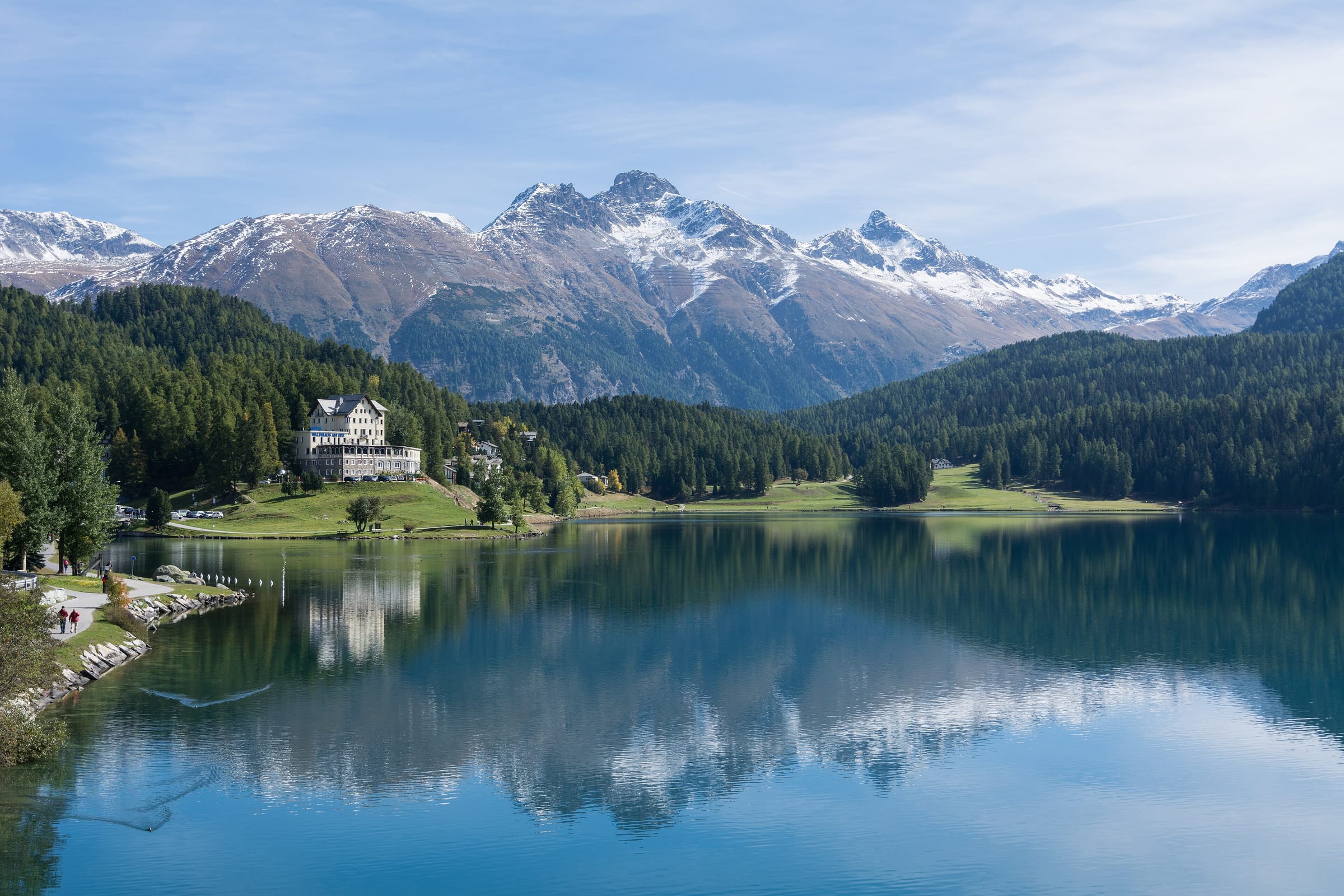
Sparkling Light Above the Engadin Lakes
St Moritz is a resort town in the Engadin valley of the canton of Graubünden in south-eastern Switzerland, known for its dry, bright air, its lake and its long history as a winter-sports capital. It sits at about 1,820 metres, and its sunny climate has long been part of its marketing. The town hosted the Winter Olympics in 1928 and again in 1948, and its mix of grand hotels, boutiques and mountain restaurants has made it one of the best-known names in the Alps.
The setting is as memorable as the reputation. Lake St Moritz lies in the middle of the valley, frozen in winter and shining in summer, with the Engadin lakes stretching beyond. The Cresta Run, a natural-ice toboggan track, has been in use since the 1880s, and the lake hosts snow polo, horse racing and cricket on ice. Nearby, Zermatt offers a different Swiss mountain mood centred on the Matterhorn, while Lake Como in Italy is reached through a scenic crossing over the Bernina and Maloja passes.
Corviglia, Grand Hotels and Engadin Tables
Skiing centres on Corviglia, with Piz Nair rising to around 3,000 metres and long, wide pistes above the town, and the Corvatsch and Diavolezza areas offer high, quiet terrain nearby. Cross-country skiing along the frozen Engadin lakes is a signature experience, and the Engadin Skimarathon each March fills the valley with thousands of skiers. Summer is equally appealing, with walking, cycling, sailing and golf in the clear air of the valley.
The grand hotel tradition runs deep. Badrutt's Palace, which dates from 1896, and the Kulm Hotel, long associated with the beginnings of Alpine winter tourism, remain landmarks of the town. Dining ranges from rustic mountain huts serving Engadin barley soup and nut tart to ambitious modern restaurants, and the valley's cafés are known for their pastries. A hotel group can place its own story within this long hospitality tradition, and Kitzbühel in Austria offers a comparable blend of heritage and sport.
The Glacier Express and When to Go
St Moritz works all year. Skiing typically runs from late November to April, with the snow polo, horse races and gourmet festivals of the winter calendar adding colour, while the summer season, from June to September, brings open-air music, walking and cycling in a landscape of clear lakes and larch forests. Autumn is particularly beautiful, with golden larches and crisp light.
The Glacier Express, the slow scenic train between Zermatt and St Moritz, runs across 291 bridges and through 91 tunnels, and the Rhaetian Railway line through the Albula and Bernina valleys is a UNESCO World Heritage Site. Most visitors fly to Zurich or Milan and continue by rail or road. VisitStMoritz.co.uk gives airlines and rail operators a single home for these routes. Further Alpine options include Verbier to the west and Cortina d'Ampezzo in the Dolomites to the east.
Dorf, Bad and the Lakeside Villages of the Engadin
St Moritz divides naturally into two districts, and the surrounding Engadin villages widen the choice. St Moritz Dorf, on the hillside above the lake, holds the grand hotels, designer boutiques and the lift to Corviglia, and it suits those who want the full sparkle of the town. St Moritz Bad, beside the lake, is quieter and calmer, with mineral springs, spa traditions and easy walking by the water. Champfèr and Celerina, a short distance away, have a village feel with a direct link to the Cresta Run, while Pontresina, in a side valley, is a handsome, tranquil base for walkers and climbers.
Further up the valley, Silvaplana and Sils Maria sit among the lakes in an open, luminous landscape, and Maloja at the head of the valley is a favourite for sailors and windsurfers. Styles of stay include grand palace hotels with spas, historic inns with painted Engadin facades, boutique chalet-hotels, serviced apartments and private villas. Couples often choose a lakeside hotel in Sils, while families like Pontresina's gentle pace. A tourist board can present each village as part of a single Engadin story, and Kitzbühel offers an Austrian counterpart for those planning two Alpine stays.
Capuns, Painted Houses and Engadin Festivals
The Engadin table has its own character. Capuns, parcels of chard wrapped around a dough of flour and dried meat, and pizokel, hearty dumplings served with cheese, belong to the Graubünden kitchen, and Bündnerfleisch, air-dried beef sliced thin, is a classic starter. Maluns, a crisp potato dish, and Birnbrot, a pear bread rich with dried fruit, show the mountain pantry at its best. Cafés in the town serve pastries and hot chocolate to match the sunny light, and traditional conditorei counters are wonderful places to linger over an afternoon.
Culture is quietly distinctive. The Segantini Museum, built in memory of the painter Giovanni Segantini, shows the Engadin light on canvas, and the old houses of the villages are decorated with sgraffito patterns carved into plaster. Romansh, a Swiss national language, is still spoken in the valley, and the philosopher Nietzsche wrote at Sils Maria. The calendar is full: the Gourmet Festival and the polo on snow in winter, the White Turf races on the frozen lake, the summer Festival da Jazz and classical music evenings, and the autumn larches, which colour the valley gold.
Bernina Express, Lake Sailing and Italian Escapes
Active guests have plenty of choices. Lake Silvaplana and Lake Sils are famous for the Maloja wind, which brings sailors, windsurfers and kitesurfers to the water on summer afternoons, and cyclists enjoy flat lakeside routes and mountain passes. Hikers take the Muottas Muragl funicular for an easy panorama, ride the Corvatsch cable car to a high glacier view, or walk the Val Roseg beneath Piz Bernina, the highest peak in the eastern Alps. Spas and mineral baths add a restful side, and golf and horse riding are available in the valley.
Day trips are rewarding. The Bernina Express, a railway through glaciers and high passes, runs to Tirano in Italy for a morning of coffee and market stalls, and the Swiss National Park near Zernez offers wildlife and quiet trails. Over the Maloja Pass, Chiavenna and the road to Lake Como open an Italian chapter, and Milan is within reach by rail via Tirano. Further afield, Cortina d'Ampezzo and Zermatt extend an Alpine circuit, and Verbier gives a lively Valais alternative for a second week.
Planning your stay
The railway station at St Moritz stands at 1,775 metres, in what Wikipedia describes as the highest town in Switzerland with a railway station, with the lake below the town and Corviglia and Corvatsch above it for skiing. Cross-country trails and frozen lake events give it a different character from steeper resorts elsewhere in the Alps. Compare it with Zermatt, Verbier, Kitzbühel and St Anton.
Beyond skiing, winter visitors come for spas, shopping and restaurants, and summer visitors come for hiking, cycling, sailing and the lakes. The village is small, so staying in the centre or near a lift matters more than the star rating.
When to go
The ski season runs from December to April, with the best snow from January to March, and events on the frozen lake add to the winter calendar. Summer, from June to September, brings walking, mountain biking and festivals, with mild days and cool evenings.
Getting there and entry rules
Fly to Zurich (check current schedules for London flights) and take the train, changing at Chur onto the Rhaetian Railway. Timetable sites put the whole journey at about 3 hours 20 minutes. The Glacier Express links St Moritz with Zermatt, and the Bernina Express runs to Tirano in Italy, both popular for the scenery.
Schengen rules apply in Switzerland.
Costs and practical tips
St Moritz is expensive, and the Swiss franc is strong, so build the cost of lift passes, equipment hire, restaurants and transfers into your budget. Booking hotels and restaurants early for Christmas, New Year and February, and checking for dress codes in some venues, saves problems later.
Before you travel
Entry requirements and official travel guidance are updated regularly, so check the latest position with your government before booking. The sources we used are listed at the foot of this page.
Why St Moritz matters to the industry
St Moritz is a name that signals luxury, so accuracy and detail matter more than volume. VisitStMoritz.co.uk lets a hotel group, tourist board or airline publish clear answers on seasons, transfers and costs, and our AI platform carries them to searchers.
See our destination guides for how other mountain markets compare, or our OTA page on booking platforms.
Questions travellers ask about St Moritz
How do you get to St Moritz from the UK?
Fly to Zurich, then take the train via Chur or a private transfer. Timetable sites give about 3 hours 20 minutes by rail, so check current schedules before booking.
When is the best time to visit St Moritz?
December to April for winter sport, with January to March the most reliable for snow. June to September for hiking, cycling and lake activities.
What is St Moritz best known for?
St Moritz is best known for its grand hotels, its sparkling Engadin light, the Cresta Run, snow polo on the frozen lake and its role as host of the Winter Olympics in 1928 and 1948. It is also a terminus of the Glacier Express.
When is the best time to visit St Moritz?
Winter, from late November to April, suits skiing, snow polo and the Engadin Skimarathon in March. Summer, from June to September, offers walking, cycling and sailing on the lakes, while autumn brings golden larches and clear, crisp days.
Where should couples stay in St Moritz?
Couples often choose a grand hotel in St Moritz Dorf for its terraces and spa, a lakeside property in St Moritz Bad for calm walks, or a boutique hotel in Sils Maria for luminous lake views and a quieter, romantic setting.
What are the best day trips from St Moritz?
The Bernina Express to Tirano in Italy, the Swiss National Park near Zernez, the Maloja Pass road to Chiavenna and Lake Como, and a funicular to Muottas Muragl are all popular, scenic and easy excursions.
In the Visit Travel Group portfolio: VisitStMoritz.co.uk.