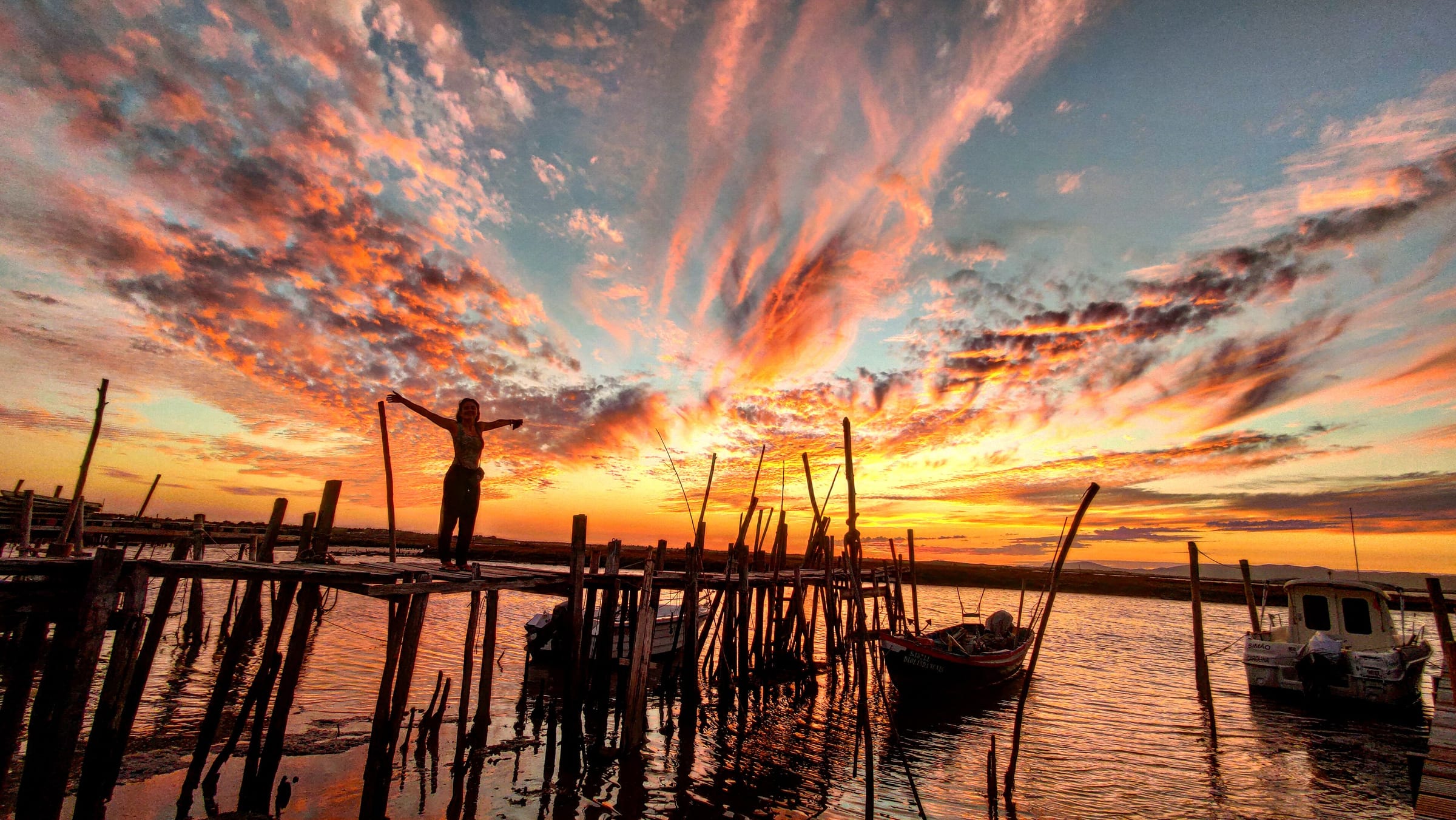
Rice Fields, Pines and Endless White Sand
Comporta is a coastal area on the Alentejo coast of Portugal, about an hour south of Lisbon, between the Atlantic and the Sado estuary, known for its wide white beaches, rice paddies, pine woods and understated, design-led stays. The area has become one of Europe's favourite barefoot retreats, with a look shaped by thatched roofs, natural materials and long, empty sands. Its beaches, including Comporta, Carvalhal and Pego, are broad and backed by dunes, with wooden walkways and beach restaurants that serve grilled fish and chilled lemonade in the sun.
The landscape is unusually varied. Rice paddies stretch behind the dunes, storks nest on rooftops and poles, and cork oaks and umbrella pines shade the sandy lanes. At Carrasqueira, an old fishing quay is lined with stilted wooden huts, or palheiros, that reach out over the Sado mudflats, a favourite subject for photographers at sunrise. Across the estuary, the Tróia peninsula adds more beach, and the Sado itself is home to a resident community of bottlenose dolphins.
Slow Days, Seafood and Simple Elegance
Days in Comporta follow a gentle rhythm: a morning on the beach, a long lunch of grilled fish, clams or rice with local seafood, an afternoon of cycling or horse riding through the pines and a sunset on the shore. The village's small boutiques, ceramics studios and cafés reflect the area's relaxed luxury, and rice, salt and local produce supply the kitchens. Boat trips on the Sado estuary offer dolphin watching and quiet creeks, while the Rota Vicentina, a long coastal walking route, begins to the south.
Stays range from rustic-chic villas and rice-farm guesthouses to design hotels with their own gardens and pools, giving a hotel group or villa collection an elegant story to tell. Comporta's identity is natural rather than showy, and that has made it a magnet for guests who want a calm, private break. It sits in a very different mood from the busier resorts of the Algarve to the south, and from the historic city streets of Porto to the north.
Reaching Comporta and Choosing Your Season
Late spring and early autumn are loved for warm sea and quiet beaches, summer brings the busiest, sunniest days, and winter has a bracing, uncrowded beauty ideal for walking and cycling. Most guests fly to Lisbon, with flights from the UK taking under three hours, then continue by road in around an hour, with the Tróia ferry as an alternative route across the estuary. A car is useful for moving between beaches, villages and restaurants, and bicycles are popular in the flat terrain.
Comporta pairs naturally with a few days in Lisbon or a longer Portuguese journey, and the wider Europe guide shows how it fits into the continent's slow-travel map. For beach lovers who want a different island flavour, Mallorca and Madeira offer contrasting choices. A name like VisitComporta.co.uk gives airlines, resorts and tourist boards a single home for the story of this quiet stretch of Atlantic coast.
Thatched Cabanas, Rice Farms and Pine Villas
Comporta offers a quiet, design-led range of stays rather than big resorts. The village centre has boutique guesthouses and shops, and Brejos da Carregueira and Carvalhal sit among pine and cork woods near the beach, with thatched cabanas, farm-style suites and private gardens. Pego and Carrasqueira bring a more traditional feel, with fishermen's houses and rice-farm lodges close to the estuary. Many properties have pools, outdoor showers and natural materials, and the setting makes them popular for couples, honeymoons and small family groups who want space.
To the north, Tróia is the resort option, with a marina, golf and larger hotels, reached by ferry from Setúbal or by road. To the south, Melides, with its lagoon and wide sands, is wilder and more rustic, and appeals to those who want empty beaches and a slower pace. Inland, the historic town of Alcácer do Sal sits on the Sado with a hilltop castle, offering a cultural base beside the rice fields. Eco-lodges, glamping and large villas for groups complete the range, and a hotel group or villa collection can group them clearly.
Fried Cuttlefish, Cante and a Rice Harvest
The Sado estuary shapes the plate. Choco frito, fried cuttlefish, is a speciality of nearby Setúbal, caldeirada de enguias, a fisherman's eel stew, belongs to the river, and arroz de tamboril, monkfish rice, reflects the rice fields behind the beaches. Azeitão cheese and tortas de Azeitão sweets come from the hills close by, Setúbal oranges are sweet in winter, and the area's moscatel has long wine heritage. Local salt from the Sado pans, cork crafts and handwoven baskets make lovely souvenirs, and the shops in Comporta village are good places to find them.
Culture is rooted in the Alentejo. Cante Alentejano, the polyphonic singing of the region, is on UNESCO's intangible heritage list, and the town of Grândola gave its name to the song that became a symbol of Portugal's 1974 revolution. The year has its own rhythm: wildflowers and nesting storks in spring, long beach days in summer, the rice harvest in late September and October, and quiet, golden walks in winter. Comporta's slow luxury is also found in Puglia and Tuscany, though here the sea and the rice fields give it a character all its own.
Dolphins, Arrábida and Day Trips from the Coast
Active days are gentle and rewarding. Horse riding on Lusitano horses through the pines and along the beach is a local tradition, bicycles are the best way to explore the flat lanes, and kayaks and paddleboards glide over quiet creeks. Birdwatchers will find flamingos and avocets on the Sado estuary, surfers choose beaches south of the village, and yoga and wellness retreats have found a natural home here. Tróia's Roman fish-salting ruins of Cetóbriga add a surprising archaeological stop, and the walk along the dunes at sunset is a daily ritual for guests.
Day trips are easy. The Arrábida natural park and its beach at Portinho da Arrábida lie across the estuary near Setúbal, Évora's UNESCO-listed old town is around ninety minutes inland, and Lisbon is about an hour north. For longer journeys, the Algarve's southern coast is a few hours south, and Porto and Madeira add city and island contrasts. Sardinia offers another Mediterranean route for guests who love natural beaches. An AI platform could help guests combine all of these into a personal itinerary.
Planning your stay
Comporta lies on the Alentejo coast south of Lisbon, between the Sado estuary and the open Atlantic. It has long, wide beaches backed by dunes and pine forest, with rice fields, small villages and thatched or low-rise buildings inland. The mood is deliberately rural, and the accommodation is mostly small hotels, villas and guest houses rather than large resorts.
Nearby, the Tróia peninsula has a marina and a resort, and the ferry from Setúbal links the two sides of the estuary. Comporta is part of our wider Portugal coverage, so compare it with the more developed Algarve, the city break of Porto and the island of Madeira.
When to go
Late spring and early autumn offer warm days and quieter beaches, and the village is liveliest in summer, when restaurants and beach clubs are open and busy. In winter the Atlantic is rough and many seasonal businesses close, though the coast suits walkers who want empty beaches. Book well ahead for summer weekends.
Pine forest and dunes are dry in summer, so never light fires and follow instructions from local authorities.
Getting there and entry rules
Most visitors fly to Lisbon and drive south, and Wikipedia describes Comporta as about an hour south of the city, so a hire car is the usual choice and also helps with reaching beaches. Portugal is on UK time. Check parking and fuel before you set off, because the area is rural and distances between villages can be long.
Portugal follows Schengen rules, and you will clear them at Lisbon before the drive south. The Entry/Exit System may take fingerprints and a photo at Lisbon on a first visit, at no cost.
Before you travel
Entry requirements and official travel guidance are updated regularly, so check the latest position with your government before booking. The sources we used are listed at the foot of this page.
Why Comporta matters to the industry
Comporta is a small, design-led destination that attracts guests who research carefully before they book, so clear and honest guidance matters.
Browse our destination guides to compare it with other coasts.
Questions travellers ask about Comporta
How do you get to Comporta from the UK?
Fly to Lisbon and drive south, which Wikipedia puts at about an hour. A hire car is the usual choice for visiting the beaches and villages.
When is the best time to visit Comporta?
Late spring and early autumn are warm and quieter. Summer is the liveliest, and many seasonal businesses close in winter.
Do I need a visa for Comporta?
A beach stay at Comporta of up to 90 days in any 180 needs no visa. Your passport must be under 10 years old when you land at Lisbon and valid for three months after you plan to leave the Schengen area.
What is Comporta best known for?
Comporta is best known for its white Atlantic beaches, rice fields, pine and cork woods, thatched design-led stays and relaxed seafood restaurants. The stilted fishermen's huts at Carrasqueira and the Sado estuary dolphins add to its character.
How far is Comporta from Lisbon?
Comporta is about an hour south of Lisbon by road. Most visitors fly to Lisbon, with flights from the UK taking under three hours, then continue by car or transfer, or use the ferry route via Tróia.
Where should I stay in Comporta?
The village and Carvalhal suit most visitors, with boutique cabanas and pine-shaded gardens near the beach. Tróia suits golfers and resort fans, and Melides suits those who want a wilder, quieter coast with a lagoon.
What can I do in Comporta beyond the beach?
Ride Lusitano horses through the pines, cycle the flat lanes, kayak the Sado creeks, watch flamingos, and visit Arrábida or Évora. Long lunches of choco frito or rice with monkfish are a highlight.
In the Visit Travel Group portfolio: VisitComporta.co.uk.