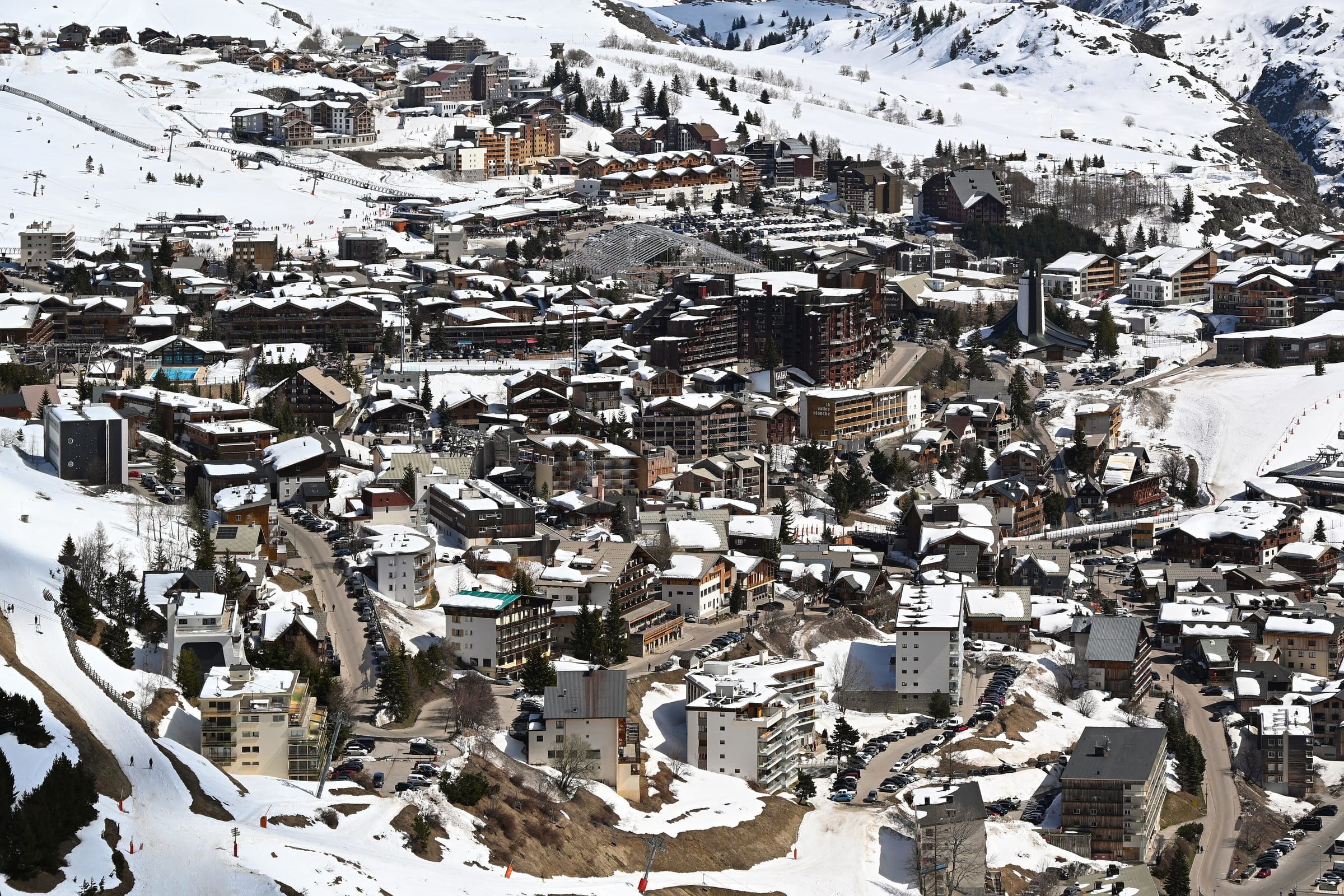
The Island in the Sun and Its Famous Hairpins
Alpe d'Huez is a ski and cycling resort in the Oisans area of the Isère department in the French Alps, known for its sunny south-facing plateau and its legendary 21 hairpin bends climbed by the Tour de France. Perched at about 1,860 metres above the valley of the Romanche, it earned the nickname Island in the Sun for the hours of daylight its open slopes receive. The village sits on a broad shelf of mountainside, with pistes dropping directly from its centre in several directions.
The climb is the stuff of cycling legend. The road rises through 21 numbered bends, each marked with the name of a past stage winner, and the Tour de France has finished here many times since the 1950s. Corner seven is known as the Dutch Corner, where supporters traditionally gather in orange. For skiers, the resort offers a different thrill, with wide sunny slopes and a high glacier at Pic Blanc, at over 3,300 metres. Nearby, Chamonix and Les Arcs give alternative Alpine moods within a day's reach.
Sarenne, Pic Blanc and a Sunlit Ski Area
The ski area, linked with neighbouring villages in the Grand Domaine, is known for its long runs and sunshine. The Sarenne, one of the longest black runs in Europe at around 16 kilometres, drops from the glacier at Pic Blanc through open Alpine terrain, with the Écrins massif spread beyond. Easier slopes serve families and beginners, and the resort's snow park and cross-country trails broaden the appeal. Snow cover is helped by the altitude and a strong snowmaking network, and the season is long.
Off the slopes, Alpe d'Huez has an energetic mix of terraces, restaurants and spa-led hotels, with Oisans specialities such as gratin dauphinois and local blue cheeses on many menus. In summer, the climb becomes a pilgrimage for road cyclists, and mountain bikers, walkers and paragliders take over the high pastures. For a tourist board, the combination of sunny slopes, cycling fame and spa-friendly stays creates a story with real year-round appeal, and Val d'Isère provides a high-Alpine contrast for visitors extending their trip.
When to Go and the Road from Grenoble
Skiing typically runs from December to April, with spring days particularly bright on the south-facing slopes. Summer opens from June, with cycling at its best in the cooler early hours and the high trails open for walking and mountain biking. The Tour de France usually passes through the Alps in July, and when it visits Alpe d'Huez the whole mountainside becomes a festival.
Most guests fly to Grenoble, Lyon or Geneva, with Grenoble the closest of the three, and continue by road or shared transfer. The route up from the valley is itself an experience, climbing the hairpins that make the resort famous. VisitAlpeDHuez.co.uk gives airlines and hotels a single home for those connections. Travellers extending a trip can head east to Courmayeur via the Mont Blanc tunnel, or further to Turin, Italy's elegant Alpine gateway.
Sunlit Terraces and Villages on the Plateau
Alpe d'Huez has a handful of bases, each with a different feel. The resort centre sits on the sunny plateau, with shops, restaurants, a pedestrian core and ski lifts a few steps away, and it suits families and groups who want to be in the middle of the action. Huez Village, a short distance below, keeps a traditional feel with a calmer pace, while Vaujany, linked by gondola to the main area, is a charming village of stone and timber with a lakeside view. Oz-en-Oisans and Villard-Reculas offer smaller, peaceful settings close to the same slopes.
Down in the valley, Le Bourg-d'Oisans is a market town that suits cyclists, walkers and budget-minded guests who like a hotel with a terrace in summer. Styles of stay include spa hotels with sun terraces, apartment residences, family guesthouses, chalets for groups and campsites for summer travellers. Cyclists often seek specialist bike-friendly hotels with secure storage and early breakfasts. A booking platform can organise these by season and activity, and the nearby Les Arcs and Courchevel provide ideas for guests planning a multi-resort trip.
Walnuts, Blue Cheese and Comedy on Screen
The Dauphiné table has its own character. Noix de Grenoble, protected walnuts, appear in breads, cakes and salads, while bleu du Vercors-Sassenage and other local cheeses are served with fresh bread. Ravioles and tourtes, pies filled with meat or vegetables, are popular in mountain restaurants, and chartreuse, the famous herbal liqueur made by monks near Grenoble, belongs to the region's culinary heritage. Honey, chestnut creams and fruit tarts make good gifts, and sunny terraces at the top of the lifts are made for slow lunches.
Alpe d'Huez has its own cultural calendar. In January the International Comedy Film Festival brings screenings and guests to the resort, and the village church of Notre-Dame des Neiges is a modern landmark with a distinctive form. Summer is the season of cycling, with the Alpe d'Huez Triathlon and the Marmotte Granfondo among the events that bring thousands of riders to the climb, and in July the Tour de France may transform the mountain. Autumn is quiet, with golden larches and clear air, and Grenoble's museums and the Bastille cable car offer an elegant city break nearby.
Ice Caves, Lakes and Ecrins Day Trips
The activities list is long. In winter, the ice cave beneath the Pic Blanc glacier adds a sculpted underground detour, while the snow park, cross-country trails, snowshoeing and ice driving offer variety. In summer, Lac Besson, Lac du Chambon and the high lakes provide picnic spots, and the cable cars open mountain-bike, walking and paragliding terrain. Road cyclists ride the 21 bends in the morning cool, and families enjoy the pools and play areas in the resort. Hikers can reach the Écrins National Park, with its glaciers, marmots and alpine meadows.
Day trips are easy and varied. La Grave, beneath the great Meije peak, is a short drive away and a place of sheer mountain drama, while Les Deux Alpes offers a second ski area and a glacier. Grenoble, in its valley between three mountain ranges, is a city of museums and old streets, and the Vercors plateau gives gentle walking and cheese tastings. Guests can continue to Turin and the Italian side of the Alps, or north to Chamonix and Courmayeur. The destination guides show how these places could form a complete Alpine route.
Planning your stay
Alpe d'Huez sits on a south-facing plateau reached by a road with 21 hairpin bends, made famous by the Tour de France. The resort sits at about 1,860 metres and the ski area rises to 3,330 metres at Pic Blanc, and includes a long black run, Sarenne, that attracts strong skiers, while the plateau also has gentle slopes for beginners. The sunny aspect gives it a reputation for bright days.
Other French resorts include Les Arcs, Méribel, Courchevel, Val d'Isère and Chamonix, each with a different feel. Alpe d'Huez stands out for its sunshine, its high terrain and its cycling heritage, which brings visitors in summer too. Travellers should compare it with the other French resorts on altitude, sunshine and the length of the transfer, because the journey from the airport is a larger part of the holiday here than in some neighbouring areas.
When to go
The ski season generally runs from December to April, with the best snow from January to March, and the high glacier terrain extends the options in early and late season. At Alpe d'Huez, Christmas, New Year and February half term bring the biggest crowds onto the plateau. In summer, cyclists and walkers use the area, and the climb itself is a draw.
Getting there
Grenoble Alpes-Isère airport is the closest for many UK visitors, with seasonal winter flights, and the resort is about 59 kilometres from Grenoble by road. Lyon is an alternative, with a longer road transfer, and Geneva is further away. Check flight schedules, as winter services vary, and pre-book transfers for Saturday changeovers.
The access road climbs the hairpins from the valley, and winter conditions can slow traffic. Visitors who prefer not to drive can use transfer firms and avoid snow chain questions entirely.
Entry requirements
A trip to Alpe d'Huez falls under France's Schengen rules, so UK visitors can travel without a visa for up to 90 days in any 180-day period as tourists. For Alpe d'Huez, if you fly into Grenoble Alpes-Isère, your passport must have been issued less than 10 years before that day and must expire at least three months after the day you plan to leave the Schengen area.
On the way into France for Alpe d'Huez, cash or travellers cheques worth 10,000 euros or more must be declared, including if you land at Grenoble Alpes-Isère.
Before you travel
Entry requirements and official travel guidance are updated regularly, so check the latest position with your government before booking. The sources we used are listed at the foot of this page.
Why Alpe d'Huez matters to the industry
Alpe d'Huez combines snow, sun and cycling, which gives it two seasons and two audiences. VisitAlpeDHuez.co.uk lets a hotel group, tourist board or airline publish clear answers on both, and our AI platform carries them to searchers.
See our destination guides and OTA page for how Alpe d'Huez compares with other Alpine resorts.
Questions travellers ask about Alpe d'Huez
How do you get to Alpe d'Huez from the UK?
Fly to Grenoble, Lyon or Geneva and transfer by road. Grenoble is closest for many visitors, but winter flights vary, so check schedules.
Why is Alpe d'Huez famous?
It is known for its sunny plateau, high ski terrain and the 21-hairpin climb that features in the Tour de France.
Do I need a visa for France?
Not for tourist stays of up to 90 days in any 180-day period in Alpe d'Huez. For Alpe d'Huez, your passport must be under 10 years old and valid for three months after you leave the Schengen area.
What is Alpe d'Huez best known for?
Alpe d'Huez is best known for its 21 hairpin bends, a legendary Tour de France climb, and for its sunny south-facing ski area, which includes the Sarenne, one of the longest black runs in Europe at around 16 kilometres.
When is the best time to visit Alpe d'Huez?
Skiing runs from December to April, with spring particularly sunny on the south-facing slopes. Summer, from June, suits cycling the famous hairpins, walking and mountain biking. July is especially lively when the Tour de France visits the Alps.
Where should I stay in Alpe d'Huez?
The resort centre suits families and groups who want shops and lifts close by, Huez Village offers a traditional calm, and Vaujany is a charming gondola-linked village. Le Bourg-d'Oisans suits summer cyclists and walkers.
What can I do in Alpe d'Huez outside the ski season?
Cycle the 21 hairpins, visit Lac Besson, walk or bike in the high pastures, try paragliding, and take day trips to La Grave, the Écrins National Park or Grenoble. Cycling events in July add extra energy to the mountain.
In the Visit Travel Group portfolio: VisitAlpeDHuez.co.uk, VisitAlpeDuez.co.uk, VisitAlpeDHuez.com.