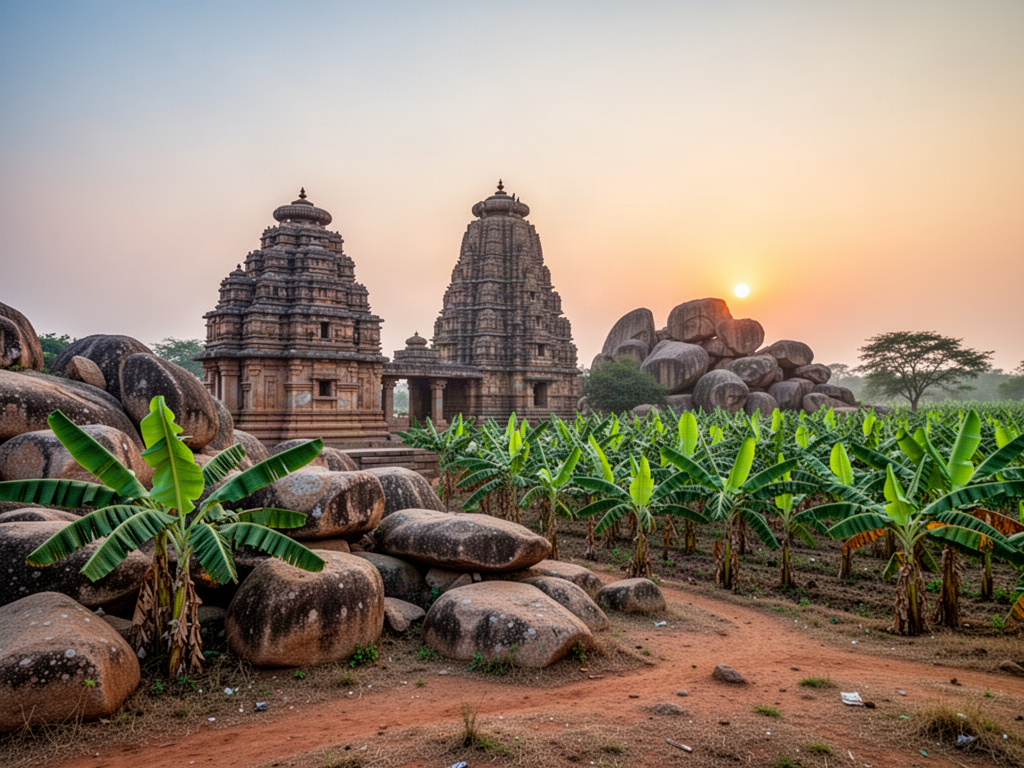
Ancient Stones, Coffee Hills and Coast
Karnataka is a state in southwest India, known for the ruins of Hampi, the royal city of Mysuru, the coffee hills of Coorg and a long Arabian Sea coastline. Its capital, Bengaluru, is one of the country's leading technology hubs, yet the state's identity runs far deeper. Hampi, the former capital of the Vijayanagara Empire, is a UNESCO World Heritage Site set among enormous boulders beside the Tungabhadra River, and its temples, stepped tanks and bazaar streets reward days of slow exploring.
The Western Ghats rise behind the coast and hold forests, waterfalls and plantations. Coorg, also called Kodagu, is famed for coffee estates and cool misty mornings, while Chikmagalur and its hills draw walkers. Mysuru's Dasara festival, which lights the Mysore Palace with thousands of bulbs, is a highlight of the autumn calendar. Across the state, food is a pleasure: crisp dosas, filter coffee, Mysore pak sweets and the Udupi cuisine that began on the coast and travelled the world.
Hampi, Mysuru, Gokarna and Beyond
Heritage fills the itinerary. Besides Hampi, the Hoysala temples at Belur and Halebidu are celebrated for their intricately carved stonework, and Badami, Aihole and Pattadakal showcase early Chalukyan architecture. Bijapur's great domed Gol Gumbaz lifts the skyline in the north. In Mysuru the palace, markets and sandalwood stalls make an easy and satisfying base, and the city sits close to Srirangapatna and the Kaveri river.
For nature and coast, Gokarna's beaches have a relaxed, pilgrim-town feel, Udupi and Mangaluru offer seafood and temple culture, and national parks such as Bandipur and Nagarhole are known for wildlife including elephants. The state sits naturally within a wider southern circuit, linking with Kerala and with India as a whole, and travellers often continue to the Maldives for a beach finale. A tourist board can use this variety to speak to history lovers, wellness guests and wildlife enthusiasts.
Best Seasons and Easy Connections
The most comfortable months for most visitors run from October to February, when days are clear and the hills are cool. The monsoon from June to September turns the Western Ghats vividly green and brings waterfalls to life, which many photographers prefer. Dasara usually falls in September or October and is a major draw. Hampi is most pleasant in the cooler months, when exploring on foot or by bicycle is at its easiest.
Bengaluru's international airport links the state with major hubs across Asia and the Gulf, and routes through places such as Dubai and Singapore make the journey from the UK straightforward. Mysuru, Hampi, Coorg and the coast are connected by road and rail, and a circuit of five to ten days covers the highlights. For hospitality partners, VisitKarnataka.co.uk offers a ready showcase for heritage stays, plantation bungalows and coastal retreats.
Heritage Hotels, Estates and Beach Retreats
Karnataka offers a stay for every mood. In Mysuru, heritage hotels and former royal guesthouses sit close to the palace, markets and Chamundi Hill, making it a graceful base for culture seekers. Hampi has two quite different sides: the riverside village of Virupapura Gaddi, with simple guesthouses and rooftop cafes, and the nearby town of Hospet, where larger resorts serve groups. Bengaluru suits business guests and food lovers, with garden hotels around Cubbon Park and a buzzing microbrewery and cafe scene in Indiranagar. Short stays here pair neatly with a first night after a long flight.
Beyond the cities, plantation life is the great luxury. Coorg and Chikmagalur have coffee-estate bungalows where guests wake to birdsong, walk among the bushes and eat home-cooked Kodava dishes on verandas. On the coast, Gokarna's cliffside huts and boutique stays suit backpackers and couples, while Udupi and Karwar offer family-friendly beach hotels. Wildlife lodges beside Kabini and Nagarhole serve photographers, with jeep safaris and boat trips on the reservoir. A good itinerary pairs one heritage night, two estate nights and a beach finish, giving a balanced picture of the state without long daily drives.
Filter Coffee, Silk and the Dasara Season
Karnataka's table is one of India's most distinctive. Breakfast is a masala dosa, soft idli with coconut chutney or the rice-and-lentil bisi bele bath, served with filter coffee in steel tumblers. Coorg's pandi curry and akki roti reflect a separate hill tradition, Udupi's vegetarian kitchens perfected the temple meal, and Mangaluru's coastal cooking adds ghee roast and neer dosa with seafood. Mysore pak, a gram flour sweet, was created in the royal kitchens and is still a must at a local sweet shop. Coffee estate tours explain the journey from cherry to cup.
Crafts and music keep tradition alive. Mysore silk saris, sandalwood carvings from Mysuru, Channapatna's lacquered wooden toys and Bidriware metalwork from Bidar are all worth seeking out. Carnatic and Hindustani music thrive, and Hampi's Utsav and Mysuru's Dasara festivities fill the autumn calendar with processions, lights and concerts. Winter is for Hampi and the Hoysala temples, spring for blossoms in Bengaluru's gardens, and the monsoon for waterfalls such as Jog Falls, one of India's best known. Each season suggests a different route, so the state rewards more than one visit across the year.
Boulders, Temples and Wildlife Day Trips
Karnataka suits themed days. Cyclists and climbers head to Hampi's boulder fields for sunrise on Matanga Hill, coracle rides cross the Tungabhadra, and the Vittala Temple's stone chariot is a highlight of any visit. Heritage lovers can build a day around the Hoysala temples at Belur and Halebidu, or ride from Mysuru to Srirangapatna and the bird sanctuary at Ranganathittu. Wellness guests find yoga retreats and Ayurvedic centres near Mysuru and along the coast, and walkers enjoy Kudremukh and Mullayanagiri, the state's highest peak, among misty grassland.
Wildlife days are a strong draw. Bandipur and Nagarhole give elephant, gaur and sometimes leopard sightings, while Dandeli adds river rafting and birdwatching. From Bengaluru, easy day trips reach Nandi Hills for sunrise and the silk town of Ramanagara. Travellers connecting between southern hubs can continue to the Maldives or fly to Dubai for an onward stopover, while visitors who want a wider Asian trip can add Thailand or Bangkok. A booking platform could package heritage, wildlife and coast into a single flexible circuit, with India as the framing story.
Planning your stay
Bengaluru is the state capital and a major technology and business city, with gardens, breweries and a fast-growing food scene. Mysuru, a few hours away, is known for its palace and markets, and Hampi is a vast ruined capital of the Vijayanagara empire set among boulders beside the Tungabhadra river.
The Western Ghats bring Coorg's coffee estates and the national parks of Kabini and Bandipur, while the coast offers temple towns and quieter beaches such as Gokarna. Karnataka sits within India, and the island add-ons are the Maldives, the Seychelles and, by sea only, the restricted Chagos Islands.
When to go
October to February is the most comfortable period for the heritage cities and for Hampi, with cooler mornings and lower humidity. March to May is hot, and the southwest monsoon from June to September drenches the coast and the Western Ghats, which is when Coorg turns green but trails and roads can be difficult.
Wildlife viewing is generally best in the drier months, when animals gather near water. Book popular lodges well ahead for the winter period, and check the dates of major festivals, because Mysuru in particular fills quickly during Dasara in the autumn.
Entry rules
The Foreign, Commonwealth and Development Office says you must have a visa to visit India unless you are an Overseas Citizen of India cardholder, and that your passport must have an expiry date at least six months after you arrive and at least two blank pages. You can apply for a regular visa or an e-visa, and should check the restrictions on airports and seaports of entry first.
British Airways flies non-stop from London to Bengaluru in about 9 hours 50 minutes, and many visitors also arrive through Delhi or Mumbai.
Roads, rail and staying healthy
For longer journeys in Karnataka, trains between Bengaluru, Mysuru and the coast are an established alternative, and domestic flights serve Hubballi, Mangaluru and other cities. Use app-based taxis rather than street hailing.
Dress modestly at temples and ask before photographing people or shrines.
Before you travel
Entry requirements and official travel guidance are updated regularly, so check the latest position with your government before booking. The sources we used are listed at the foot of this page.
Why Karnataka matters to the industry
Karnataka draws business, heritage and wildlife travellers who each search differently. On VisitKarnataka.co.uk, a tourist board, hotel or lodge group or airline can publish state-level guidance for Bengaluru, Hampi and Coorg, and our AI platform relays it to travellers searching for Karnataka.
Compare other destination guides, or read how our OTA partnerships work.
Questions travellers ask about Karnataka
Do I need a visa for Karnataka?
Yes. UK visitors need an Indian visa or e-visa, and a passport with at least six months' validity and two blank pages. You must also complete the online e-arrival card before reaching immigration.
When is the best time to visit Karnataka?
October to February is the most comfortable for cities and Hampi. The monsoon from June to September brings heavy rain to the coast and Western Ghats.
How do I get to Karnataka from the UK?
British Airways flies non-stop from London to Bengaluru in about 9 hours 50 minutes, and many travellers also connect through Delhi or Mumbai.
What is Karnataka best known for?
Karnataka is best known for the UNESCO-listed ruins of Hampi, the palace city of Mysuru, Coorg's coffee plantations, Hoysala temples and its Arabian Sea beaches. Bengaluru, the capital, is one of India's leading technology cities.
When is the best time to visit Karnataka?
October to February is the most comfortable period, with clear skies and cooler air, ideal for Hampi and Mysuru. The monsoon months of June to September make the Western Ghats lush, and Dasara in early autumn is a festival highlight.
Where should I stay in Karnataka?
Mysuru suits culture and palace lovers, Hampi suits history and photography, Coorg and Chikmagalur suit coffee-estate retreats, and Gokarna or Udupi suit beach time. Kabini and Nagarhole are best for wildlife lodges, while Bengaluru is ideal for city breaks.
What is there to do in Karnataka outside the main cities?
Visit the Hoysala temples at Belur and Halebidu, ride a coracle at Hampi, tour a coffee estate in Coorg, see Jog Falls in the monsoon, or join a wildlife safari in Nagarhole or Bandipur. Gokarna's beaches add easy seaside days.
In the Visit Travel Group portfolio: VisitKarnataka.co.uk.