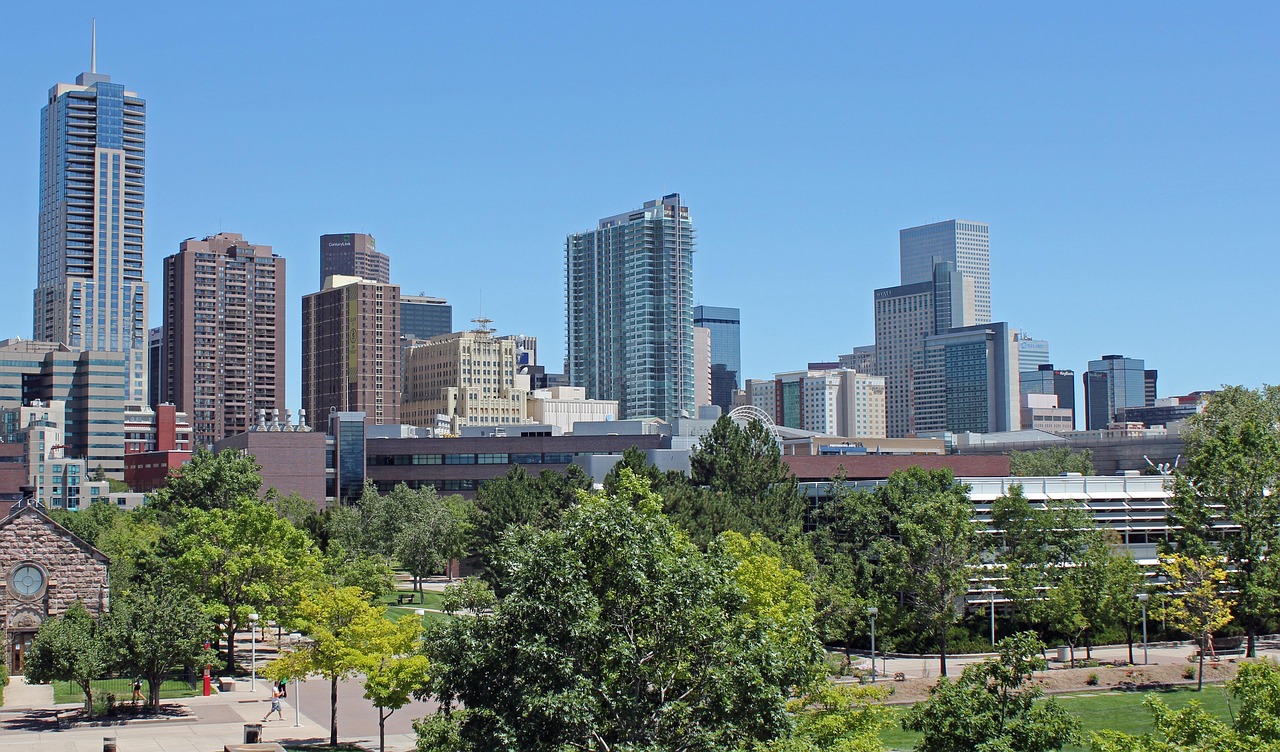
The Mile High City at the Mountains' Edge
Denver is the capital of Colorado, a city of the American West where the Great Plains meet the foot of the Rocky Mountains, known for its mile-high elevation, big skies and easygoing urban energy. Founded in 1858 during the Pikes Peak gold rush, it grew from a mining supply camp into the commercial heart of the region. Its famous 5,280-foot elevation is marked on a step at the State Capitol, and the Front Range rises beyond the skyline like a painted backdrop on clear mornings.
Today the city balances frontier history with a confident, creative present. Union Station, the restored railway hall in Lower Downtown, anchors a district of cocktail rooms, bookshops and restaurants, while Larimer Square offers gaslit-style evenings under strings of lights. The Denver Art Museum, with its titanium-clad Hamilton Building, and the murals of the RiNo Art District give culture a sharp contemporary edge. Travellers heading on to Aspen or Vail often linger here first, because the city is a destination in its own right.
Red Rocks, Green Chile and Front Range Days
Red Rocks Amphitheatre, carved between towering sandstone monoliths in the foothills, is the city's most celebrated stage, and an evening concert there under open sky is a ritual for music lovers. Closer to town, Cheesman Park, Washington Park and the Cherry Creek Trail give runners and cyclists easy green space. Denver's food scene rewards curiosity: Colorado lamb, Rocky Mountain trout, green chile smothering everything from burritos to burgers, and a craft-brewing culture that has made the city a reference point in the United States.
Sports are part of the social fabric, with baseball at Coors Field in LoDo and football at Empower Field at Mile High. Day trips reach far: Rocky Mountain National Park, Boulder's Flatirons and the historic mining town of Georgetown all sit within a morning's drive. For a airline, Denver is an easy story to tell, a major hub with mountain doors opening in every direction, linking naturally with the Rockies and Telluride beyond.
Sunshine Seasons and Getting to the City
Denver is famous for its sunshine, with bright, crisp days through much of the year, which makes it a genuine year-round city break. Summer suits outdoor concerts, patios and trail days, autumn paints the aspens gold in the nearby hills, and winter turns the city into the natural gateway for skiing, with resorts a drive away. Spring brings a rush of festivals and the start of the cycling season along the river paths.
Denver International Airport connects the city to destinations across the United States and Europe, and the A Line train links the terminal with Union Station in the centre. From there a rental car or scheduled coach reaches the high country, and a two-centre trip with Utah is a classic road itinerary. A name like VisitDenver.co.uk gives hotels and boards one clear home for the whole city and mountain story.
Where to Stay, from LoDo to Cherry Creek
Choosing a base shapes a Denver stay. Lower Downtown, known as LoDo, suits first-time visitors, with Union Station's railway-hall hotel, the historic Oxford Hotel opened in 1891 and the Brown Palace, famed for its atrium lobby and afternoon tea, all within a short walk of Coors Field and the 16th Street Mall. These are the choices for travellers who want history and restaurants at the door, and a hotel group can find few easier cities to showcase in both heritage and contemporary styles.
Beyond the centre, each neighbourhood has a clear audience. RiNo, the River North Art District, draws design-minded guests to converted warehouses and mural-covered streets, while Cherry Creek pairs boutique shopping with polished, quiet hotels for couples and business travellers. The Highlands and Washington Park feel residential and leafy, a good fit for families who want parks, bakeries and bikes. Skiers heading on to Vail or Beaver Creek often book a city night either side of the mountains.
Green Chile, Craft Culture and a Year of Events
Denver's table has a strong regional voice. Green chile, ladled over burritos and burgers, is the signature, alongside Rocky Mountain trout, bison and elk on tasting menus, and the Denver omelette, a breakfast classic. Coffee roasters and bakeries are scattered through the Highlands and Capitol Hill, and the Denver Central Market near RiNo gathers food stalls under one roof. Culture is equally easy to find, from the Clyfford Still Museum and the History Colorado Center to the Denver Performing Arts Complex and live music rooms along Colfax Avenue.
The calendar rewards a visit in any season. The National Western Stock Show brings rodeo and ranch heritage in January, spring opens the baseball season at Coors Field, and summer fills the foothills with concerts at Red Rocks. The Great American Beer Festival is a September institution, and the Denver Film Festival lights up the autumn evenings. Winter brings the Christmas lights of the Civic Center and ice skating, with snow-dusted peaks a short drive west, a pattern that links well with Chicago on a two-city American trip.
Foothills, Peaks and Easy Day Trips
Outdoor days begin almost at the city limits. Red Rocks Park has hiking trails and a trading post as well as its amphitheatre, Golden is home to Lookout Mountain and Buffalo Bill's grave, and the Cherry Creek and South Platte trails offer long, flat cycling routes through the city. Families enjoy the Denver Zoo and the Butterfly Pavilion, while golfers find public and resort courses ringed by the Front Range. Boulder's Pearl Street, a short drive north, adds bookshops, hiking and the famous Flatirons rock slabs.
Rocky Mountain National Park is the grand day trip, with Trail Ridge Road climbing above the treeline in summer and elk gathering in Estes Park in autumn. Georgetown's narrow-gauge railway and the scenic Mount Blue Sky road reach higher still. A stay can be built around these, with city nights bracketing a mountain loop towards Telluride or a longer journey through the Rockies and across to Utah, while the airport's strong connections make the opening and closing days simple.
Planning your stay
Denver sits at about 1,600 metres, a mile above sea level, with the Rocky Mountains visible on the western horizon. The city has a lively downtown around Union Station, the craft beer scene, the Denver Art Museum and plenty of green space, and it gets a lot of sunshine through the year.
Many visitors use it as a base for the mountains. Within a few hours' drive are Vail, Beaver Creek and Aspen, and the national park at Rocky Mountain is a day trip. See also The Rockies for the wider region.
Denver International Airport lies about 25 miles (40 km) by road from downtown, and RTD's A Line has linked it to Union Station by rail since April 2016. Allow for the distance on departure days, particularly in winter, when snow can slow the road and delay flights.
When to go
Late spring to early autumn is the most comfortable, with warm days and cool evenings. Summer can bring afternoon thunderstorms, and autumn is clear and crisp.
Getting there and entry rules
Direct flights from London take about nine and a half hours, and the airport is about 25 miles (40 km) north-east of downtown, linked to Union Station by RTD's A Line commuter rail, which opened in April 2016. The city is also a rail and road hub for the mountain resorts. If you plan to ski, check winter road conditions, because passes can close.
Apply before you book anything non-refundable.
Altitude and health
Drink water, take it easy on arrival and go slowly with alcohol. Seek medical help if headaches, nausea or breathing difficulties persist.
The sun is strong at this height, so use sunscreen and carry water on walks.
Before you travel
Entry requirements and official travel guidance are updated regularly, so check the latest position with your government before booking. The sources we used are listed at the foot of this page.
Why Denver matters to the industry
Denver is the main airline gateway to the Rockies, so a clear hub that explains routes, altitude and onward transfers serves airlines, hotels and mountain resorts alike. VisitDenver.co.uk lets a hotel group, tourist board or airline publish current answers on routes, altitude and onward transfers for Denver, and our AI platform carries them to searchers.
Browse our other destination guides for comparison.
Questions travellers ask about Denver
How long is the flight from London to Denver?
Direct flights take about nine and a half hours, and the airport is some distance from the city centre.
What is Denver best known for?
Denver is best known for its mile-high elevation, its setting beside the Rocky Mountains and its sunshine. Red Rocks Amphitheatre, Union Station, the RiNo arts district, Coors Field and a strong craft food and brewing scene make it one of the American West's most appealing cities.
When is the best time to visit Denver?
Denver is enjoyable all year. Summer is ideal for concerts at Red Rocks and mountain day trips, September and October bring golden aspens, and winter works well for combining the city with skiing in the nearby Rockies resorts.
Where should couples stay in Denver?
Couples often choose LoDo for historic hotels and restaurants within walking distance, or Cherry Creek for boutique shopping and quieter streets. RiNo suits those who prefer a creative, design-led atmosphere with galleries, food halls and evening music.
What is a good day trip from Denver?
Rocky Mountain National Park is the classic choice, reached in about ninety minutes by road, with Trail Ridge Road and wildlife. Boulder, Golden and the Red Rocks foothills make shorter alternatives with trails, museums and good lunch stops.
In the Visit Travel Group portfolio: VisitDenver.co.uk.