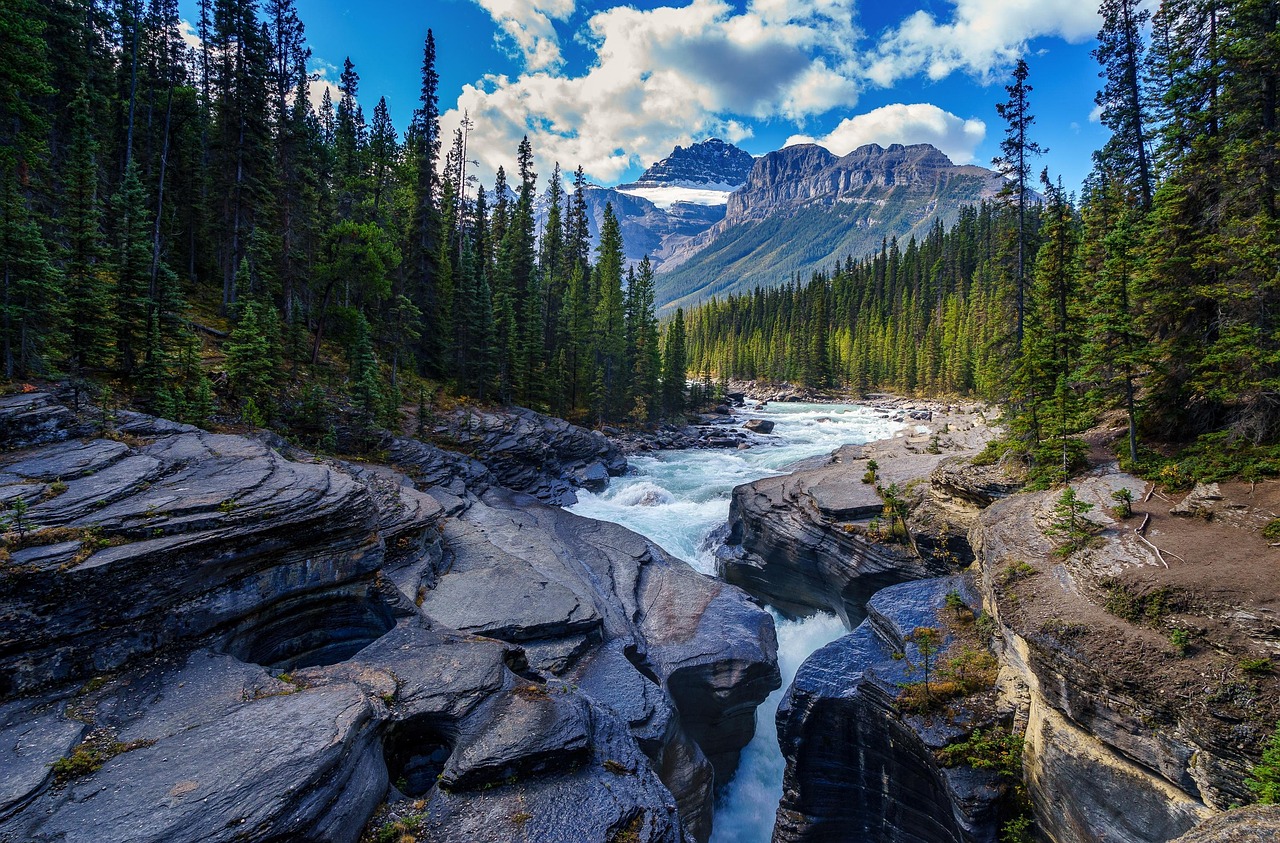
A Country Built on a Grand Scale
Canada is the second-largest country in the world by area, with ten provinces and three territories stretching from the Pacific to the Atlantic and north to the Arctic. Its capital is Ottawa, and it is known for its national parks, lakes, cosmopolitan cities and a welcome that mixes English, French and Indigenous heritage. Canada's landscapes are vast, from the Rocky Mountains and the prairies to the Canadian Shield and a coastline longer than that of any other nation.
The big cities are an attraction in themselves. Toronto offers museums, theatre and the CN Tower, Montreal blends French culture with festivals and food, and Vancouver pairs Pacific scenery with a lively dining scene. Quebec City, with its walled old town recognised by UNESCO, feels like a corner of Europe on the St Lawrence River. Niagara Falls, on the Ontario side, remains one of the continent's most visited natural attractions.
Rocky Mountain Parks and Atlantic Coastlines
In the west, Banff and Jasper national parks form part of the Canadian Rocky Mountain Parks UNESCO site, known for turquoise lakes such as Moraine Lake and Lake Louise, glaciers and wildlife. Whistler, in British Columbia, is the country's best-known ski resort, and the wider Rockies extend south into the United States. The Rocky Mountaineer train offers a leisurely, scenic way to cross the mountains between Vancouver and Banff.
In the east, Nova Scotia's Cabot Trail, Prince Edward Island's red-sand beaches and Newfoundland's colourful fishing villages offer a very different pace. Seafood, from lobster rolls to Atlantic salmon, is a highlight, and autumn brings maple colour across Ontario, Quebec and the Maritimes. For a destination guides audience, the diversity of Canada makes it ideal for themed trips, from food to wildlife and from skiing to road journeys.
Seasons, Festivals and Planning Your Route
Summer is the season of festivals, with the Calgary Stampede in July, Montreal's jazz and comedy events and long days at the lakes. Autumn is celebrated for foliage, usually peaking in late September and October, while winter brings skiing, skating on the Rideau Canal in Ottawa and the northern lights in the Yukon and Northwest Territories. Spring is quieter and suits city breaks and maple syrup season.
Major airports at Toronto, Montreal, Vancouver and Calgary receive direct flights from the UK and Europe, and domestic flights and rail make onward travel easy. Canada combines well with Washington State on a Pacific Northwest trip or with Boston on a New England and Quebec journey. A name like YourCanada.co.uk gives airlines, hotels and boards a single, welcoming home for the whole country.
Grand Hotels, Wilderness Lodges and City Stays
Canada's lodgings range from grand railway hotels to remote wilderness retreats. The Fairmont Banff Springs and Chateau Lake Louise sit amid Rocky Mountain scenery, while Quebec City's Chateau Frontenac crowns the old town. Toronto and Montreal offer boutique hotels in heritage buildings and lofts in lively districts, and Vancouver offers waterfront stays with mountain backdrops. Couples enjoy lakeside cabins in the Muskoka region and cosy inns in Prince Edward Island, while families favour resorts at Whistler and in the Okanagan.
Adventurous travellers choose lodges in the Yukon, Churchill and Newfoundland, with northern lights viewing and wildlife tours at the doorstep. Fishing lodges, ranch stays in Alberta and treehouse cabins in British Columbia add distinctive choices, while Atlantic Canada's seaside inns offer lobster dinners and sea views. A hotel group can offer the whole range as a coast-to-coast collection, linking Vancouver, the Rockies and eastern cities under a single Canadian promise.
Poutine, Maple and a Country of Festivals
Canada's food reflects its regions and communities. Poutine, tourtiere, butter tarts, Nanaimo bars, maple syrup, Atlantic lobster, Alberta beef and Pacific salmon are national favourites, and Montreal bagels and smoked meat sandwiches are iconic. Indigenous cuisine, including bannock and game, is increasingly celebrated, while Toronto's multicultural kitchens span the globe. Ice wine from Niagara and the Okanagan, produced from frozen grapes, is a heritage product often served with dessert.
Festivals light up the calendar. Winterlude in Ottawa, Quebec's Winter Carnival, Montreal's Jazz Festival, the Calgary Stampede, Stratford's Shakespeare Festival and the Toronto International Film Festival are all internationally known. Indigenous powwows and the Celtic Colours Festival on Cape Breton add cultural depth. Museums such as the Royal Ontario Museum, the Canadian Museum of History and the Museum of Anthropology reward curious visitors, and a short hop to Boston pairs Canadian culture with American history.
Rail Journeys, Whale Coasts and Northern Lights
Canada is a country built for active and themed travel. Rail journeys on the Rocky Mountaineer and VIA Rail cross mountains and prairies, while the Trans-Canada Highway makes road trips straightforward. Whale watching in the Bay of Fundy and the Saguenay, polar bear tours in Churchill, canoeing in Algonquin Park and skiing at Whistler and Banff suit different tastes. Cyclists enjoy the Confederation Trail on Prince Edward Island, and golfers play Cabot Links on Cape Breton.
Day trips reach famous places. Niagara Falls and Niagara-on-the-Lake are an hour from Toronto, Lake Louise and Moraine Lake sit near Banff, and Vancouver Island's Tofino offers surf beaches and rainforest. Evenings in the Yukon and the Northwest Territories deliver aurora displays between autumn and spring. A stay can be built around one region, with a night or two beyond, and the Canadian Rockies link neatly with the wider Rockies to the south for a continental journey.
Planning your stay
Canada is the second-largest country in the world, so distances catch visitors out. The west offers mountains, national parks and coast, with Vancouver and Whistler as the best-known bases, and the Rockies in Alberta and British Columbia. In the east, Toronto, Niagara, Montreal and Quebec City suit city breaks, while the Atlantic provinces offer coast and fishing villages.
Many UK visitors pair the west with the United States, for example via Washington State. Across the Pacific, Hawaii is the usual beach contrast. Plan one region properly rather than trying to cross the country.
When to go
Summer, from June to September, is the main season for hiking, lakes and city festivals. September and October bring autumn colour, especially in Ontario and Quebec. Winter, from December to March, is the ski and northern lights season, with deep cold in much of the country.
The Atlantic hurricane season normally runs from June to November, which overlaps with trips to Canada, and hurricanes can affect coastal regions.
Entry rules and the eTA
Direct flights from London reach Toronto in roughly eight hours and Vancouver in about nine and a half, with direct services to several other Canadian cities.
A UK visitor to Canada on a short stay, normally up to six months, does not need a visa, but may need an eTA instead, and the passport must be valid for the whole planned stay. Expect questions on arrival in Canada about a return or onward ticket and your funds, and apply for the eTA only on the official Government of Canada website, since unauthorised sites charge fees.
Immigration officers may question children, so keep the paperwork to hand.
Driving, wildlife and extreme weather
Make sure your vehicle has snow tyres and emergency supplies. Laws vary between provinces, including whether you can turn right on a red light and what licence you need, and you may need an international driving permit. Hire companies often set stricter requirements, such as a higher minimum age.
Watch out for wild animals on country roads.
Before you travel
Entry requirements and official travel guidance are updated regularly, so check the latest position with your government before booking. The sources we used are listed at the foot of this page.
Why Canada matters to the industry
Canada is a large, multi-region market with strong UK ties, so a single national name helps tourist boards, airlines and hotel groups route visitors to the right province. YourCanada.co.uk lets a hotel group, tourist board or airline publish current answers on the eTA, regions and seasons for Canada, and our AI platform carries them to searchers.
Browse our other destination guides for comparison.
Questions travellers ask about Canada
When is the best time to visit Canada?
June to September for summer travel, September and October for autumn colour, and December to March for skiing and northern lights.
What is Canada best known for?
Canada is best known for its national parks such as Banff and Jasper, cities including Toronto, Montreal and Vancouver, Niagara Falls, maple syrup and a landscape that includes mountains, lakes and coastline.
When is the best time to visit Canada?
Summer suits festivals, lakes and mountain hiking, autumn is ideal for foliage and city breaks, and winter is perfect for skiing and northern lights. The best season depends on the region.
Which part of Canada suits a first visit?
Many first-time visitors combine Toronto, Niagara Falls and Montreal in the east, or Vancouver, Whistler, Banff and Lake Louise in the west. Each offers cities, food and landscapes within easy reach of one another by road, rail or short flights.
What food should I try in Canada?
Try poutine, maple syrup treats, butter tarts, Nanaimo bars, Montreal bagels, Atlantic lobster, Pacific salmon and Alberta beef. Ice wine from Niagara and the Okanagan is a notable heritage product, and Indigenous dishes such as bannock are increasingly easy to find.
In the Visit Travel Group portfolio: YourCanada.co.uk.